Finding stillness and strength within the bustle of the fair.
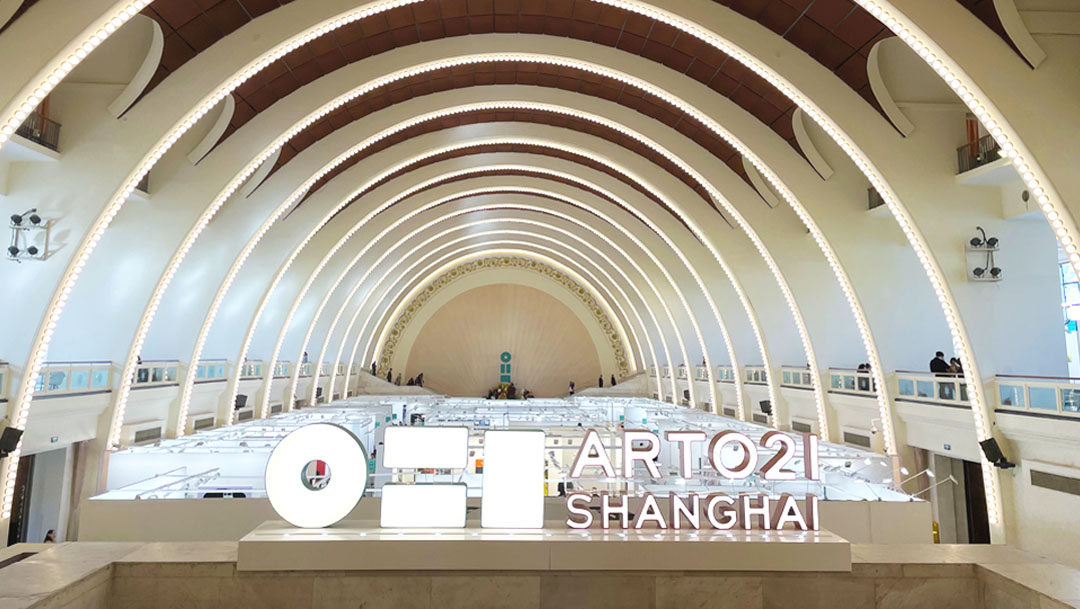
The 13th edition of ART021 Shanghai Contemporary Art Fair arrived on schedule this November. As a platform bringing together leading galleries, artists, and collectors from around the world, ART021 Shanghai has grown into something of a barometer for the contemporary art market — rooted in its own cultural traditions, while tracking the shifting visual grammar of contemporary art more broadly.
This year's fair brought together 141 galleries and projects from 22 countries and regions, spanning 50 cities, with 34 galleries making their debut — a vibrant, varied artistic landscape. At the VIP preview, collectors and art professionals gathered in high spirits; expectations for the market remain positive, though the mood leaned more toward rationality than speculation, with attention falling on works of long-term collecting value rather than a chase after big names or big scale.
As of publication, gallery sales have held steady and within expectations, with acquisitions from both institutions and private collectors. Several galleries performed impressively — some selling out on the first day — while many other works remain under reservation or in negotiation.
The major galleries arrived with strong presentations from their star artists. Perrotin reported that close to half of its booth was under reservation, with Takashi Murakami's "Pastel Purple," priced at USD 280,000, standing as the booth's most expensive work. Mennour presented Ugo Rondinone's "Blue, Yellow, Pink Mountain," currently the highest-priced confirmed sale at USD 180,000. Lisson Gallery made its ART021 Shanghai debut, bringing a major signature work by Anish Kapoor priced above RMB 8 million to draw the attention of younger collectors. De Sarthe Gallery offered work ranging from tens of thousands to millions of RMB. Hive Center for Contemporary Art sold nearly thirty works, with Zhang Yingnan's "Footprint" the most expensive among them. Song Art Museum sold more than ten works. Bluerider ART presented a tightly edited selection priced under RMB 700,000. BANK Gallery sold out its booth on the first day. Newcomer PETITREE, from Shenzhen, introduced emerging artists at more accessible price points — from a few thousand RMB up to around RMB 100,000.
As the market's "foam" continues to wither, both galleries and collectors are showing greater pragmatism and longer-term thinking. Collecting patterns now form a clear ladder: works under RMB 100,000 offer an approachable entry point for new collectors, while works under RMB 500,000 continue to draw steady interest from more experienced collectors building out their holdings.
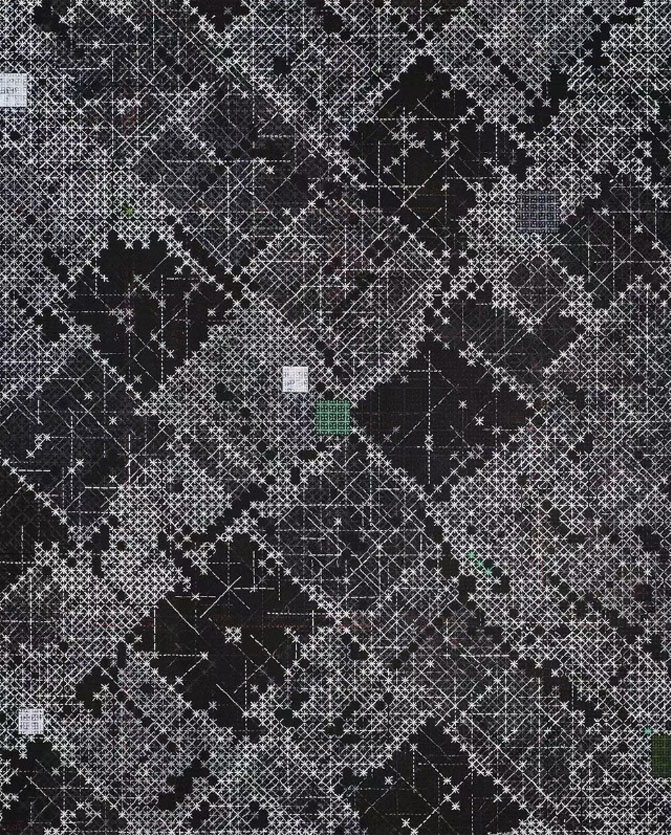
Amid the dazzling range of work on view, pieces rooted in Eastern aesthetics stood apart, carrying a distinct cultural depth. From the mid-career generation to artists born in the 1990s, many Chinese artists are folding traditional Eastern aesthetics into contemporary abstraction, while Western artists living in the East draw fresh insight from their own cross-cultural encounters.
If the Ancients Played With the Universe
For Chinese artists, ink painting has never been simply a medium or technique; it carries instead with its own emotional and aesthetic lineage. The worldview underlying this tradition had since been reimagined by artists and given new form and fresh vitality; behind the notion that “a single flower contains the whole universe” lies nothing less than an ultimate inquiry into time and space.
Sun Yanchu's "Water 1#, Homage to Ma Yuan" and Tang Hui's "Cliff Cypress Stream" carry the spirit of landscape through mixed media. Xia Jianning observes leaf cells under a microscope, merging micro-pulsation with classical landscape imagery. Xu Lei reworks images into the spatial logic of traditional painting. "The Moon Embraced by the Mountain," adapted from the Japanese stone compendium "Record of Weathered Stones," forms a cross-cultural meditation of its own.
Phillips presented new work by Liu Dan, a leading figure in contemporary ink. Whether depicting rock or flower, his "Papaver Rhoeas — Purple" establishes an order beyond the motif itself, articulating an expansive temporal consciousness that unites the micro and the macro.
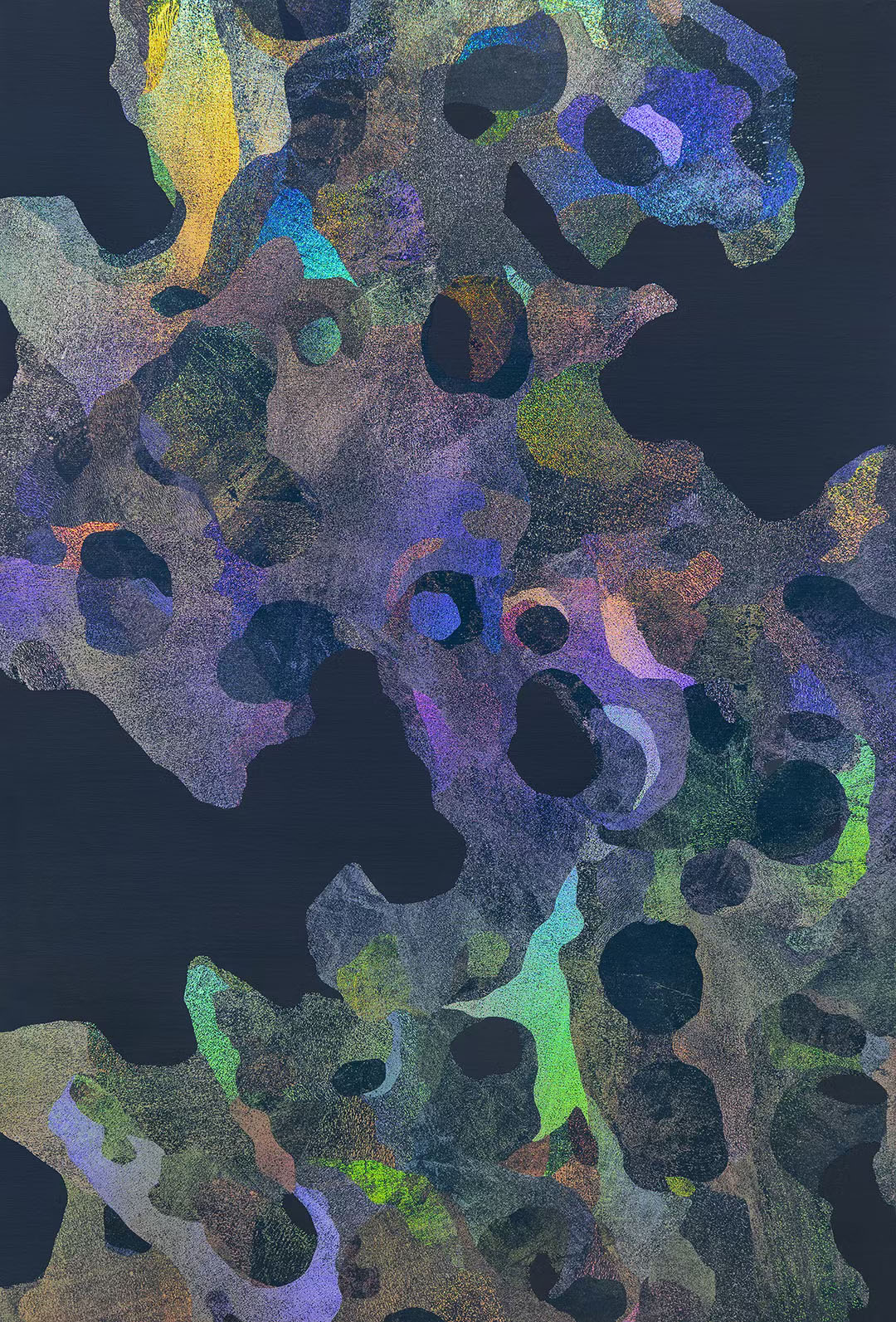
Huang Zhe, long fascinated by archaeology, approaches history through discontinuity. The iridescent patina that forms on ancient glass after millennia inspired his "Such as the Milky Way" — its shifting colors echo the scholar-stone aesthetics of the Song dynasty and reflect a contemplative philosophy born of seeing the heart through stone.
Between Eastern Control and Improvised Gesture
For years, AroundSpace Gallery has upheld a long-termist vision, presenting work of serene elegance. This year they showcased Liang Quan, among the earliest artists to merge ink with abstraction — his practice uses torn, dyed, and collaged xuan paper, along with tea stains and perforated packing material, to build layered washes.
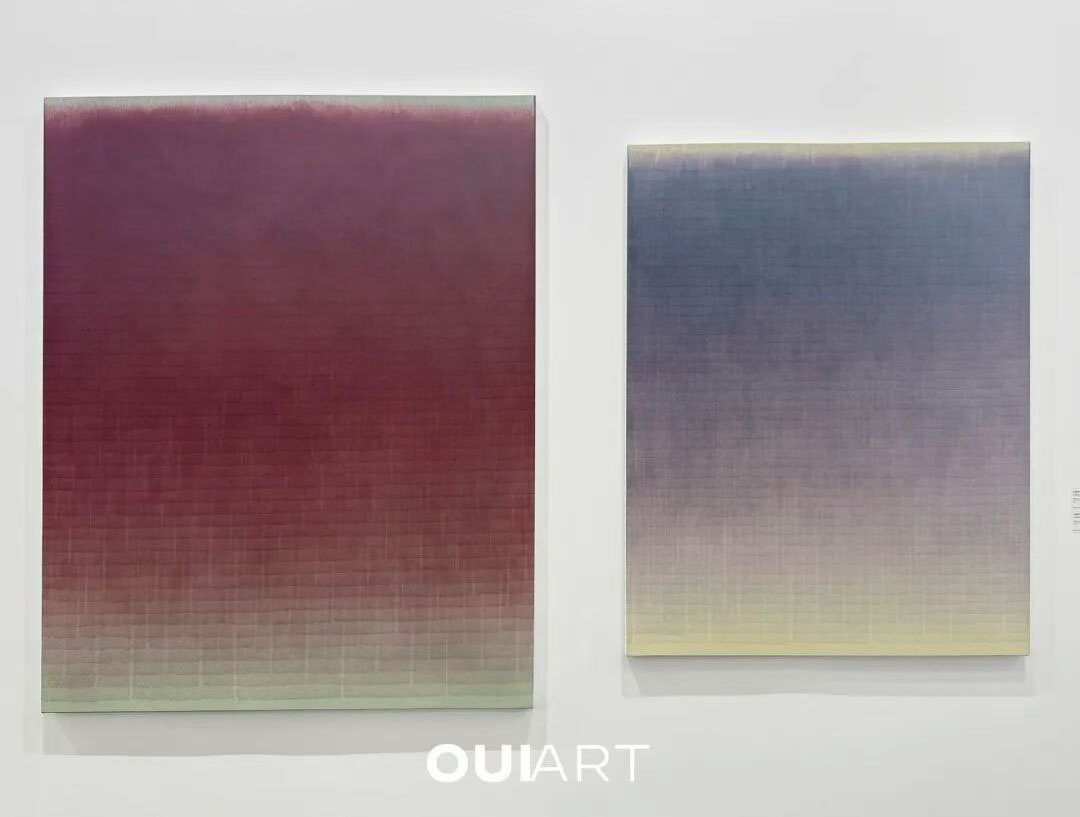
Chen Qiang's abstract practice combines traditional xuan paper and ink with Western linen and pigment. His brushstrokes shift between dense and airy, controlled and improvisational, as color flows, pools, and converges somewhere between order and chance.
The circle had long since been a symbol of cosmic cycle and yin-yang duality; it now anchors the late work of Yu Youhan at A+ Contemporary. Moving from early monochrome toward a more restrained polychrome, Yu merges ink technique with Western abstract composition, building tension through endlessly repeating circular brushwork.
The Weight of Materiality
Materiality and temporality carry particular weight within Eastern aesthetics. These artists foreground the accumulation of time itself, leaving traces of labor and gesture that extend past mere surface appearance. Through layered pigment, texture, and material character, they build structures that feel calm, yet remain full of tension.
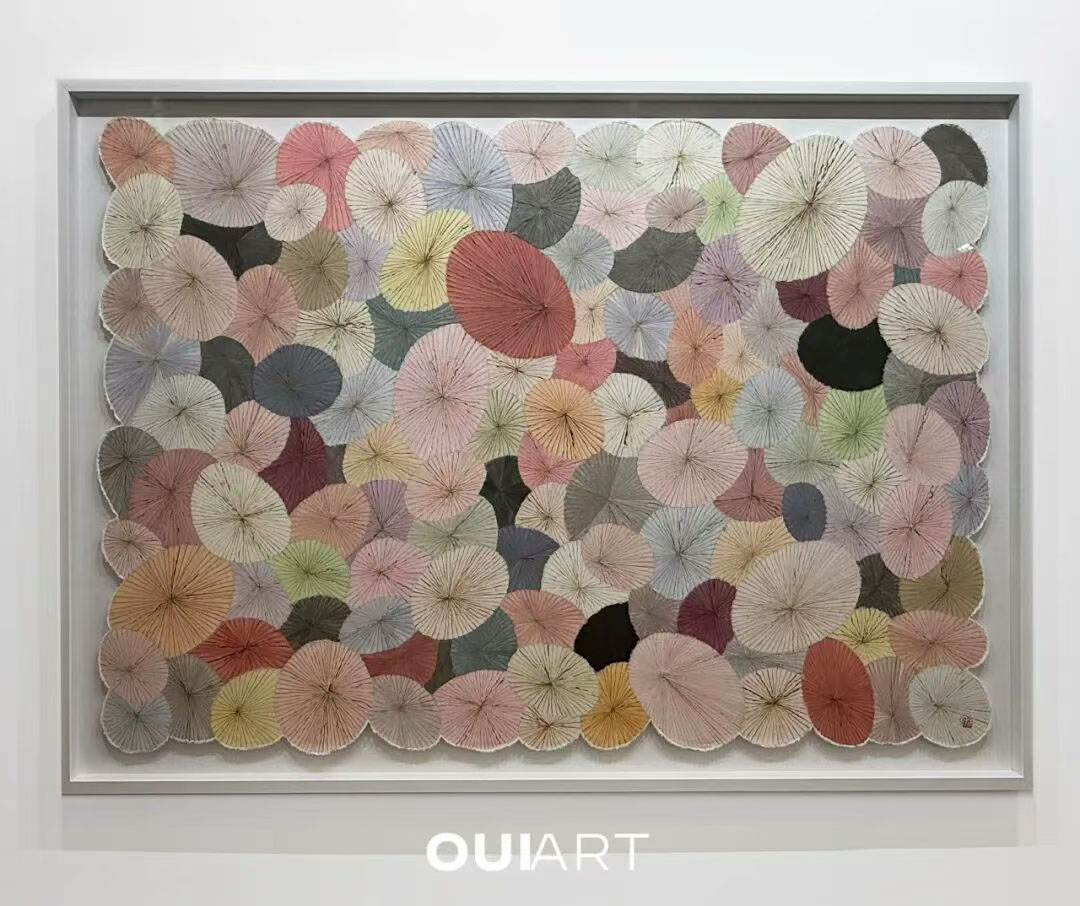
Emerging artist Yiwen continues her exploration of natural, organic form — from plant to shell — using the spirals and logarithmic curves found in mollusks to contemplate primordial life, weaving natural rhythm together with human trace.
Tang Jiaxin pierces paper in rhythmic repetition, recording her own bodily rhythm and shifting perception. Drawing on "The Art of War" and the "I Ching," her work meditates on the balance between destruction and fragility.
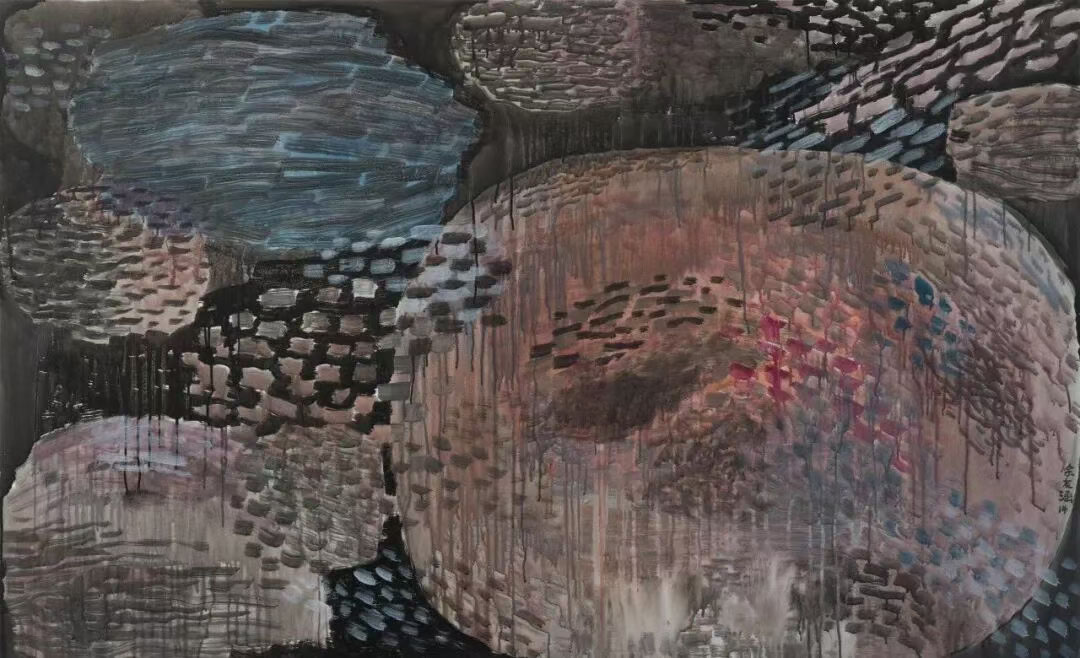
Shen Chen began pushing experimental ink and its conceptual abstraction as early as the 1980s. His brushwork traces back to traditional calligraphy; he works with long-handled brushes of his own invention and assembly, applying dozens of layers of acrylic onto canvas laid flat on the floor, in a labor that feels almost meditative in its evenness. Through the rhythm of his brushwork, quickening and then slowing again, the overlaps and gaps between strokes form lines of varying density, drawing ink tones across shifting color registers and giving rise to a minimalist aesthetic of "the void"
Traditional lacquer has seen a revival among younger artists, its inherent unpredictability part of its appeal, thus artists working in this medium always seem to lie tie its transformation to the vitality of time itself. Guo Tiantian works primarily in natural lacquer, incorporating mother-of-pearl, leather, and metal into multisensory work that merges color resonance, sonic texture, and historical consciousness — a kind of “synesthesia”, shading into “mono no aware”.
Whether through repeated brushing, layered collage, or slow polishing, these artists collectively foreground the trace of process and the weight of time — echoing a broader Eastern reflection on the interplay between the instantaneous and the eternal.
When Living in the East Sparks New Passions
Contemporary Eastern aesthetics has moved well past symbolic appropriation or retro styling, returning instead to more fundamental questions: nature and humanity, myth and reality, East and West.
Kyungmi Shin often draws on Eastern symbols to challenge Western stereotypes of "the East”, merging traditional motifs such as cranes, snakes with family photographs to explore the layered experience of the Asian diaspora. Xie Qun reflects on Orientalism through Yixing clay, copper, and ink, constructing bodily mythologies that reimagine fragmented histories.
Many Chinese artists who studied abroad have undergone a real shift in perspective; they entered a foreign culture as outsiders, then returning home to reassess their own traditions with new eyes. . In the collision between cultures, they step outside old habits of thought and revisit their own tradition, moving from being lost inside the mountain to seeing the mountain, once again, as itself.
After years in France, Qi Zhuo returned to China to study the history of Buddhist sculpture. His "Bubble Game" series reflects on cultural multiplicity, combining ceramic, glass, and metal. Blown-glass bubbles serve as "restoration bases" for reconstructed Northern and Southern Dynasties figurines, stitching together new interpretations of historical fragmentation.
For Cai Yaling, rooting oneself in one's own soil brings deeper wisdom. Chinese philosophical perspectives on gender have long shaped her practice, an inquiry she deepened further during a residency in Paris. In her blown-glass florals, blooming branches emerge from traditional vessels, their layered colors and nested forms echoing classical Chinese flower arrangement. Using the flower as a metaphor for female interiority, she explores how body and consciousness connect. Her mixed-media paintings carry these reflections further, into narratives more intimate and, at times, more melancholic.
Following a residency in Taipei, Benjamin Spiers created "Remains." Though being known for grotesque and surreal imagery, he paints here instead flowers glowing faintly in the dark, petals curling inward, edging toward decay. The work carries something of an Eastern acceptance of impermanence: budding, blooming, withering, returning to earth, each stage folded into an endless cycle.
Through personal language and cross-cultural perspective, these artists return to tradition and reinterpret it, engaging not with surface motif but with the methodology, philosophy, and cosmology beneath it. Eastern aesthetics remains a path connecting past to future: an inward, contemplative approach rooted in patient, sustained inquiry.
Producer:Tiffany Liu
Editor:Tiffany Liu
Designer:Nina
Image:From ART021 Shanghai Contemporary Art Fair and Oui Art on-site shooting