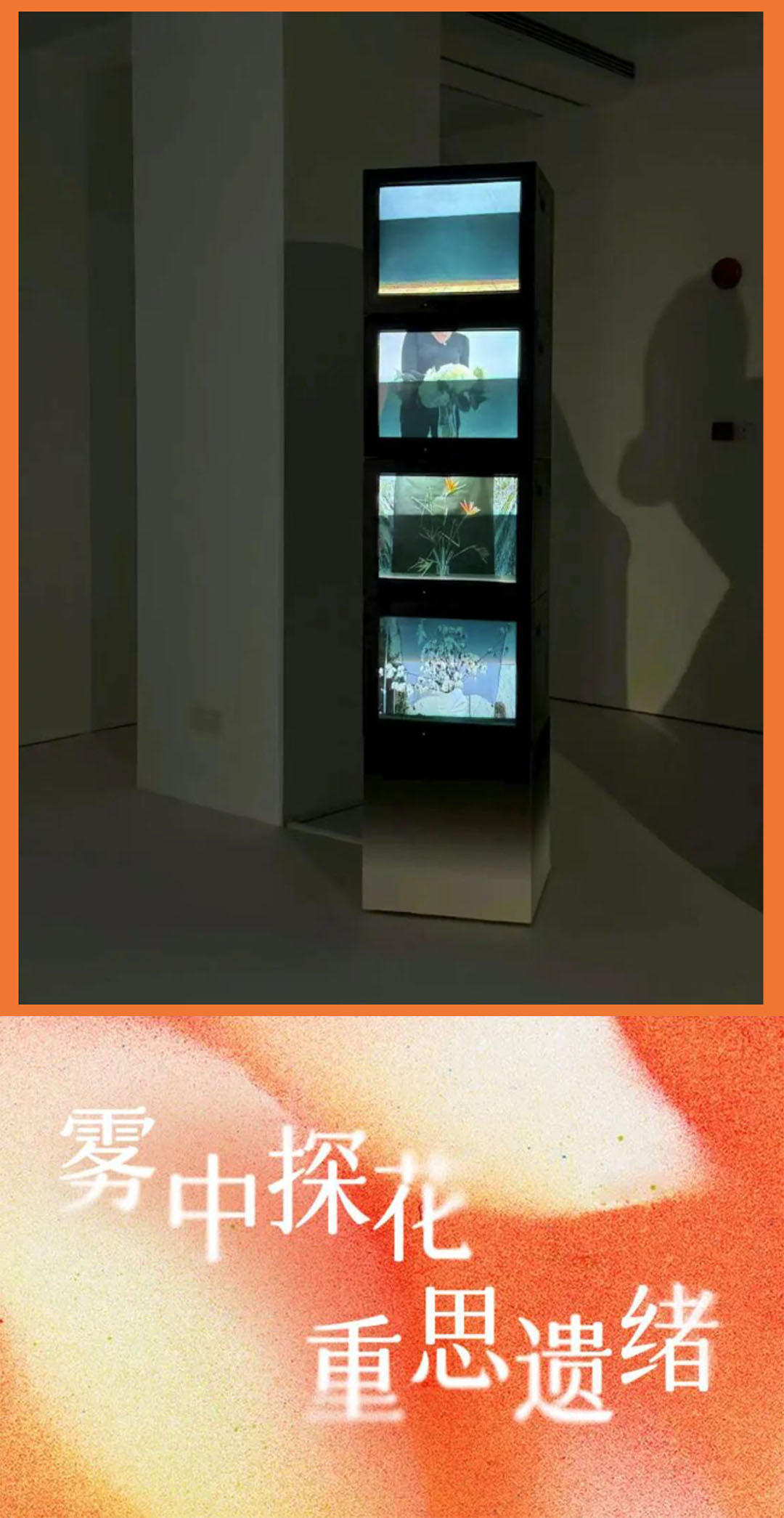
As winter approaches, the Rockbund Art Museum (RAM) in Shanghai unveils the second round of its annual exhibition program: the sixteen-artist group exhibition The Great Camouflage, occupying all floors of the museum, alongside the solo exhibition Short-term Histories by artist Peng Zuqiang. Since its reopening in 2021 after extensive renovation, the century-old former building of the Asiatic Society has continued to assert itself through an ambitious and distinctive exhibition program. In early 2023, with X Zhu–Nowell assuming the roles of Director and Chief Curator, the museum’s institutional focus became increasingly centered on critical narratives of diaspora, labor, and historical inheritance under globalism. RAM’s collective modes of expression and its experiments in public engagement have since remained firmly in the spotlight.
Much like the six solo exhibitions that unfolded from a shared curatorial premise in 2023 and the lectures and workshops that expanded the museum’s institutional boundaries in 2024, RAM has, over the course of this year, begun to weave together “depth” and “breadth” into a coherent curatorial strategy. On the one hand, three stylistically distinct yet conceptually interdependent solo exhibitions spread across six floors sustained the museum’s signature, rigorously articulated exhibition-making. On the other hand, the spring–summer program marked the lifting of a long-standing ticketing policy that had been in place since the museum’s founding in 2010—rendering RAM free of charge for all visitors. While such a sudden opening inevitably carries the risk of overflow, the institution has clearly chosen the stance of an active agent—one that experiments and adjusts rather than hesitates.
Beneath unresolved tensions and unanswered questions lie ongoing interpretations, judgments, and commemorations of historical myths; collective strategies for engaging with what might be called “residual legacies”; and comparative inquiries that traverse race, belief, and geopolitics. These impulses coalesce in the curatorial thinking behind this autumn–winter program, which ultimately affirms a belief—measured yet resolute—in the possibility of human empathy.
At 20 Huqiu Road, a site long haunted by the specters of classical ornamentalism and the obscure history of learned societies, how—and why—does the institution continue to modulate its tone, murmuring softly to contemporary time and its audiences? Over the past three years, this question has accumulated and unraveled itself repeatedly, remaining an unresolved enigma. This time, however, the boundary of the nightmare appears faintly visible.
I. Silent Choreographies
Through black-and-white gradient spatial reconfigurations, dialogues in flux are staged as visual disguises—like landscapes transmuted into internal forces.
“The Great Camouflage” takes its title from the Caribbean writer Suzanne Césaire (1915–1966), anchoring the exhibition in the intellectual legacy catalyzed by revolutionary movements of the mid-twentieth century. From this point of departure, the exhibition proposes a renewed interpretation of radical expression: just as the natural beauty of certain islands has historically masked the violence of colonial domination, radical ideas and aesthetics themselves may function as forms of “camouflage,” sustaining latent internal forces.
At the entrance to the first gallery, the English title is isolated and enlarged, rendered in stark sans-serif lettering on a sliced wall plane. It reads like a slogan that seems to advance with the rhythm of reading yet remains fixed in place. The exhibition design further reinforces the curatorial premise through an immersive black-to-white gradient that gestures toward a form of spectral realism.
Positioned at the center of the gallery is Pope.L’s (1955–2023) inverted wooden sculpture “Du Bois Machine” (2013). Accompanied by the chilling statement, “Spreading 'fragments' of historical figures to the public. If that could make everyone as good as Martin Luther King, that would certainly be a fine thing,” the work offers a provocative counter-text. While W. E. B. Du Bois stands as one of the great colored intellectuals within male-authored revolutionary narratives, Pope.L embeds the recorded voices of young girls within dark loudspeakers lodged between the hollow wooden legs. Through biting satire, the work exposes the sanctification of intellectual heroes as entangled with moral posturing and authoritarian desire.
Passing through this tribunal-like space illuminated by a single, unforgiving light source, visitors encounter a black wooden staircase imbued with neo-classical gravitas. Two symmetrical yet subtly mismatched polyester curtains hang lightly at the threshold. Printed with countless juxtaposed portraits of Black female singers, the curtains sway gently in an unseen breeze.
These curtains belong to “Nosebleed Section” (2025), a newly commissioned series by Los Angeles–based Chinese artist Charlotte Zhang Integrated seamlessly into each narrative layer of the exhibition, Zhang—whose background includes film production—examines shared fantasies, reenactment, and the economy of desire. By repeatedly stitching together these symbolized and instrumentalized female images, she reflects on twentieth-century West Coast Black music cultures (from jazz to hip-hop), as well as once-thriving social dance halls in Shanghai and Beijing—revealing how entertainment industries conceal histories of oppression, commodification, and resilient grassroots creativity.
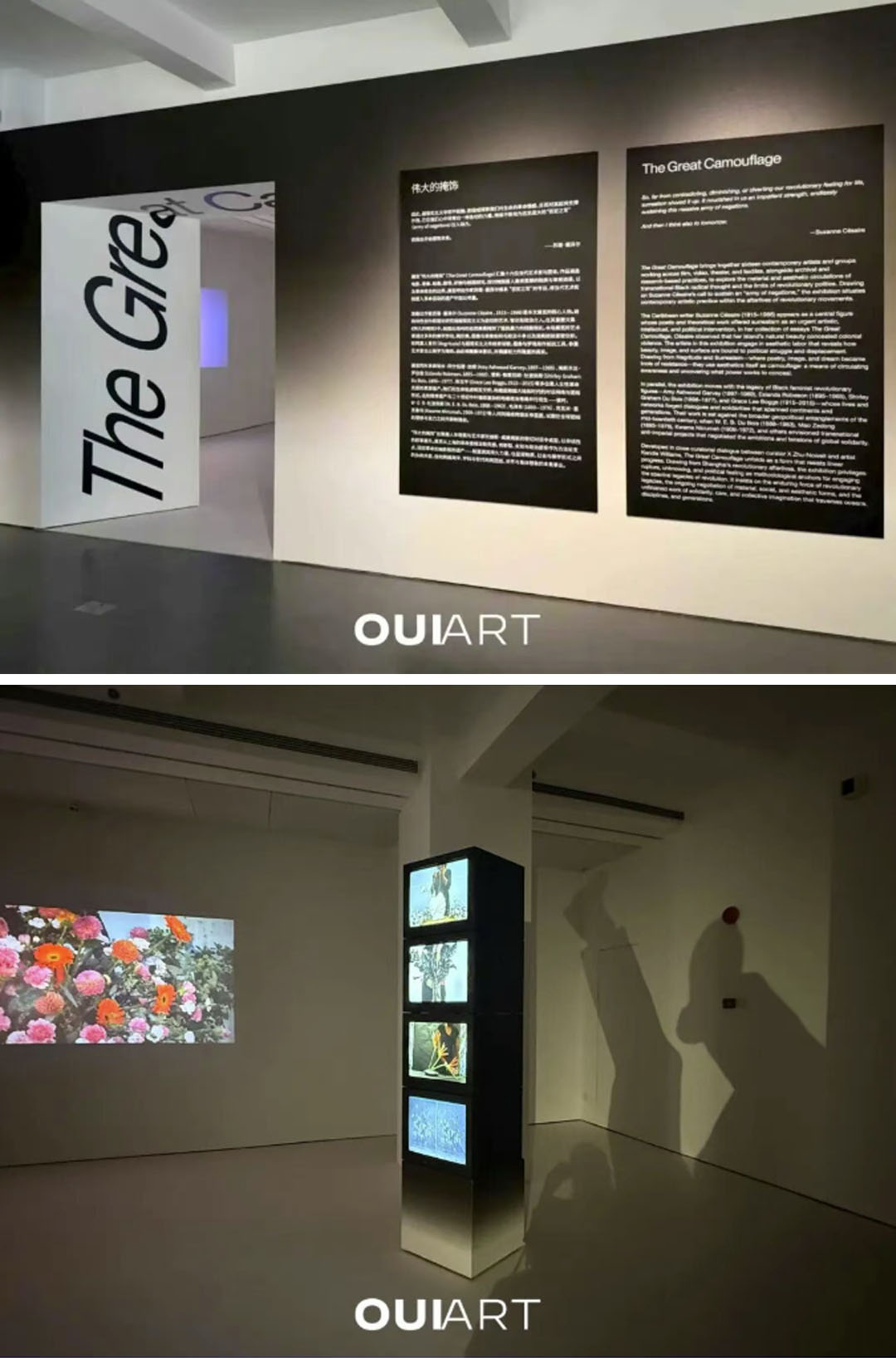
Installation view, The Great Camouflage, Rockbund Art Museum, Shanghai, 2026. © Rockbund Art Museum, Shanghai. Photo: Tiffany Liu
II. Polyphonic Specters
Between colonial archives and theatrical fictions, histories of hybridity and postcolonial identity resurface as entangled echoes.
Ascending to the second floor, the exhibition’s interrogation of “camouflage” shifts from the external reconstruction of historical fragments to an allegorical exploration of individual conditions and contemporary identities.
The fluid transitional space at the gallery entrance is bathed in an ambiguous crimson glow. Yet the archival footage playing on the screen—"Mother, Métis, Memory” (2019–2022) by Vietnamese artist Tuấn Andrew Nguyễn—cuts through the haze like a blade. The work summons a haunted history rooted in the Vietnam War, when Senegalese Tirailleurs conscripted by French colonial forces committed acts of violence against Vietnamese women. The film unfolds complex entanglements of victimhood and complicity, fractured identities of “mixed-race” descendants, and the trauma of transnational memory.
Inside the gallery, a constellation of theatrical installations reconstructs a memory-scape from the era of British colonialism: a wooden round table draped in aged cloth sits atop a Persian rug, scattered with cigars, tobacco, faux books, and paper props. Two diagonal white lines divide the darkened floor into three zones—one labeled “Clive’s Living Room”, the other “Rehearsal Room”, suspended between truth and fiction. Seating occupies the destabilized center, flanked by intermittently illuminated screens.
Onyeka Igwe's (b. 1986) two-channel video work “A Radical Duet” (2023), and the installation of props and set pieces it subsequently gave rise to, “Notes on the Production of Props and Sets” (2024), reimagine a "site of confrontation" among a group of international intellectuals, artists, and activists gathered at a revolutionary base in London during the closing period of a twentieth-century war — staged around a white male playwright, "Clive." Within this reimagining, fictional characters — the Nigerian socialist, Christian, trade-union leader, women's-rights activist, a mother by the name Adura Falade, and the Jamaican student, dancer, actress, and playwright Sylvie St. Hill — reconstruct the postcolonial world as people once imagined and understood it, through a performance that blurs into indistinguishability from reality, moving between fictional historical plot and genuine present-day reflection.
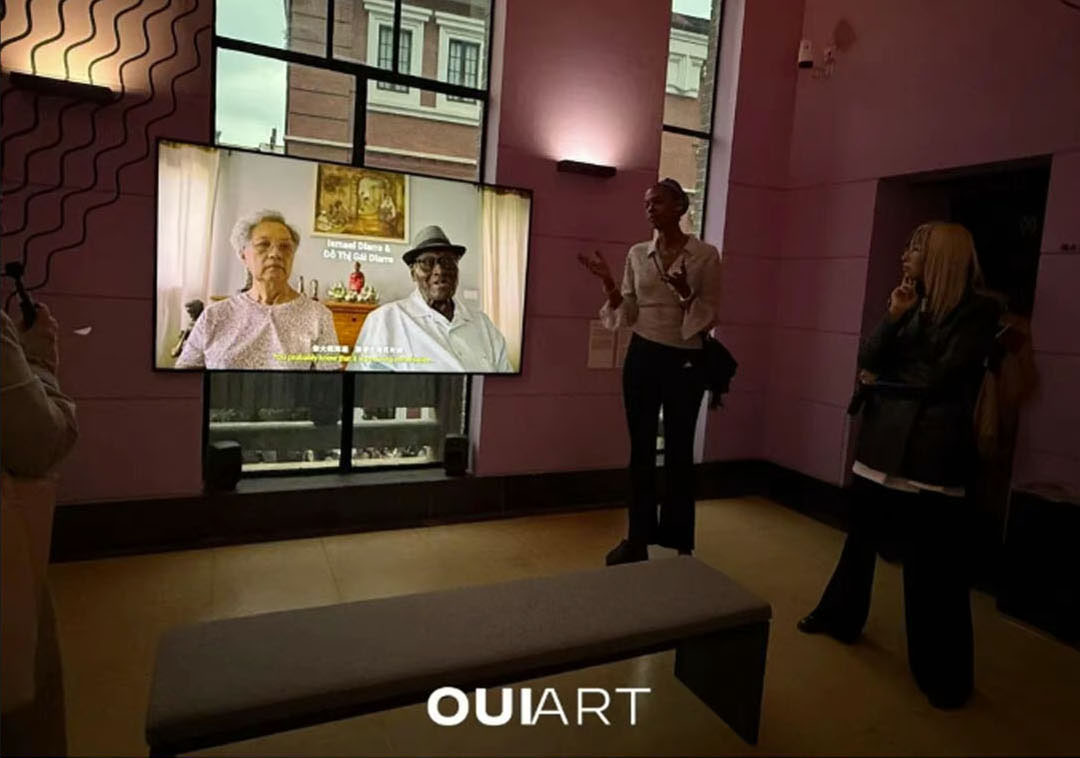
Installation view, The Great Camouflage, Rockbund Art Museum, Shanghai, 2026. © Rockbund Art Museum, Shanghai. Photo: Tiffany Liu
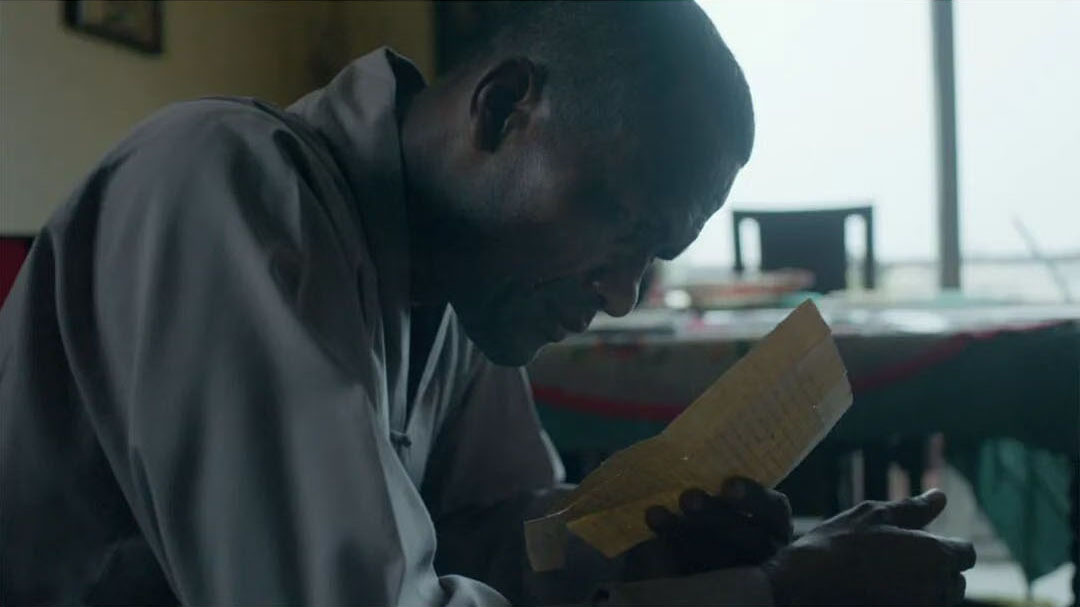
Tuấn Andrew Nguyễn, Mother, Métis, Memory, 2019–2022, color video, with sound, 29min., 30 sec. © Tuấn Andrew Nguyễn. Image courtesy of the artist and James Cohan Gallery, New York.
Interwoven into this theatrical constellation is Wang Tuo’s “Distorting Words” (2019), the second chapter of his “The Northeast Tetralogy”. The triptych screen installation runs parallel to “Clive’s Living Room”, forming a reciprocal backbone. Its semantic structure hinges on two “righteous cases” separated by a century, exposing the violence inherent in collective judgment and the act of naming guilt. A calm male voice in Taizhou dialect evokes, through imaginative reconstruction, the suicide of a disgraced scholar—an account resonant with the demonization of medieval witches. This is followed by a layered depiction of the contemporary “Zhang Koukou incident,” framed through a rock band’s trance-like rehearsal before an act of revenge. The cycle closes in silence, returning to its opening cadence.
III. Subterranean Currents
From street graffiti to transoceanic textiles, grassroots forces and collective trauma surface through practices of solidarity and self-organization.
How might one excavate, touch, and articulate fragments buried beneath dominant historical narratives?
On the fourth floor, the exhibition offers a series of community-based responses. One of which comes from “44 Monthly”, a Guangzhou-based collective writing group whose practices span text, space, murals, installation, video, performance, and publishing, with an ever-shifting membership. Their commissioned installation “Viparyāsa Station” (2025) transforms the double-height, naturally lit atrium into a chaotic, provisional street scene reminiscent of communities in South China or North Africa. Through concrete grates, awnings, and expansive graffiti, the exhibition disguises itself as a kaleidoscopic psychic refuge, internalizing pain and pleasure alike as unfinished encounters and acts of trauma repair—assembling a form of solidarity that cuts across time and experience.
In “The Great Camouflage”, histories of geopolitical colonialism diffuse across the discursive terrain we inhabit, unfolding in configurations that are at once parallel and antagonistic. Provisional affinities, narratives, and actions—formed in situ—operate as a set of alternative methodologies, allowing viewers, through an embodied movement akin to searching for blossoms in the fog, to recompose their own paths. In this process, consciousness gives rise to new sensory faculties, enabling a renewed seeing and hearing of reawakened images and sounds. At the same time, the exhibition sharpens a critical vigilance: why has collective consciousness lain dormant for so long, and why does the act of awakening and rethinking appear so urgent—here and now?
Across the interlinked fourth- and sixth-floor mezzanine space, Bhenji Ra’s three-channel video “Trade Routes” (2023) enters into an informal dialogue with Eric N. Mack’s monumental textile assemblage suspended above. Mack’s work stitches together Kente cloth—handwoven and dyed textiles associated with Ghanaian ritual traditions of the 1940s—with locally sourced fabrics collected from Shanghai flea markets and Chongming Island. The assemblage vividly echoes Lisa Lowe’s argument in “The Intimacies of Four Continents” (2015), foregrounding the entanglement of craft, labor, and cultural exchange within postcolonial global trade networks.
At the far end of the fourth floor, Hao Jingban’s dual-channel installation “Opus One” (2020) introduces a critical tension. The film follows a Beijing couple, Suzy and KC, as they meticulously rehearse swing dance routines of legendary dancers. Their imitative bodily inscriptions—rigid, disjointed, and awkward—render this grassroots Black dance form strangely estranged. Viewers are drawn into a process of self-interrogation, where only through experiencing both affirmation and negation does dialectical reflection become possible.
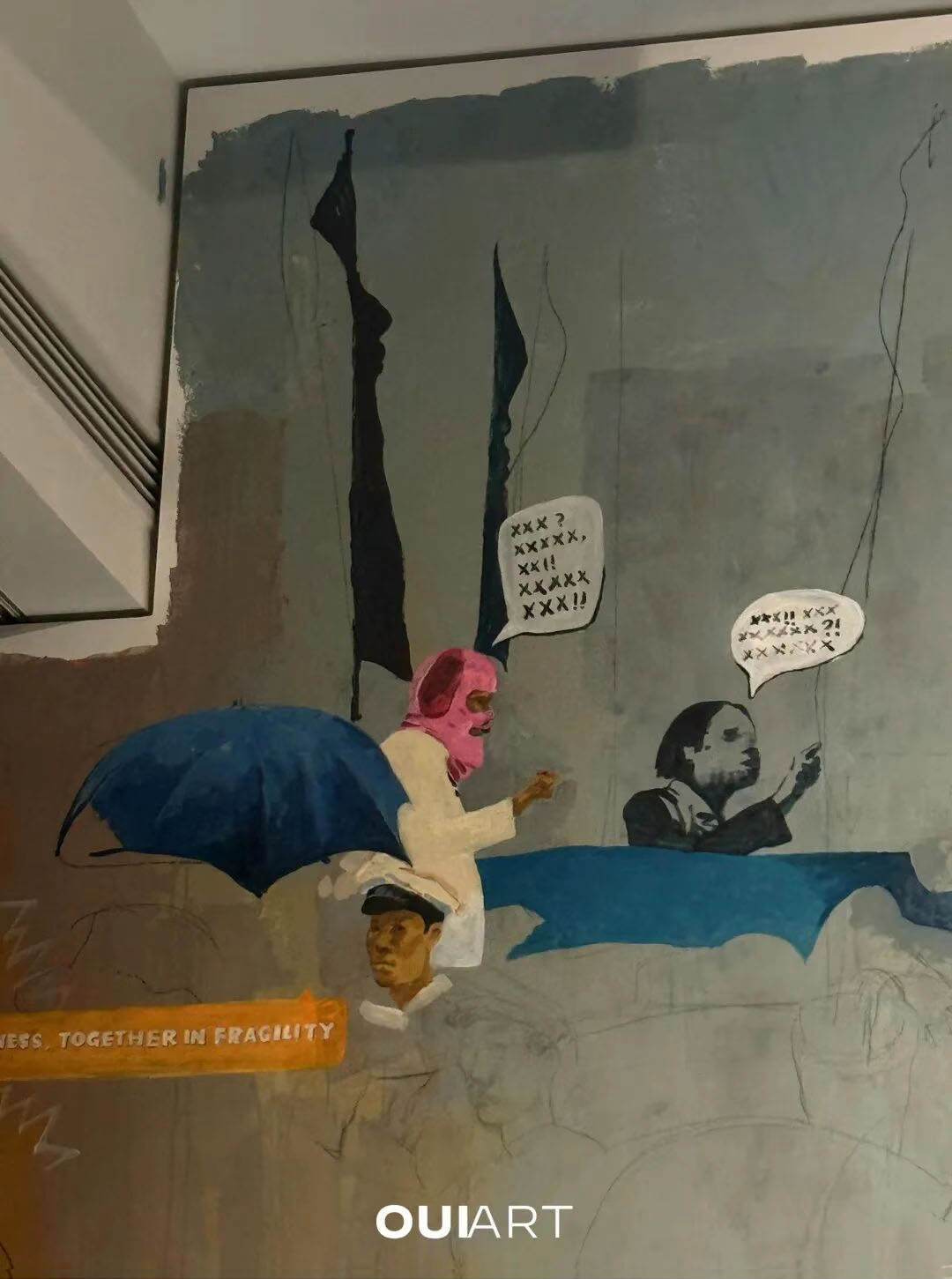
Installation view, The Great Camouflage, Rockbund Art Museum, Shanghai, 2026. © Rockbund Art Museum, Shanghai. Photo: Tiffany Liu
IV. Awakening in the Mist
Through a circular archive, the exhibition constructs a theater of awakening, calling upon viewers to think actively within fractured temporalities.
Much as local audiences are familiar with the literary technique of qi-cheng-zhuan-he ("introduction, elaboration, turn, conclusion") celebrated within their own context, the four chapters of " The Great Camouflage" follow almost the same narrative strategy; and so by the time we finally arrive at the fifth-floor space, we have already folded ourselves into this dynamic theater.
As the final chapter, the fifth-floor gallery foregrounds individual agency across disparate historical scripts. In the face of rupture, uncertainty, and involuntary collective trance, the exhibition assembles revolutionary ideas and practices across eras and geographies—urging viewers to awaken from the fog, to remain in motion rather than stagnation.
The commissioned print work in the fifth-floor gallery, Cassandra Press's “Army of Negotiations” (2025), attempts to open a dialogue with the exhibition's core text, "The Great Concealment," and the "Army of Negotiations " it puts forward — and from that collision, to generate a force capable of pulling displaced knowledge, even culture itself, back onto its "proper track." Walking through this hollow, circular space on this floor feels much like the way many strongly curated exhibitions place a documentary index as their closing structure: here, the surrounding works also carry a heavier textual quality, and the sense of embodiment once again grows blurred and distant — including American artist Cauleen Smith's “Homegirls” (2024), and the U.S.-based Chinese artist Wang Tian's gold-leaf-pigment internet-meme labels made on found cardboard, whose light, drifting, circling gestures likewise align well with the curatorial logic of prompting viewers to think actively. And so, the instruction we're given during the visit — "no photography allowed" — that small reflex bred out of an ultra-fast screen society, comes to feel, over the course of the whole visit, redundant, even harmful.
Stepping away from The Great Camouflage and returning to the third floor, visitors transition seamlessly into Peng Zuqiang’s solo exhibition Short-term Histories. The exhibition unfolds as a triptych of filmic thresholds: beginning with the deliberately “faulty” imagery of “Déjà vu” (2023–2024), projected from a French vintage 16mm color film projector; moving through the newly commissioned “Afternoon Hearsay” (2025); and finally immersing viewers in “The Cyan Garden” (2022), a transferred video supported by frosted glass.
Amid these dense, semi-conscious monologues, I recalled that Peng Zu has recently relocated from the rain-soaked Netherlands to Paris, the historic nexus of the Nouvelle Vague. His experimental engagement with “Super 8” film manifests not only in the diversity of presentation formats but also in the institution’s deliberate maintenance of an indeterminate tone. This uncertainty allows the once-industrial medium to oscillate between object and subject—mirroring the museum’s own poised transformation within an in-between state.
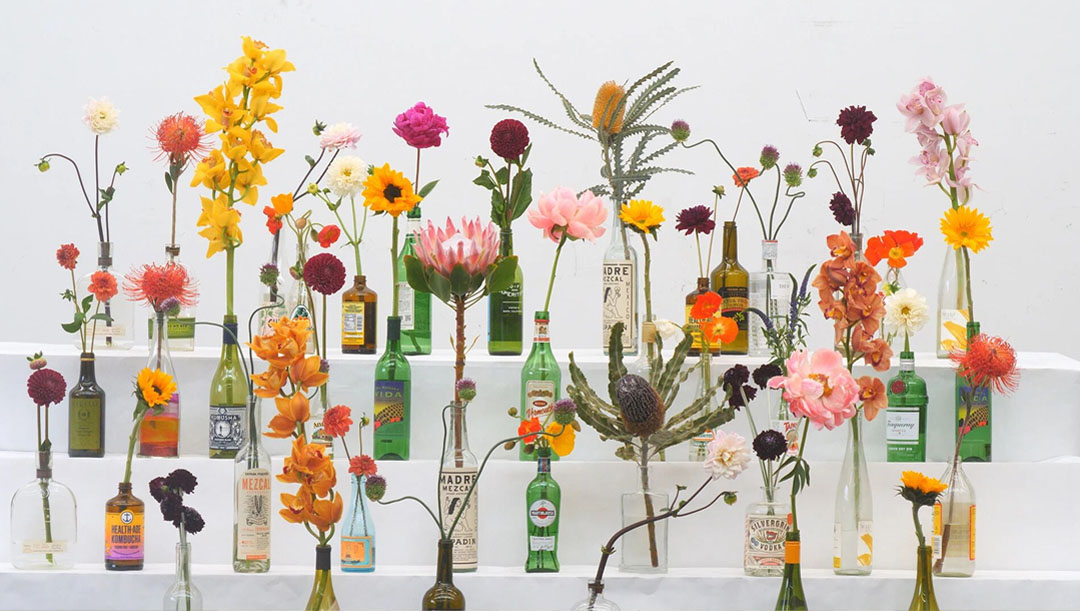
Cauleen Smith Homegirls, 2024 Color video, with sound, 17 min., 44 sec. Courtesy the artist and Morán Morán, Los Angeles
Producer: Tiffany Liu
Editor: Tiffany Liu
Designer: Nina
Image: From Rockbund Art Museum and Oui Art On site shooting



