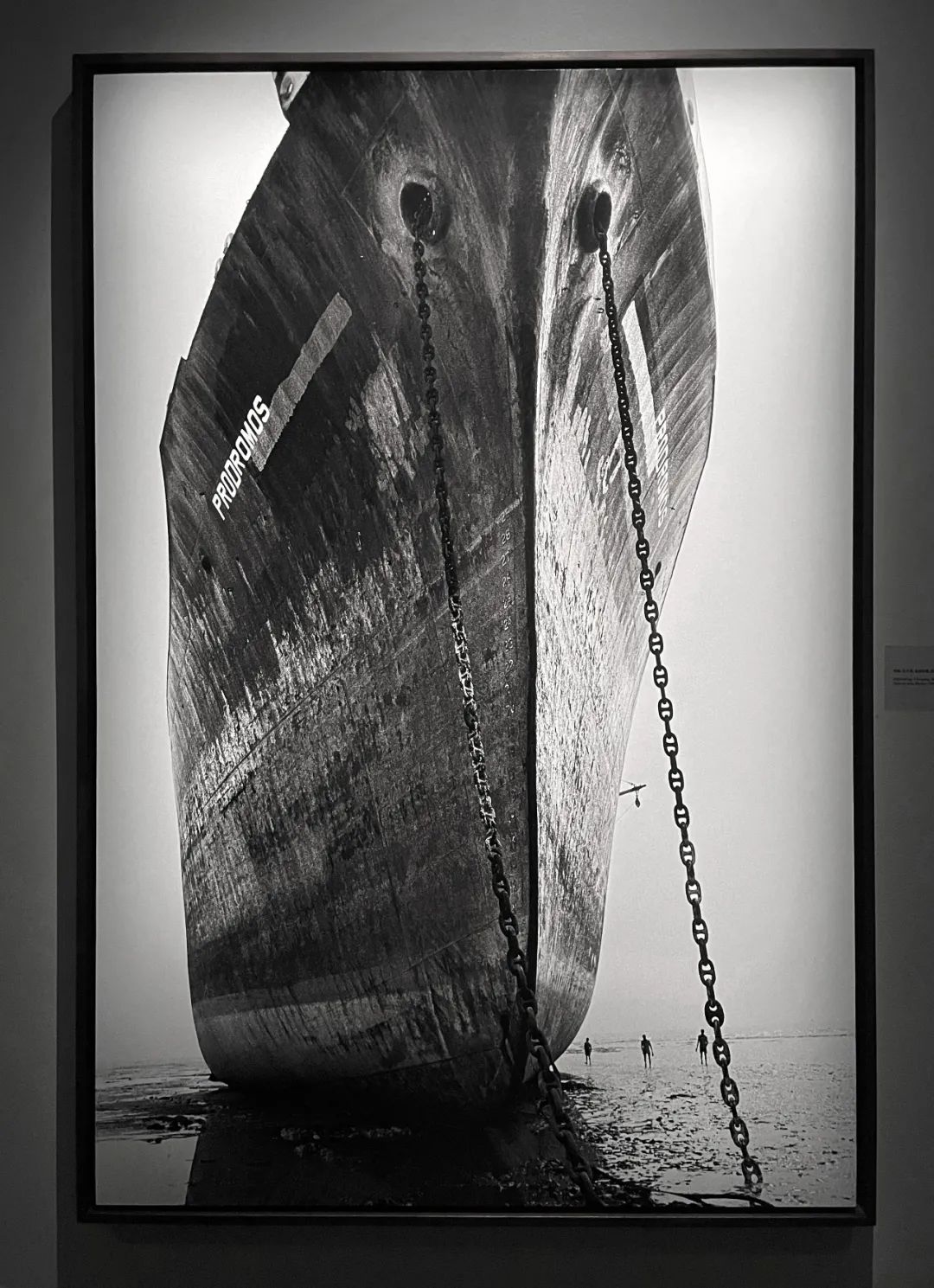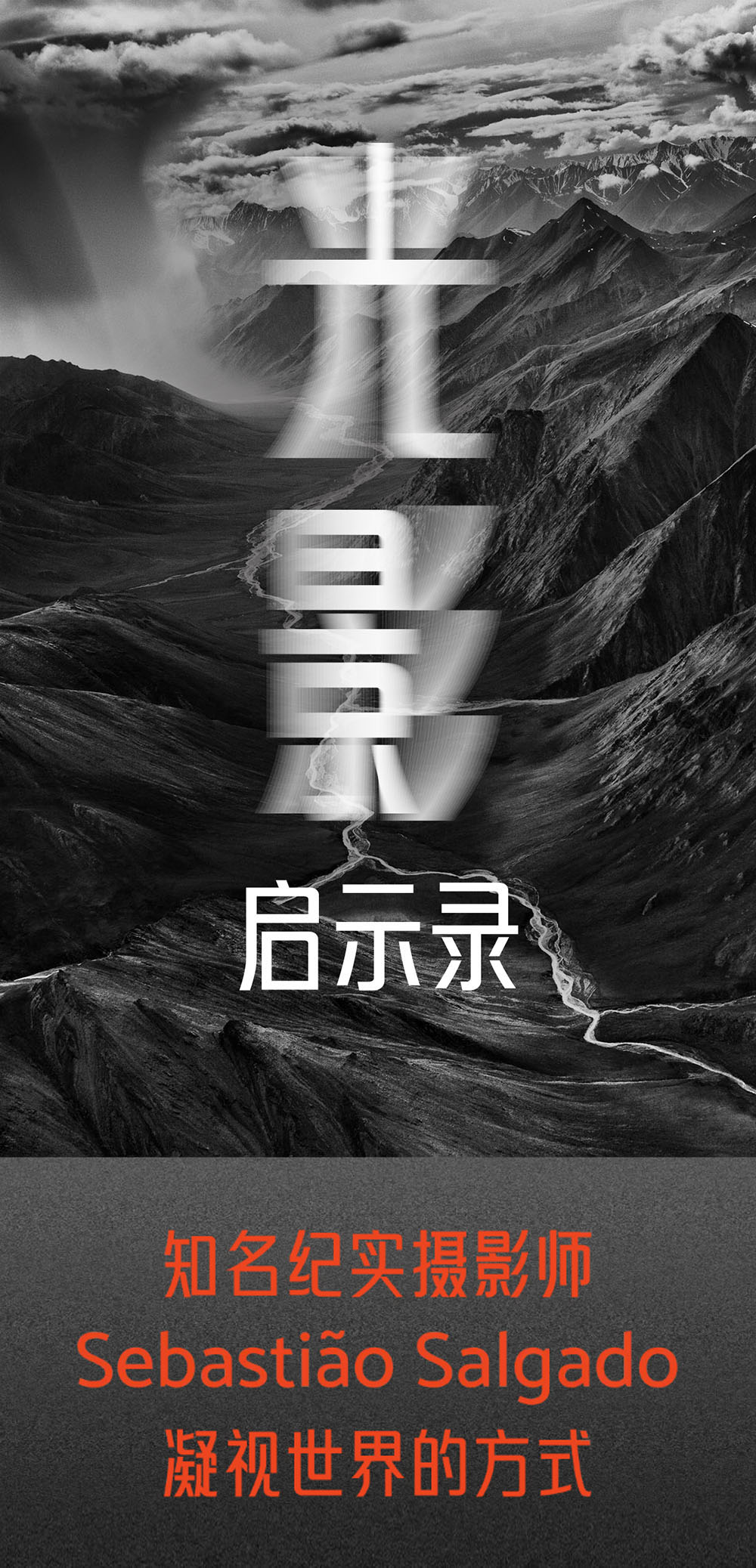
Sebastião Salgado (1944–2025) was one of the most influential documentary photographers of his time. Through his lens, he bore witness to the transformations of human society, as well as to the natural wonders still untouched by modern civilization. His photographs transcend cultural and species boundaries, conveying a profound reverence and care for life. This past May, the photographer passed away in Paris at the age of 81. Fotografiska Shanghai has since mounted the first global retrospective of his work since his death — a tribute that carries forward his humanist spirit and invites audiences to reconsider the relationship between humanity and nature.
Across his long career, Salgado produced a vast body of black-and-white images defined by a classical aesthetic. His work compels us to reexamine the conditions of our shared environment and the urgencies of humanitarian concern, reminding us that images retain the power to move us — and that in the face of that power, humanity must reflect, and act.
From Economics PhD to Globetrotting Documentary Photographer
Born on February 8, 1944, in Aimorés, Brazil, Salgado completed a master's degree in economics before travelling to France to pursue his doctorate. Arriving in Paris, then brimming with artistic energy and populated by brilliant cultural figures, he encountered the photographic philosophy of Henri Cartier-Bresson and his notion of the "decisive moment", an idea that would shape a generation of photographers. Salgado maintained a close personal relationship with Cartier-Bresson, though their approaches to the medium differed significantly: Salgado gravitated instead toward large, cohesive series that unfold like an epic narrative. His work is best experienced in groups — like a puzzle assembled from multiple vantage points, each piece reconstructing a fragment of the photographer's larger vision.
Between 1973 and 1974, Salgado worked as a freelance photographer for the Sygma agency, covering political news, but soon realized the format didn't suit his sensibility. He moved to the Gamma agency, of which he later said: "Gamma was my school of documentary photography." Over five years there, he learned how to truly "enter" a country — how to analyze, reason, and construct historical narrative, and how to build complete visual stories for magazines.
In 1979, Salgado joined Magnum Photos, where he would spend the next fifteen years, eventually serving as president of Magnum Europe. He rose to international prominence in 1981 after documenting the assassination attempt on U.S. President Ronald Reagan by John Hinckley Jr.
Before turning his lens toward human suffering and global inequality, Salgado worked for the International Coffee Organization in London, resuming a role that dovetailed with his doctoral research, which examined global coffee production and demand. It was in Paris that he first began photographing, using a camera that belonged to his wife, an architect, who had used it for her own work. With it, he documented coffee-growing regions across the world, along with plantation laborers and their working conditions. Featured in the current exhibition is his series "The Scent of a Dream," which renders the African coffee trade with a restrained, almost spare simplicity. This early body of work resonates thematically with his later series "Genesis," both threaded through with an abiding concern for the environment.
"My photography is my life, it's my way of life."
Photography shaped Salgado's entire way of living. He preferred to work alone, believing proximity to his subjects depended on it — that “only by tendering yourself as defenseless as the people you photograph, entering their world as a vulnerable stranger, will they not only tolerate but welcome your presence.”
His work spans more than 100 countries and regions: from famine-stricken populations in Ethiopia to refugees of the Rwandan genocide, from the Serra Pelada open-pit gold mine in Brazil to the oil workers battling Kuwait's blazing wellheads. Even in his seventies, he ventured deep into the rainforest to bring Indigenous communities before his camera, still pursuing the same enduring questions about the survival of civilizations. In an age shadowed by ecological crisis and cultural conflict, these images continue to radiate a profound humanistic concern.
His lens never settled for mere documentation. It interrogated the fate of humanity and gave voice to those overlooked by mainstream media. In his foreword to "Other Americas," Aperture founder Michael Hoffman wrote that it was no surprise Salgado became a great photographer; at his core, he essentially was a pacifist fighter.
Salgado's wife, Lélia, was an indispensable partner throughout his career. Not only did her camera set his photographic journey in motion, but she also edited his books and shaped the conceptual development of every project he undertook. In 1994, the two of them founded Amazonas Images together, dedicating themselves to large-scale, long-term photographic projects.
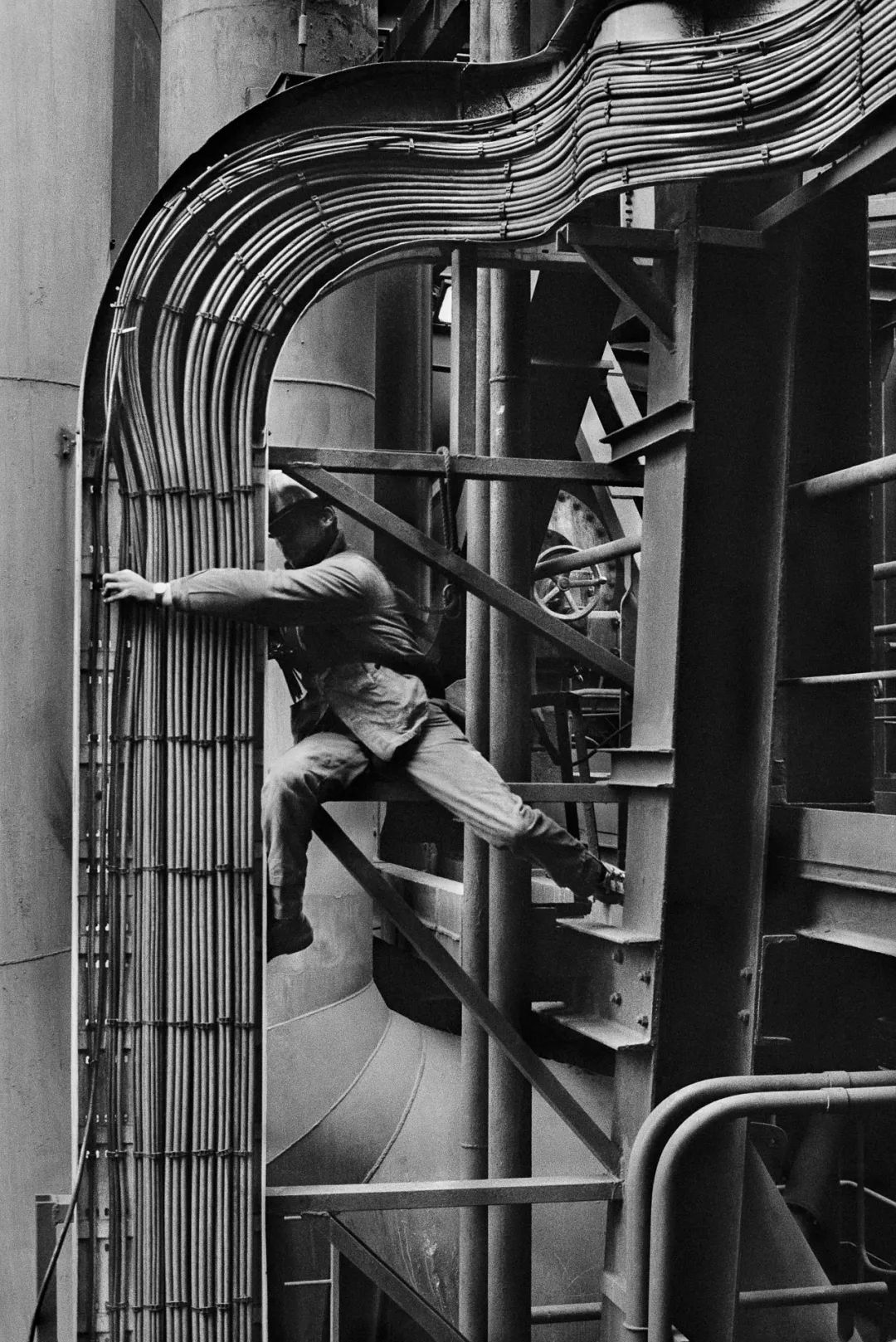
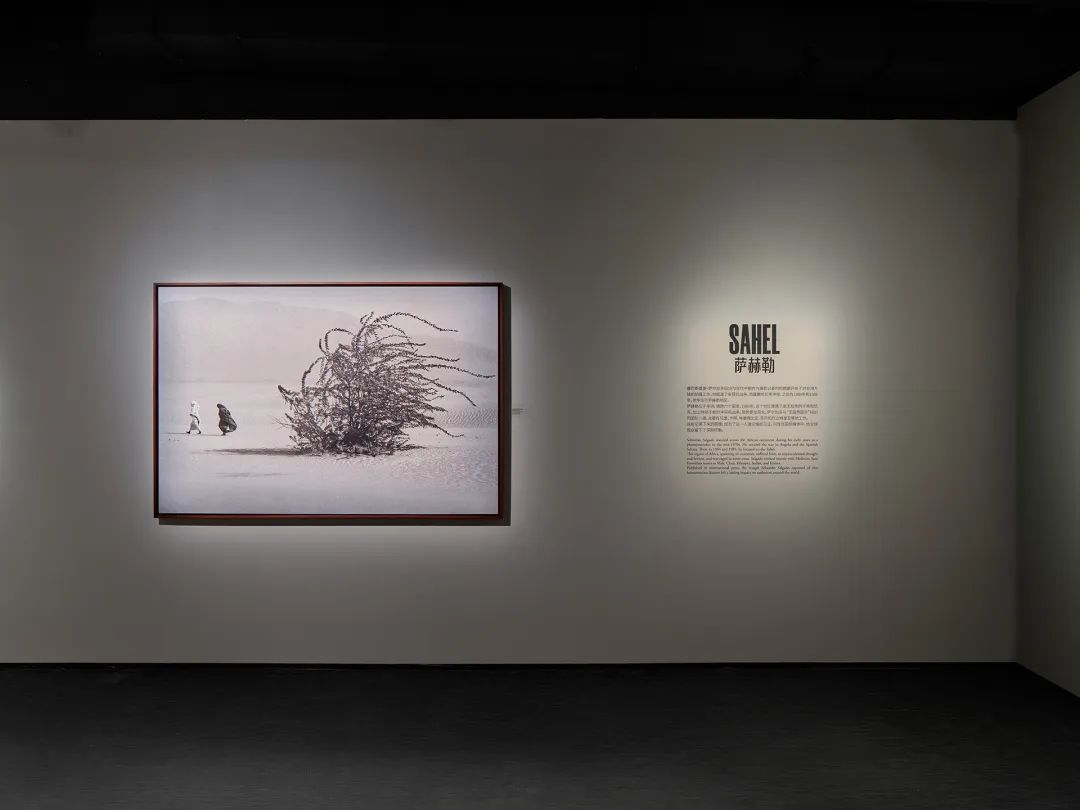
Series such as "Other Americas," "Sahel," "Workers," and "Exodus" carried Salgado into some of the most devastated regions on Earth. He witnessed mass suffering wrought by armed conflict, genocide, and environmental catastrophe, as rural populations fled into cities in the millions — displacement that so often ended in death, war, and famine. These experiences shook his faith in humanity's future and left him with severe psychological and physical trauma, bringing his creative work to a temporary halt.
"Genesis": Rediscovering the Grandeur and Vastness of the Planet
When Salgado's elderly parents called him back to the family farm in Brazil, he was confronted with a childhood paradise reduced to barrenness — the once-lush forest had vanished entirely. The devastation moved him profoundly. In response, this activist-photographer and his wife launched an ecological restoration project in 1998, pouring their life savings into rebuilding the ecosystem and founding the environmental organization Instituto Terra.
Through their tireless efforts, greenery slowly returned to the land. The experience of restoration also turned Salgado's lens toward the planet's remaining wild places. Although human presence now spans the globe, some 46% of the Earth's surface remains relatively untouched. Over the eight years he spent photographing "Genesis," Salgado traveled to some of the world's most remote regions, spending nearly eight months of each year in the field.
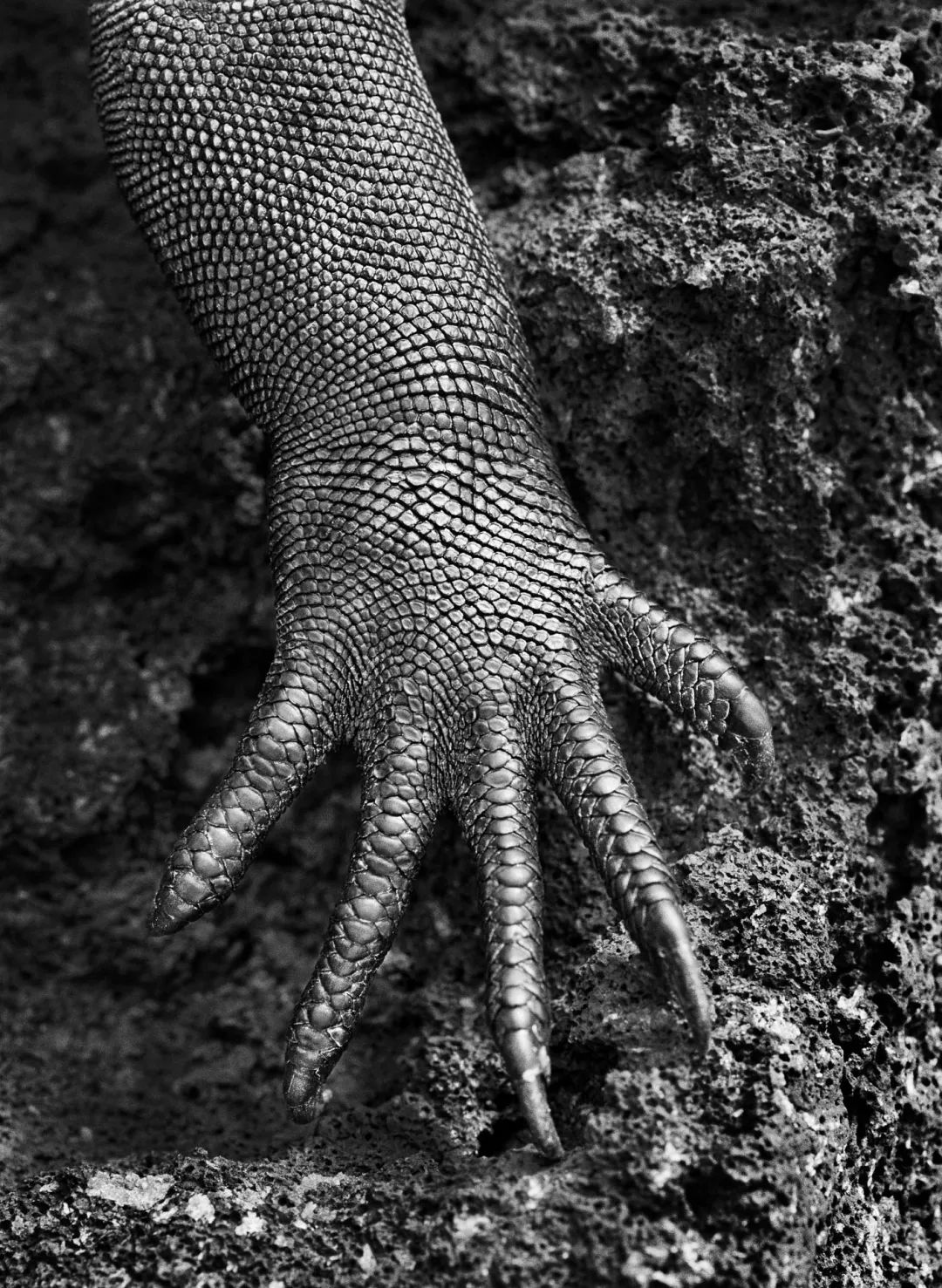
The vastness of the Earth became the most powerful balm for his emotional wounds. He trekked through Siberia in temperatures of minus 45°C, accompanied Indigenous Nenets herders as they drove reindeer across the tundra, and photographed marine iguanas in the Galápagos, a creature Darwin once described in unflattering terms. “Every movement in the arm of the iguana is the same as we have in our arm – I identify with the iguana as my cousin. All of us came from the same cells. In a moment, it was possible to be an iguana and the iguana to be me.”
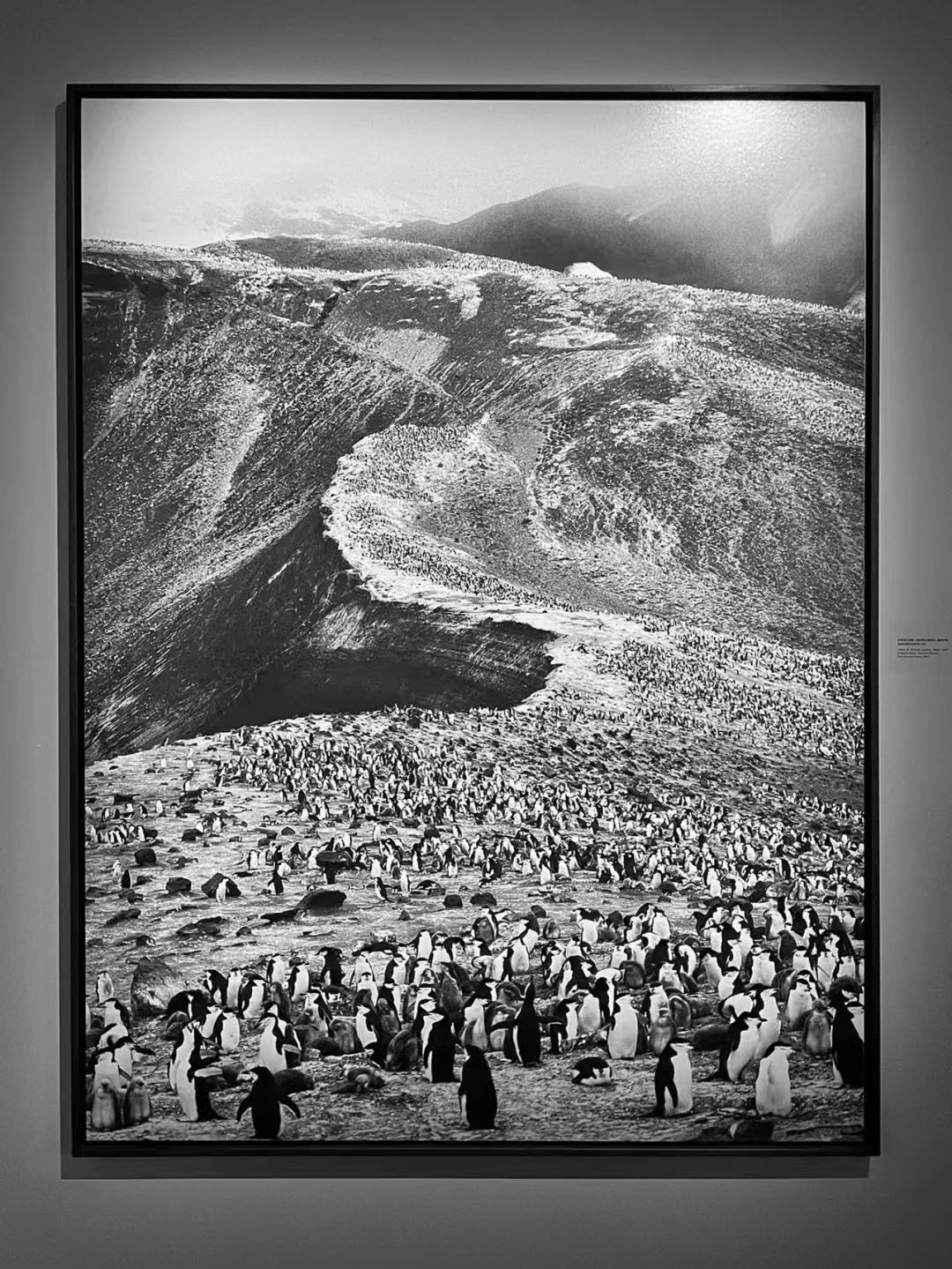
From the tail of a southern right whale off Argentina's Atlantic coast, to the lightning-fractured canyons of the Brooks Range in the Arctic National Wildlife Refuge, to penguin colonies packed dense upon glacial ice — his black-and-white images reconstruct the raw beauty of landscapes untouched by human hands. Wild animals living free of human disturbance, alongside Indigenous communities upholding centuries-old traditions, together pose an enduring question: how might humanity learn to coexist with nature?
Meanwhile, Instituto Terra has planted over three million trees across two decades. Biodiversity has returned at scale: jaguars, once locally extinct, have come back; soil that once gave way to destructive landslides now absorbs floodwaters; clear streams run year-round through the revived landscape.
Today, Instituto Terra forms part of UNESCO's Atlantic Forest Biosphere Reserve. In September 2022, Sotheby's New York hosted "Sebastião Salgado: Genesis," a major exhibition mounted to raise funds for the project — the largest photography solo exhibition in Sotheby's history, with all proceeds donated to the nonprofit.
Black-and-White Aesthetics: Finding Essence in Grayscale
Salgado was not born into the era of black-and-white photography. Early in his career, working for photo agencies, he shot in color as a matter of course. His eventual commitment to monochrome was a deliberate choice, made even as new photographic technologies emerged: by stripping away the "noise" of color, he could concentrate on composition and structure, and his portraits took on a solemn, almost classical dignity.
Across the decades — from his first camera through the successive technological shifts from film to digital — photography as a medium underwent repeated transformation. Yet Salgado remained steadfastly devoted to monochrome. As he saw it, color created blind spots: the reds and blues that had once captivated him in the darkroom eventually became distractions from the image's underlying technical and formal discipline. When he turned his attention instead to the gradations of black, white, and gray, he felt he had arrived closer to photography's essential nature:
"Of course, black and white is an abstraction, but it's one that allows you to concentrate only on your point of interest — the personality, the movement of the person, not the shirt they are wearing."
For Salgado, only black and white could reveal the true nature of the world; only pure grayscale could properly honor the dignity of Earth's living beings. In his landscape work, he brought an almost architectural sensitivity to light — tracking it through rain clouds, wrapping it around mountains, shaping it into form.
Even after he eventually set aside his trusted Leica for digital cameras, he continued to work meticulously in post-production, recreating in each image the distinctive grain of Kodak black-and-white film.
Life‘s Essence is a Salty Bitterness
From economics to documentary photography, Salgado's artistic journey may appear to have hinged on chance, yet it also carries a deeper inevitability — a lifelong attentiveness to the bittersweet nature of existence itself. Seen in retrospect, economics and documentary photography are, at their core, both forms of social inquiry. Salgado never approached photography from a position of detachment. Confronted with accusations that he aestheticized suffering, he rejected the notion that compassion must be diluted into moral discomfort, arguing, "Those in the wealthy North feel guilt when they look at images of suffering. Those of us from the South, who have lived that suffering, do not. My critics cannot know what I have witnessed. I look upon my subjects with respect, not judgment."
The final image in the retrospective depicts two Mixtec Indigenous people standing one behind the other, arms outstretched to form a cruciform shape as they pray to the earth and the goddess of harvest. The exhibition text frames its intention plainly: having witnessed humanity's dual capacity for destruction and resilience, the work arrives not at despair but at gratitude — not at exploitation but at coexistence.
When German filmmaker Wim Wenders spent long hours in his office gazing at Salgado's photographs, one question kept returning to him: why did these images speak so directly to the soul? That question ultimately gave rise to the Oscar-nominated documentary "The Salt of the Earth," a nominee for Best Documentary Feature at the 87th Academy Awards.
The film was co-directed by Wenders and Salgado's son, Juliano Ribeiro Salgado. The younger Salgado built a darkroom-like setting and used dual cameras to capture his father's reflections as he confronted his own body of work. Spanning decades of Salgado's career, the documentary centers on his decision to step away from photography after witnessing the Rwandan genocide and explores enduring questions of destruction and rebirth, despair and hope, and how humanity might yet inhabit the Earth.
The title "The Salt of the Earth" plays on the meaning of "Salgado" — Portuguese for "salted" or "salty" — a name chosen by his son and Wenders to suggest that life itself carries a subtle, saline bitterness.
Salgado leaves behind a vital archive for twenty-first-century documentary photography, one that continues to shape thinking around photojournalism and social conscience. As he once said, echoing Roland Barthes, photography — more than film or television — stands as the collective memory of the world; it renders moments immortal, transforming them into symbols and points of reference; it is a universal language requiring no translation, its collective memory a mirror in which society perpetually examines itself.


Producer: Tiffany Liu
Editor: Tiffany Liu
Designer: Nina
Image: From Fotografiska Shanghai and Oui Art On site shooting