Finished and Unfinished
One work concludes.
Another remains in motion.
Completion marks the present.
Incompletion points forward.
Nine artists pause
between what is and what is becoming —
sharing finished works,
and the breath of those still unfolding.

FINISHED
This year, I finally completed "After 'A Kiss After Drink,'" presented in the Discovery Award section of Jimei x Arles as a multi-channel moving-image installation. The project unfolds across two interconnected narratives: "A Kiss After Drink" and "After."
"A Kiss After Drink" adapts Ling Shuhua's short story of the same title, first published in 1925. Shot on color 16mm film at the former wartime relocation site of Wuhan University — Longshen Temple and Leshan Confucian Temple — the work takes final form in the exhibition as seventeen backlit photographic lightboxes, paired with a film-within-a-film moving-image component.
"After" comprises a three-channel 4K color video installation alongside a triptych of still photographs. It follows a married couple attending a performance of "Drinking," unfolding into a layered, recursive narrative structure. Presented across dual screens, the work traces two divergent narrative paths that never quite converge.
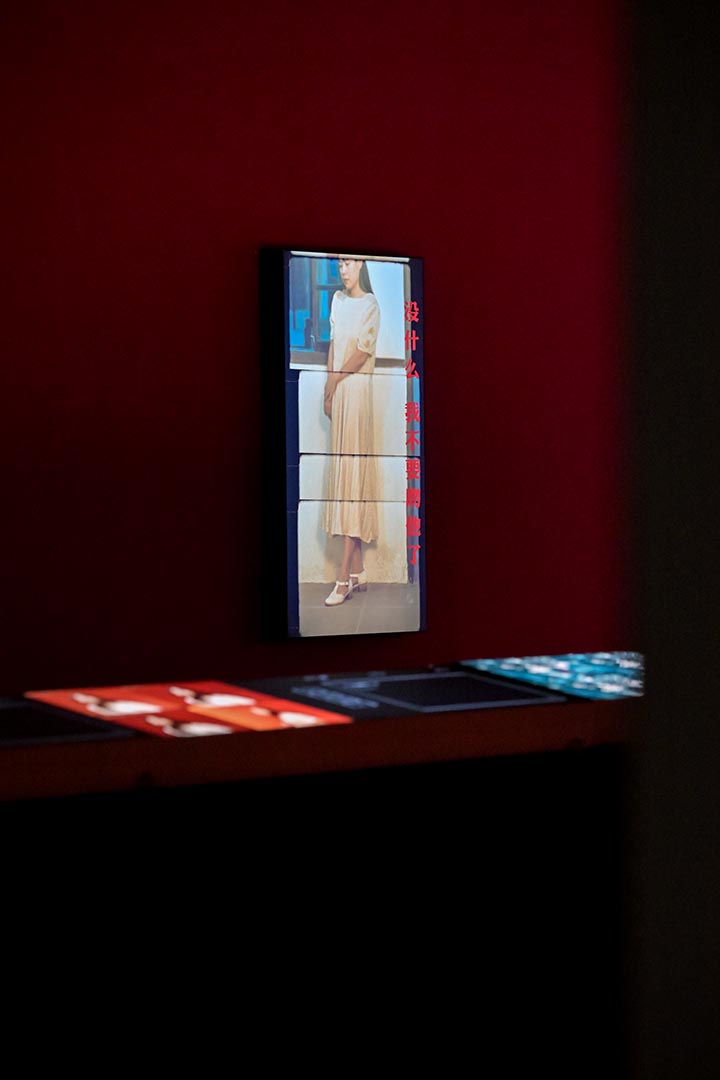
After “Drinking”, Cao Mengqin
UNFINISHED
I am currently developing the second installment of the love trilogy following "After 'A Kiss After Drink,'". The project is now in the early stages of location scouting and script development.
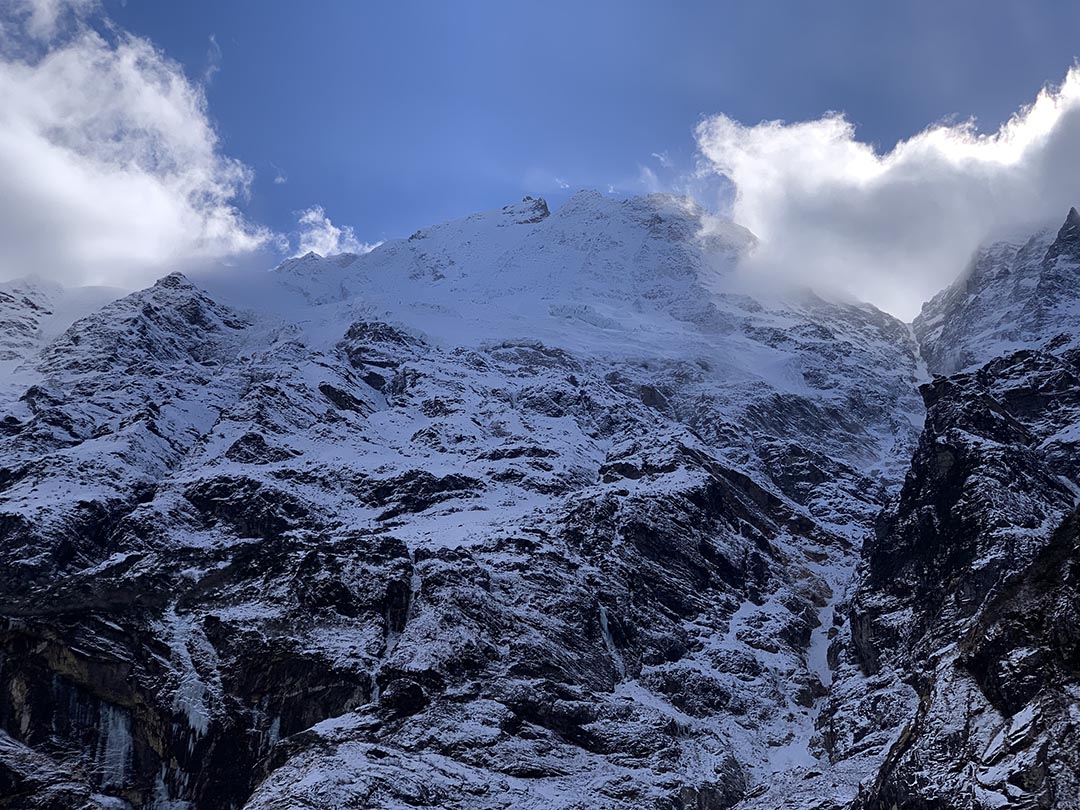
The story revolves around an uncertain relationship between two university students — one Tibetan and one Yi — and unfolds alongside four poems. The film is expected to be shot in the Ganzi region, where Tibetan and Yi communities have long coexisted.
HOW DO YOU CELEBRATE CHINESE NEW YEAR?
As it happens, I was born on Chinese New Year's Eve, so the New Year also marks my birthday. I usually stay in Shanghai for the holiday.
Most years, we either gather at the old family house on Huaihai Fang for the reunion dinner, or relatives and friends come to my studio to celebrate together. Beyond New Year's Eve dinner itself, my daily life stays much the same — work still comes first.

FINISHED
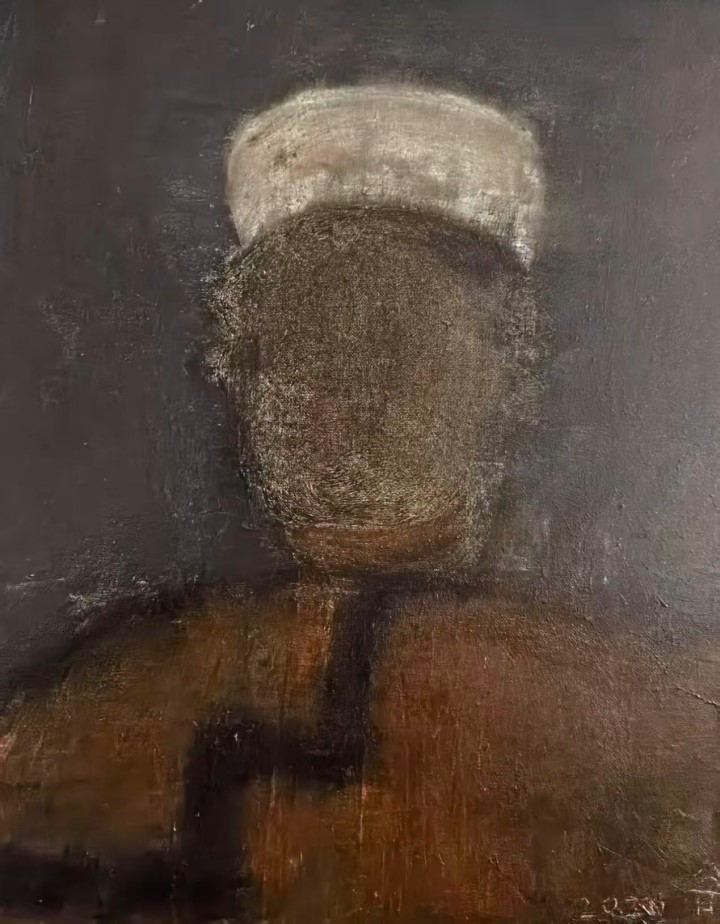
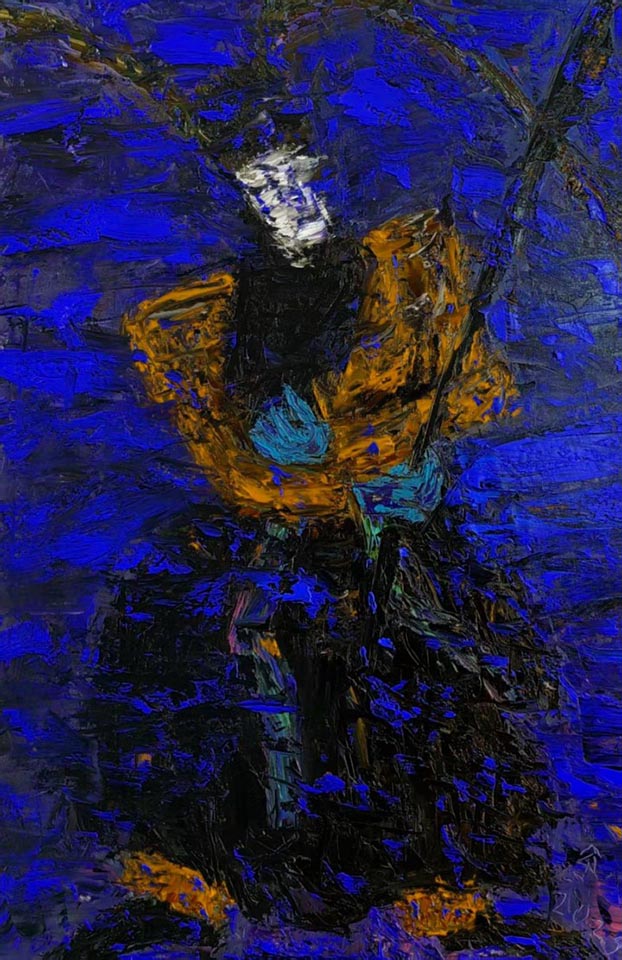
The elderly women of Tunpu, faces obscure, carried the weight of history within them; the whole is steeped in a tonality of blue, evoking a distant, mysterious presence.
UNFINISHED
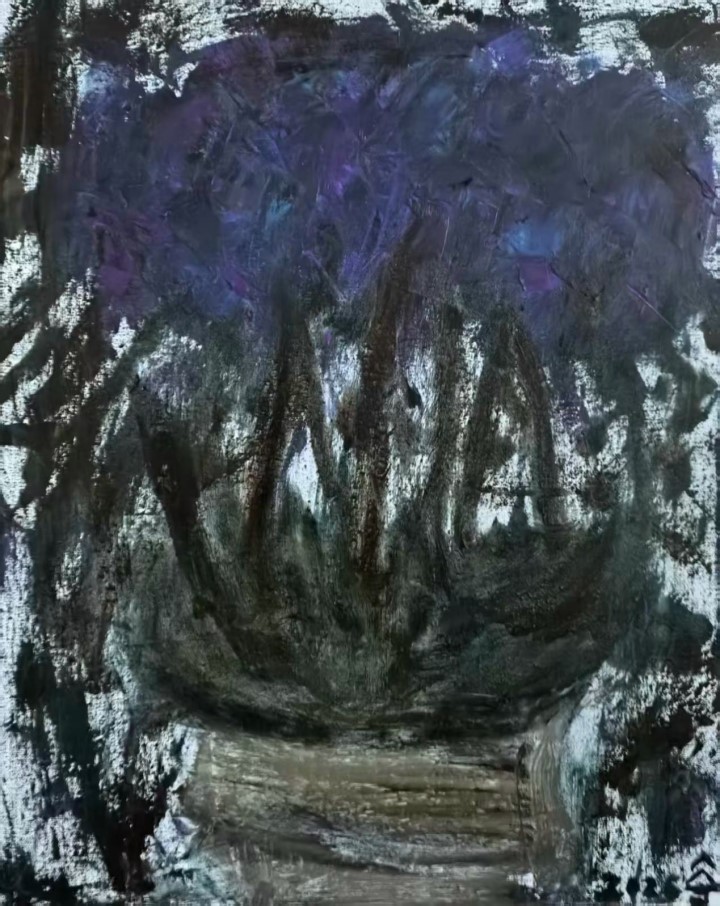
A shift in course, a new identity assumed — and with it, a self-expression looser, more at ease. The phalaenopsis crowds the frame, caught somewhere between finished and unfinished, its wildness refusing to be tamed.
HOW DO YOU CELEBRATE CHINESE NEW YEAR?
During the Spring Festival, I went back to Tunpu to watch Dixi opera. In a ritual society that is slowly disappearing, I came to feel that once the gongs and drums sound, the New Year in the mountains finally finds its soul. Behind the masks, eyes and brows carry stories that never age; there's no need to force an understanding of the form or its rules — simply take in the warmth and clamor of it all, and the heart settles into stillness on its own.

FINISHED
"A Brief History of Time" is currently on view at the Chengdu Biennale. The work borrows Hawking's title, along with a few of his simpler propositions about time — chiefly, that time has a clear directionality, an arrow pointing from past into future. Even in total darkness, absent all light, time still exists, and its direction holds. Under the pull of larger social gravitational fields, or for reasons particular to any one life, the speed at which time passes can shift; both societal black holes and personal ones can slow its flow to a crawl, even to a standstill — and yet time keeps moving forward, never to return. As Bei Dao writes in his poem "The Rose of Time":
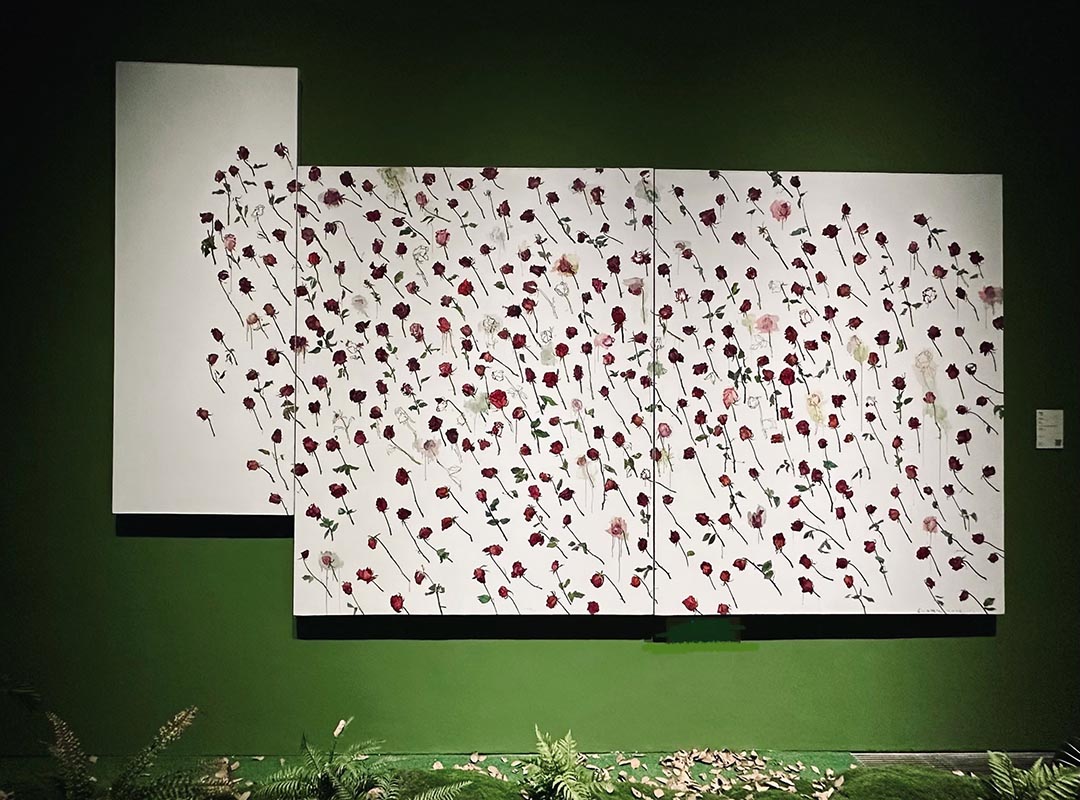
A Brief History of Time, Luo Min
“ When the gate guard sinks into sleep
You turn back together with the storm
That which ages in the embrace is
The rose of time
When the birds’ routes demarcate the sky
You look backward at the sunset
That which appears in the disappearance is
The rose of time
…
It is always this moment in the mirror
This moment leads toward the gate of rebirth
And the gate opens toward seas
The roses of time”
UNFINISHED
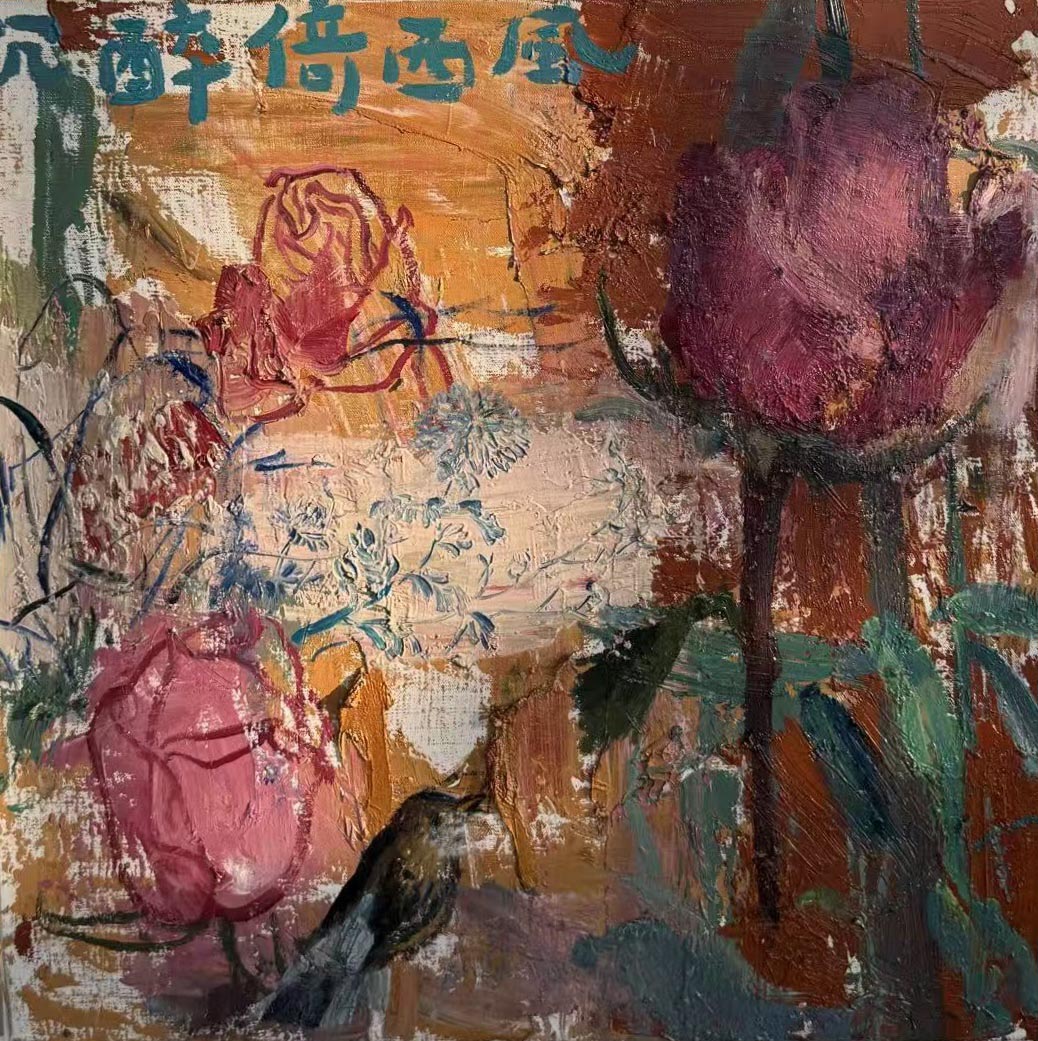
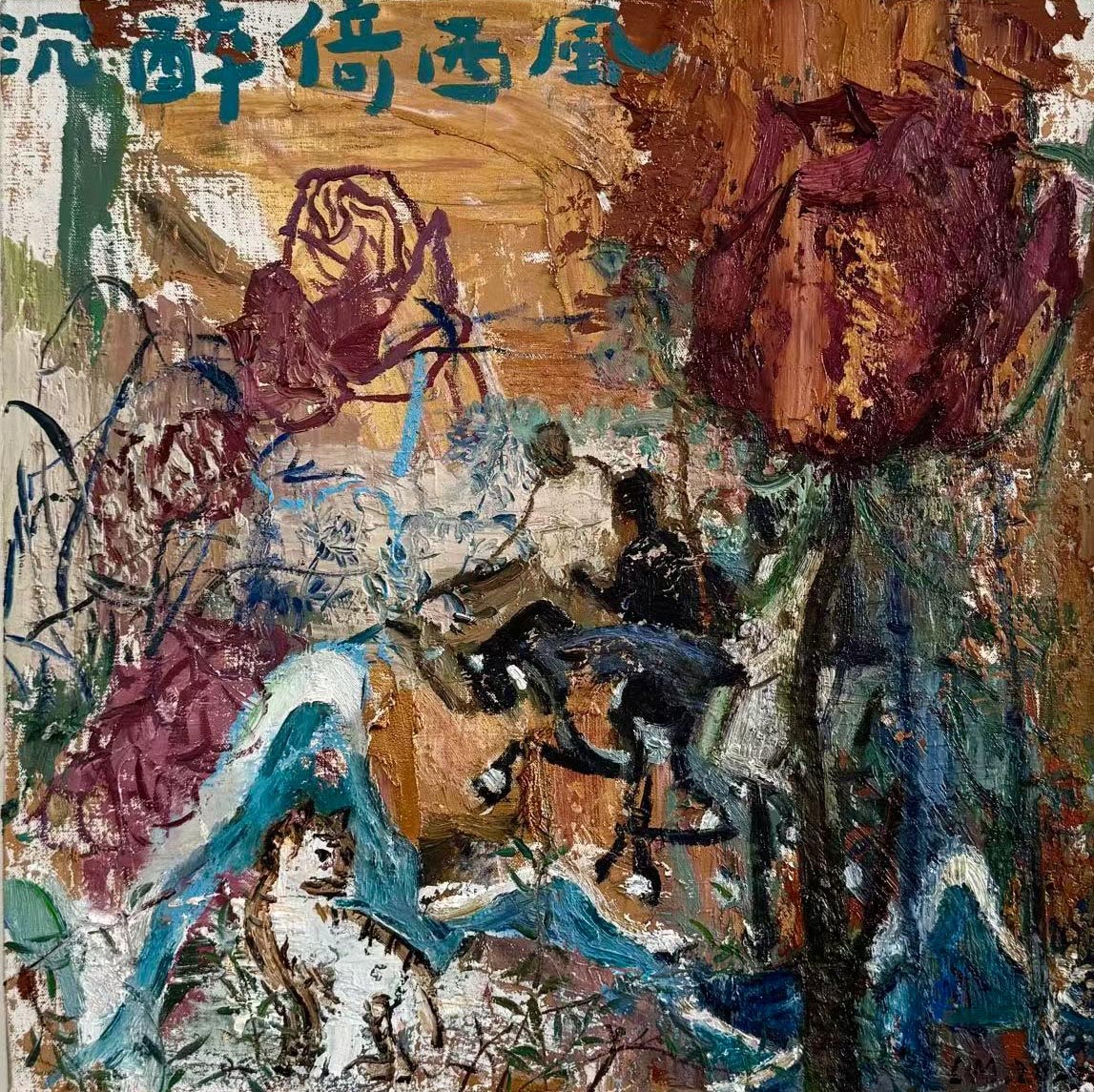
This is a small painting — I'd taken it this far before setting it aside.
A year later, I picked it back up and painted it to where it is now. I don't know if I'll keep going with it. As long as it stays on the studio wall, it's still open to being reworked.
HOW DO YOU CELEBRATE CHINESE NEW YEAR?
Come New Year, I always put together a proper reunion dinner. But even outside the holidays, as long as I'm not away for work, cooking every day is something I complain about, and yet can't help doing. Because, well, I happen to be quite good at it.

FINISHED
This first painting stems from the memory of a particular scene, more than a decade old — though I never began working on it at the time. Last year, after completing "The Green Hole" and "Archaeology" series, that memory resurfaced.
As the work gradually took shape, it stayed with me through most of 2025. Time flows, and so does consciousness; painting, perhaps, is simply an attempt to grasp something certain within that flow. Amid the tension between flux and fixity, there were moments of elation and moments of falling into a low ebb. Perhaps because the elephant is regarded as an auspicious symbol, what I felt most intensely in making this work was a sense of boundless imagination and unexpected delight.
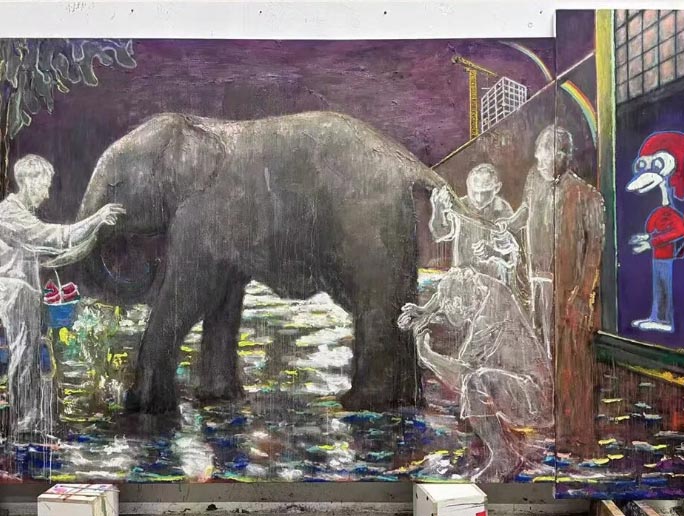
Elephant, Rainbow (Detail), Luo Quanmu, 2025, Oil on canvas
UNFINISHED
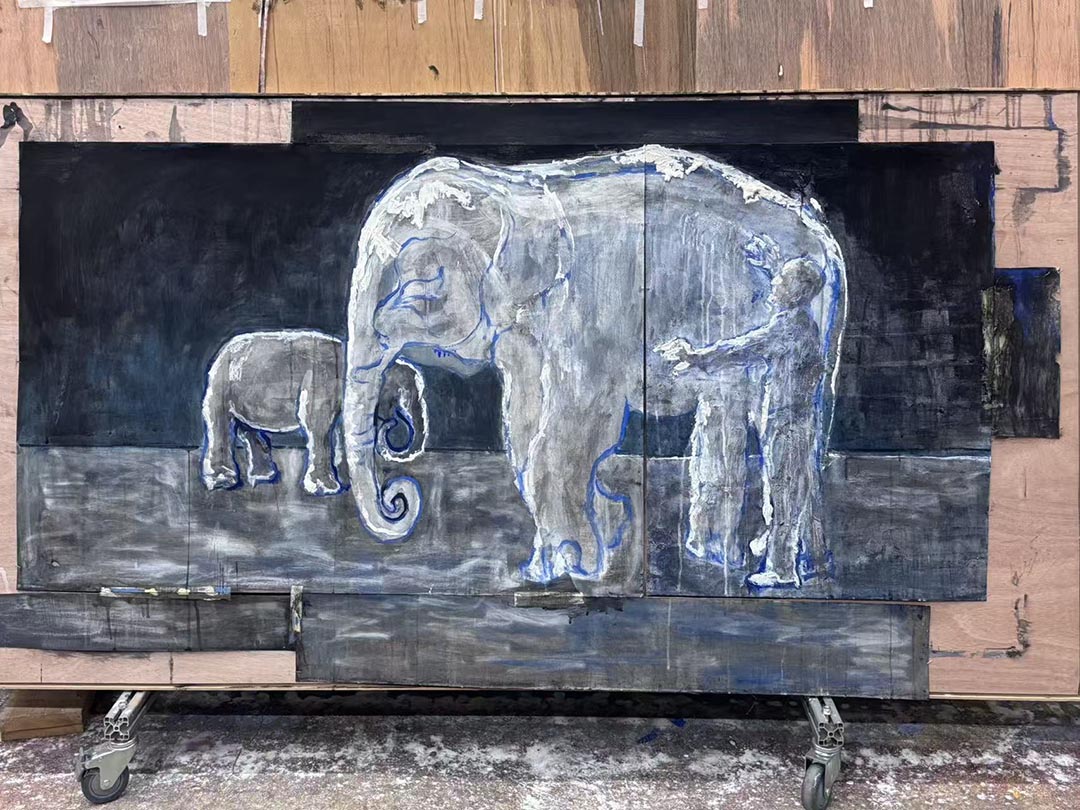
Washing the Elephant, Luo Quanmu, 2025, Mixed media, 140 × 80 cm
After this long stretch of work, I felt the urge to approach the memory differently — more immediately, almost abruptly. The image itself comes from an ordinary scene at the zoo, and it bears some resemblance to the old parable of blind men touching an elephant.
The limits of understanding are often not a matter of insufficient effort, but of our inability to occupy every position at once. And yet, even if every fragment were assembled, would we truly arrive at "elephant" itself? It seems, instead, like a position we are always approaching, and never quite able to possess.
HOW DO YOU CELEBRATE CHINESE NEW YEAR?
Much like this pursuit of "wholeness" — during the New Year, everyone talks about how much of the holiday atmosphere still remains — for me, Spring Festival has always been the most important marker of time: the true beginning of the new year. All of my work is dated by the lunar calendar.

FINISHED
Recently, my solo exhibition was on view at the Shenzhen Bay Art Center. Among the works presented is a site-specific installation created especially for the space: “All Forms Bow to Gravity, Even Imagination is Absent.” The work consists of a nearly 21-meter-long symbiotic spinal structure composed of 18 different species — including humans and other animals that have not yet become extinct. Suspended in midair, the hybrid spine hangs downward, governed by an invisible force of gravity…
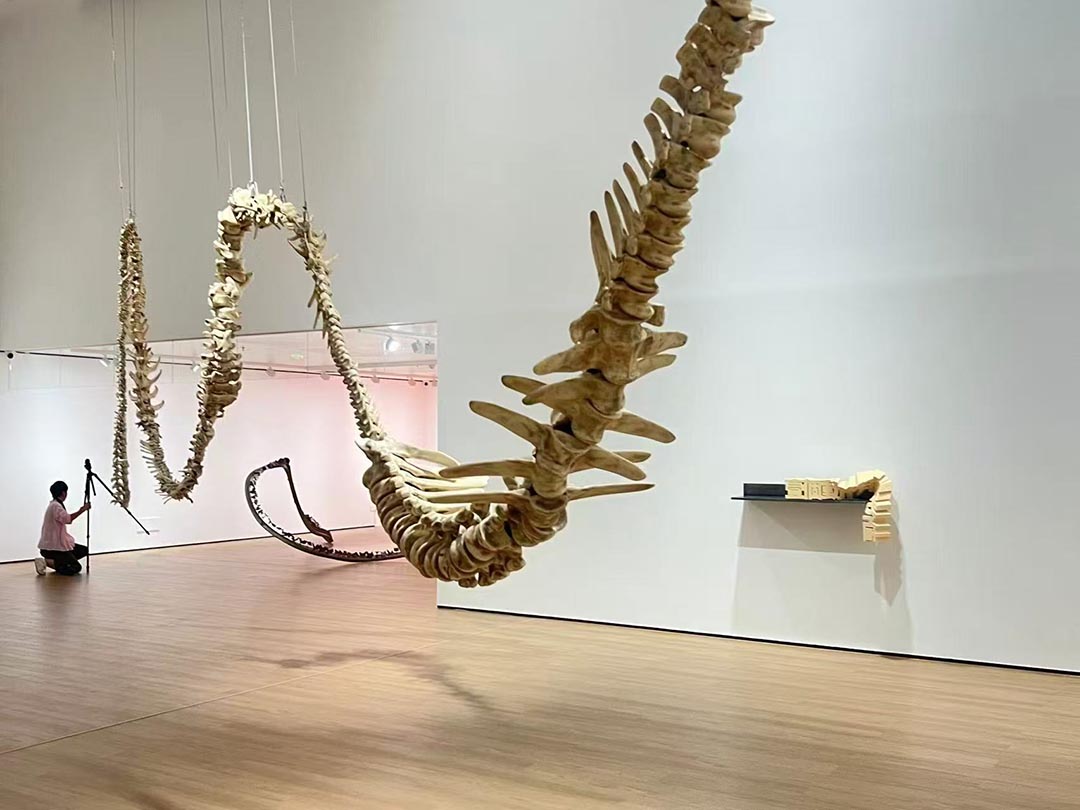
All Forms Bow to Gravity, Even Imagination is Absent, Shi Yong
UNFINISHED
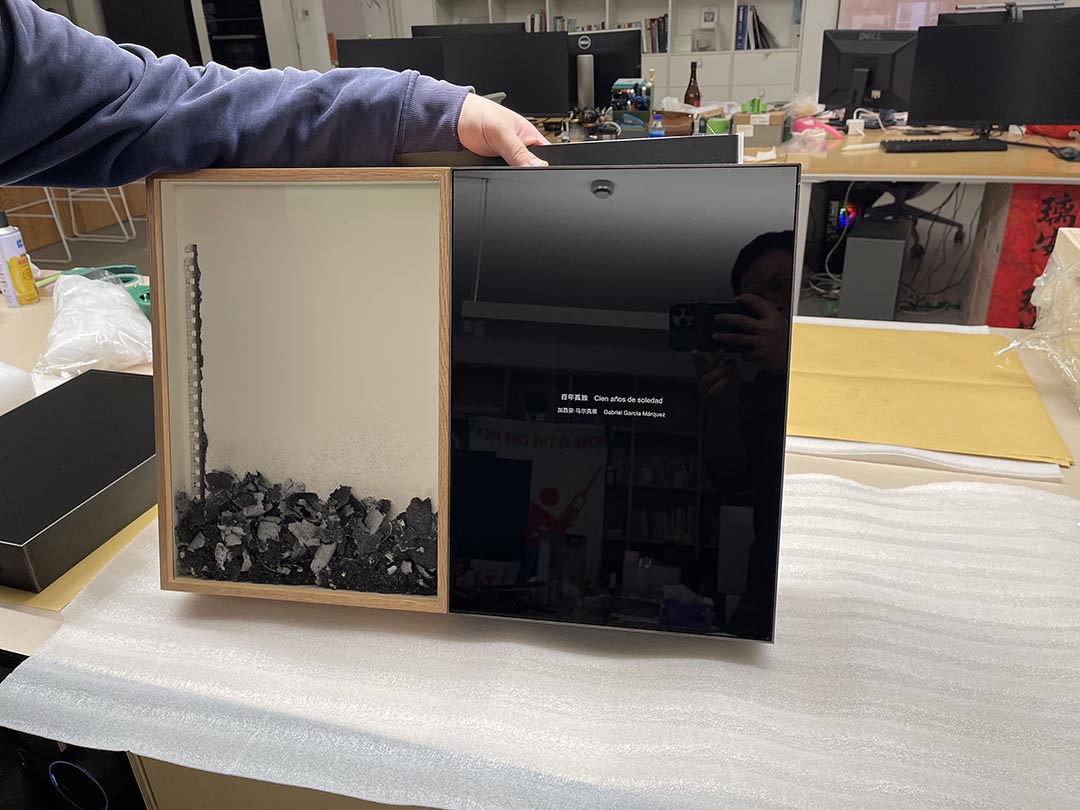
Oblivion Lasts Longer than Memory——One Hundred Years of Solitude, Shi Yong
When I saw the invitation from Oui Art to contribute to their Spring Festival special feature, I had a new work underway — one tied to time, produced through daily, uninterrupted labor each morning — from my latest series, "Forgetting Outlasts Memory: Cien años de soledad." It was nearly finished, waiting only on the final assembly of the video documentation, editing, and the performance's "evidentiary objects."
This series began in late 2019, and seven pieces have been completed so far — extraordinarily time—and labor-intensive work. The basic form is this: on a single sheet of paper, I copy out a text (philosophical treatises, novels, and the like); once the page is filled, I erase what I've written and preserve the resulting ash; I then resume copying, erase again, preserve the ash again, and so on. By the time a text has been copied out in full, the paper — worn down by the repeated pressure of writing and the weight of erasure — has become extremely fragile, ragged beyond repair. The sheets become a kind of metaphor for the flesh itself: in the ongoing process of absorbing information, they are, in the end, devoured by that very information. This time, though, in copying and erasing "Cien años de soledad" (One Hundred Years of Solitude) the paper failed — for the first time — to withstand the crushing weight and battering of time. It gave out midway, alone, reduced to a final scrap too fragile to write on any further; everything became ash. (Thirty-seven pages remained uncopied and unerased; the process had already consumed some one hundred and sixty-odd hours.) I do not decide the ending, nor am I able to decide it — I can only follow behind it, trailing after wherever it leads...
HOW DO YOU CELEBRATE CHINESE NEW YEAR?
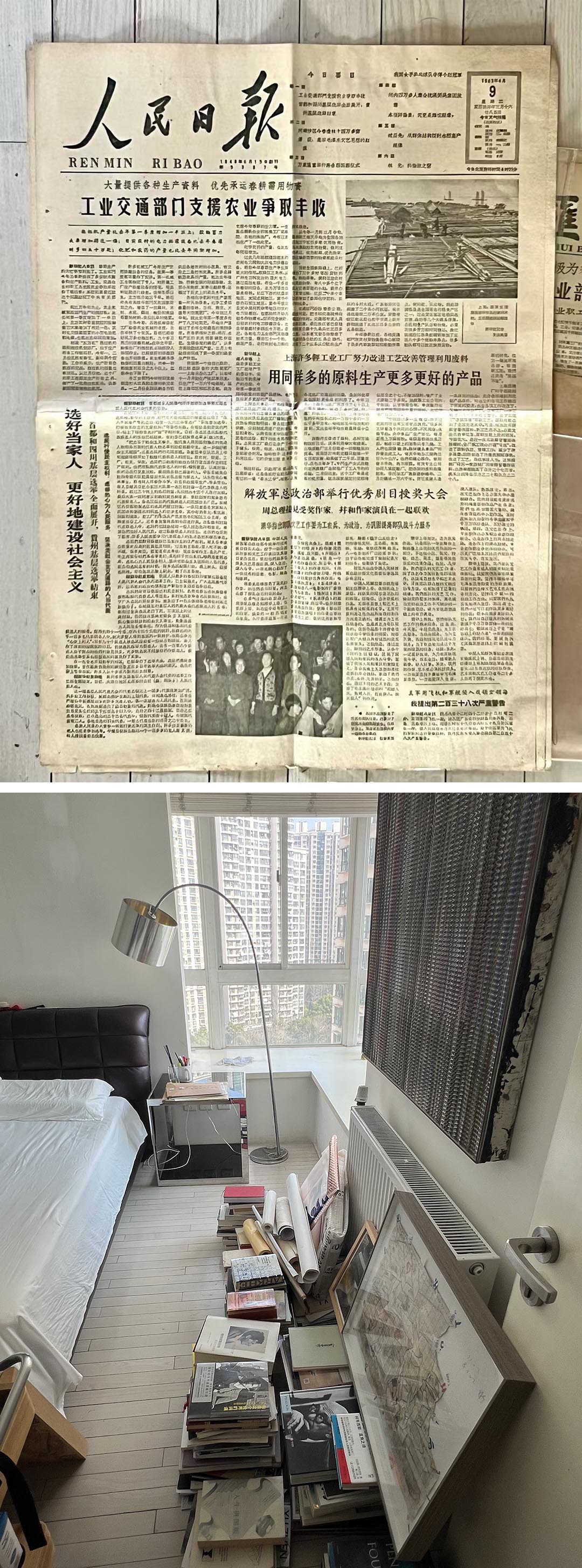
These days, I don't feel much about the New Year at all. That sense of joy I used to have during the holiday disappeared once Shanghai banned firecrackers within the city. Still, every year before the New Year, I like to reorganize the windowsill in my bedroom, piled high with books — and this year was no exception. What's interesting is that every time I sort through it, there are always surprises. This time, amid the pile of books, I happened to rediscover a newspaper I'd ordered online years ago — a copy of the People's Daily from the exact same year, month, and day as my own birth.

FINISHED
I recently completed "试墨" (Studies in Ink), a group of nine works. Together with another group of six, titled "墨生六彩" (Ink Gives Rise to Six Colors), they are currently on view alongside "Ink Resonance of Jiangnan," an exhibition of ancient ink held at the East Branch of the Shanghai Museum. Taking ancient ink as both material and point of departure, these works explore further the chromatic and technical possibilities of ink painting — attempting to re-examine ink's expressive range not merely as a monochrome substance, but as a medium capable of generating its own subtle variations of color, through an internal logic all its own.
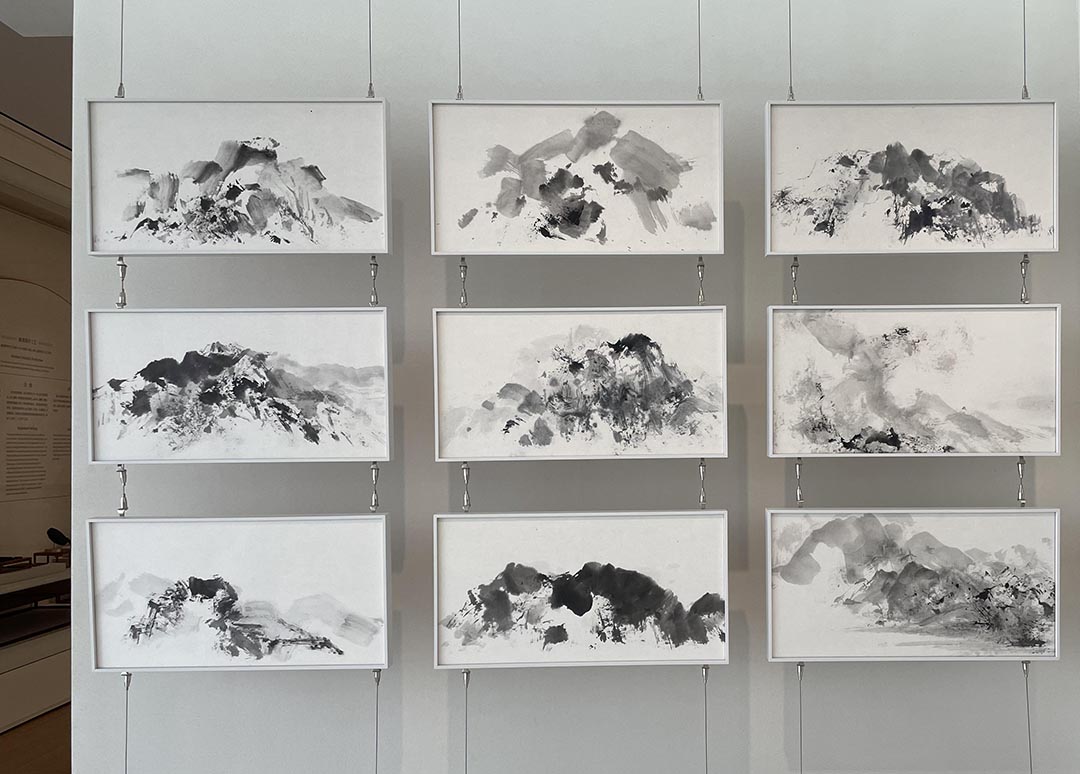
Studies in Ink, Wang Shuzhong, 2025, Materials: ancient ink, xuan paper
UNFINISHED
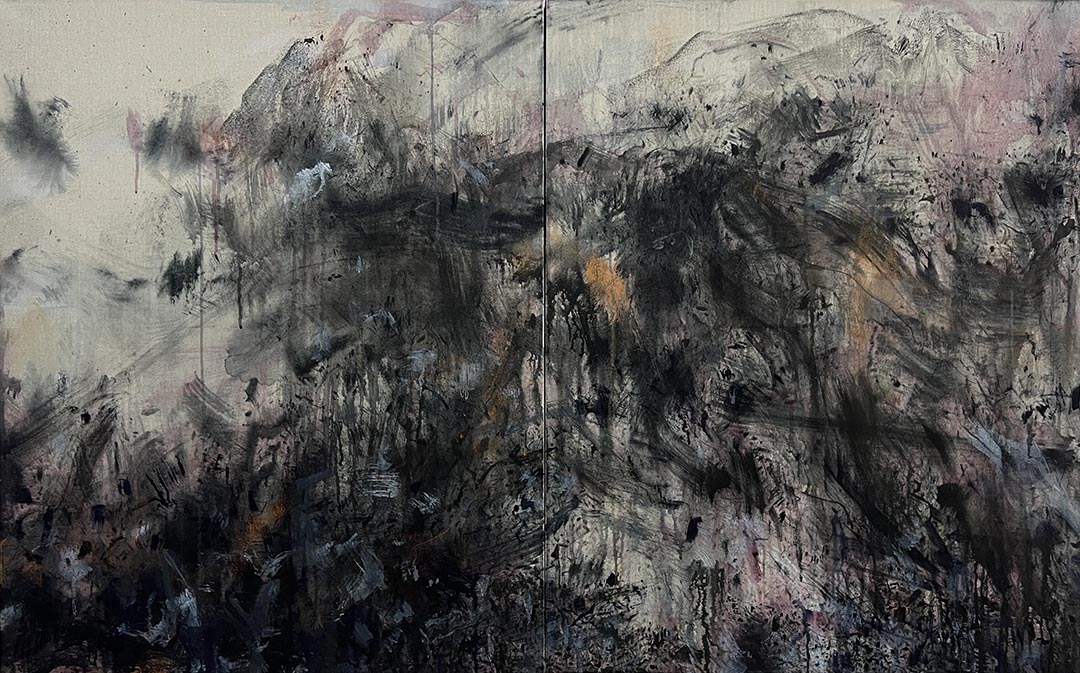
This work remains unfinished and has not yet been given a formal title. It grows out of my ongoing re-examination of the chromatic possibilities within Chinese ink painting and marks a renewed engagement with the practice of brushwork itself.
HOW DO YOU CELEBRATE CHINESE NEW YEAR?
As the year comes to a close, I continue to slow down and rest, lightly proofreading two small books soon to be published. I will keep reading books on painting theory and casually leaf through art catalogues, without seeking to fully understand everything.

FINISHED
In this work, I layered two different white materials and used pure silver powder to depict the “scars.” Under varying light, the surface reveals subtle shades and textures — black, antique silver, and bright silver. The restrained, quiet luster of the silver resonates with the warm, soft whiteness of the foal, creating a dialogue between material, light, and form.
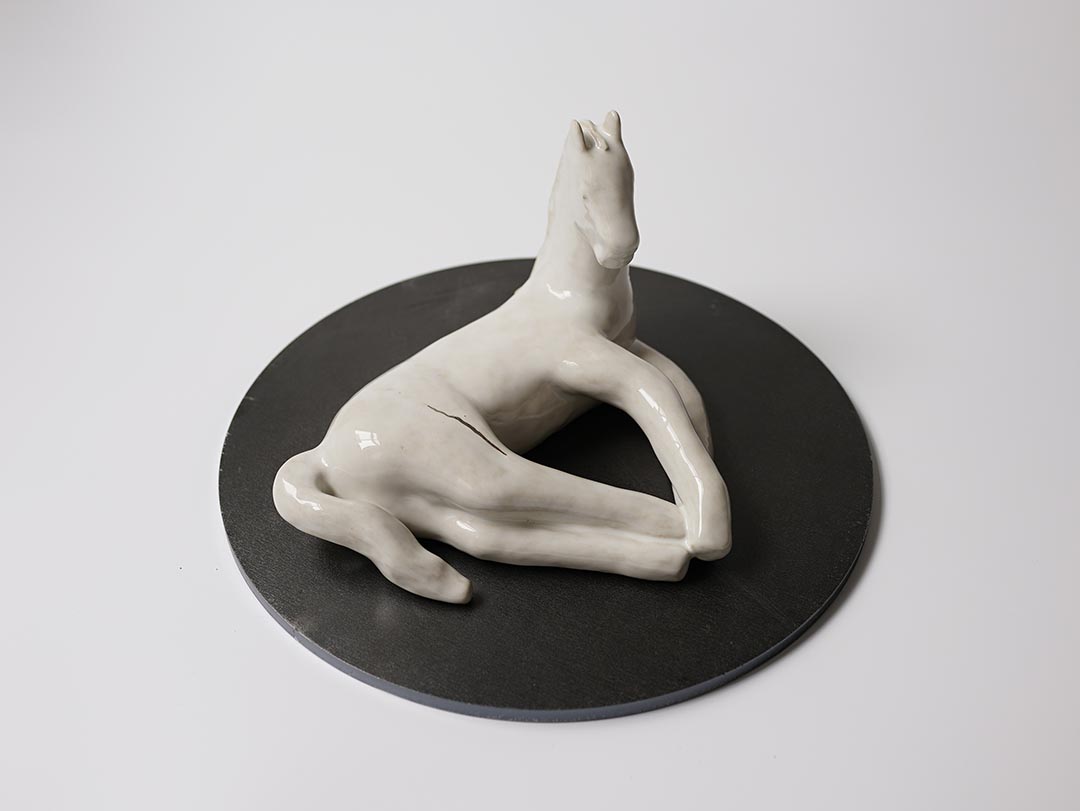
White Horse,Yang Yang, 2026,Materials: glazed ceramic, silver inlay, carbon steel
UNFINISHED
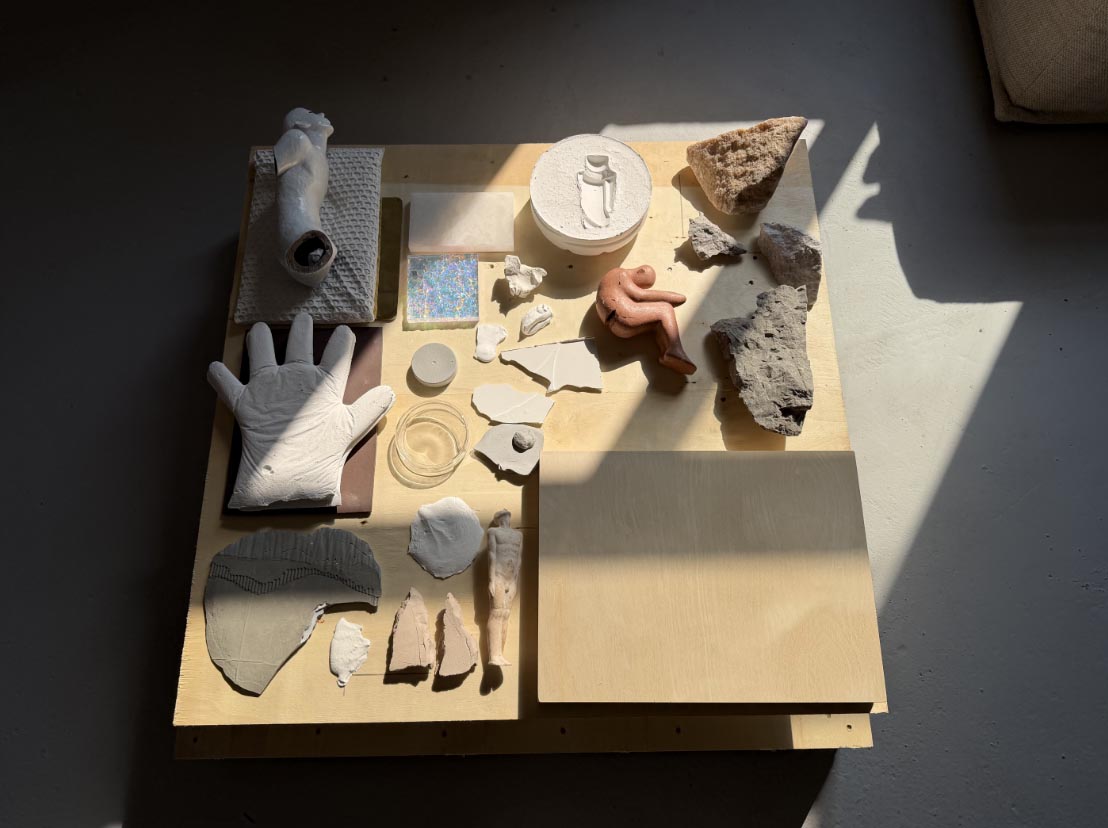
I want to explore a sculptural language of my own from traditional materials and develop my personal interpretation of them. I hope to shape a lifelike presence through an alternative medium.
HOW DO YOU CELEBRATE CHINESE NEW YEAR?
During the Spring Festival, I usually take a short trip outdoors and spend New Year’s Eve and the holiday with my family.

FINISHED
A peeled, raw egg stands upright on a block of salt. Faint white strands visible inside the egg mark its freshness, while the salt block's form echoes the contours of a mountain range, extending past the frame into something untouchable. The egg's delicate fragility sits against the salt's sharpness, generating a quiet tension between the two — and behind that tension, a metaphor for individual life force: a persistent resilience, a quiet confrontation, staged against cold and rigid constraint.
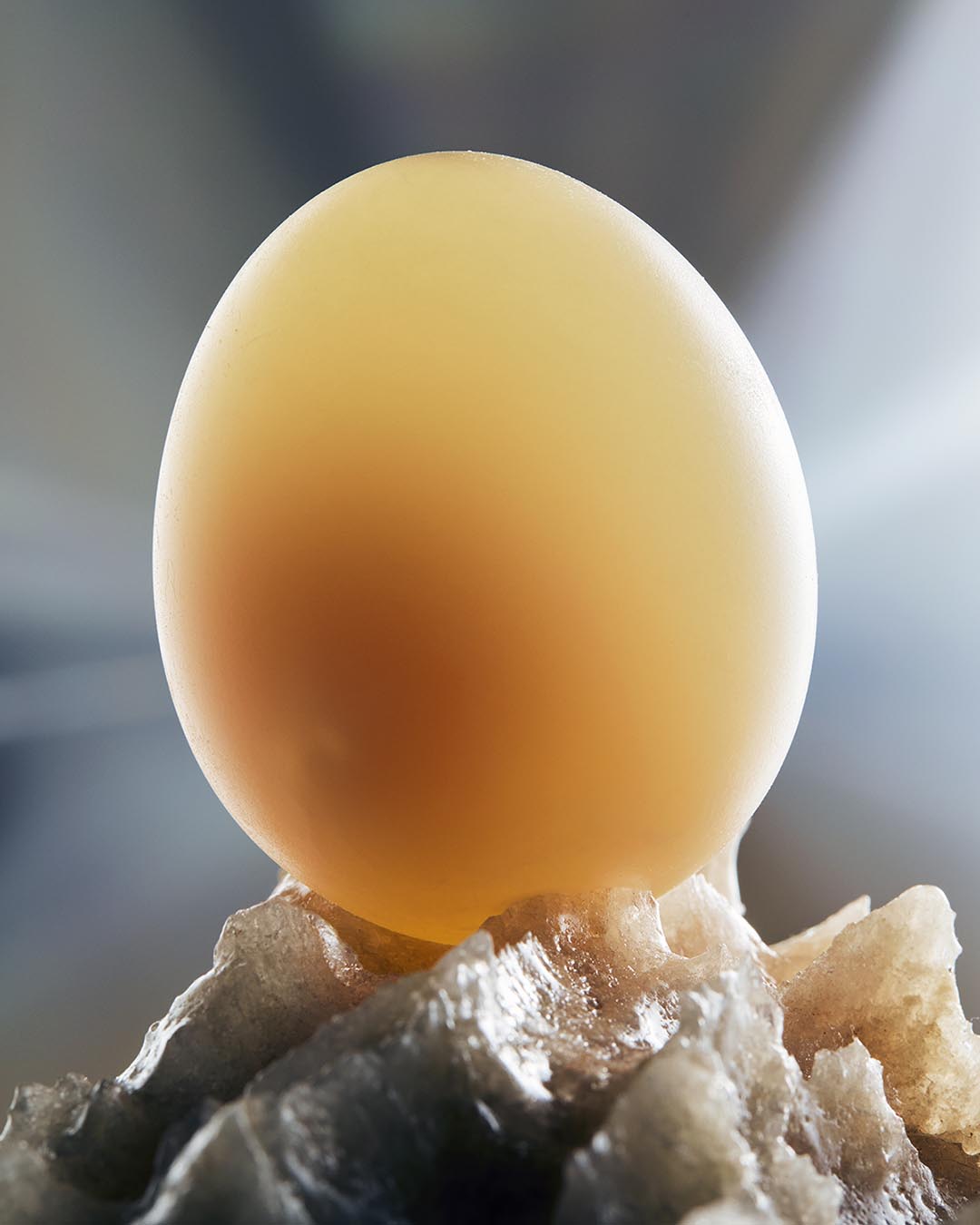
Breath,Yin Hang, 2026
UNFINISHED
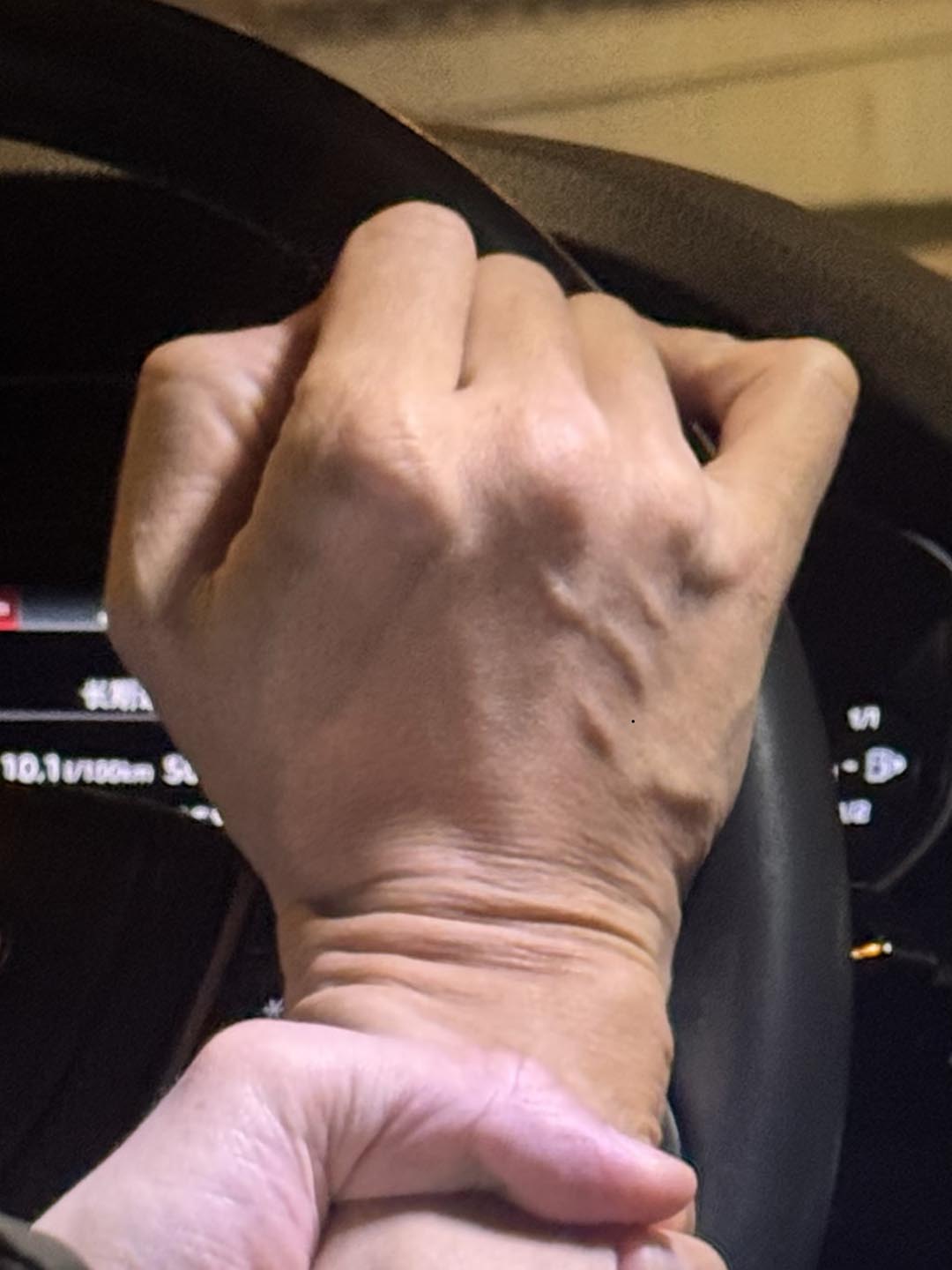
Photographed on December 7, 2025, at 22:49.
This is a photograph of my hand while driving. To capture a sense of explosive energy in the veins at high speed, I deliberately clenched my wrist, producing a draft-like image. Shaped by Actor-Network Theory, I've long believed that objects are never merely background — they act as agents of power, turning invisible rule into tangible resistance. What I'm after here is a picture of the body reshaped, even compressed and deformed, in the act of handling an object.
HOW DO YOU CELEBRATE CHINESE NEW YEAR?
Every year, on the night of the first day of the Chinese New Year, I gather with the friends I grew up with to welcome the new year together. We set no limit on how much we drink, and over the course of the evening, fueled by alcohol, we pour out all the dregs and hardships accumulated over the past year — tears and vomit included — getting things off our chest in the most literal sense possible, until the brain simply shuts down. In the end, we always reboot into the new year through a collective blackout. This gathering, faithful to the calendar year after year, gradually shifted from something we once did on a whim into a habit, and from habit into a ritual — one that, every New Year, we find ourselves looking forward to.
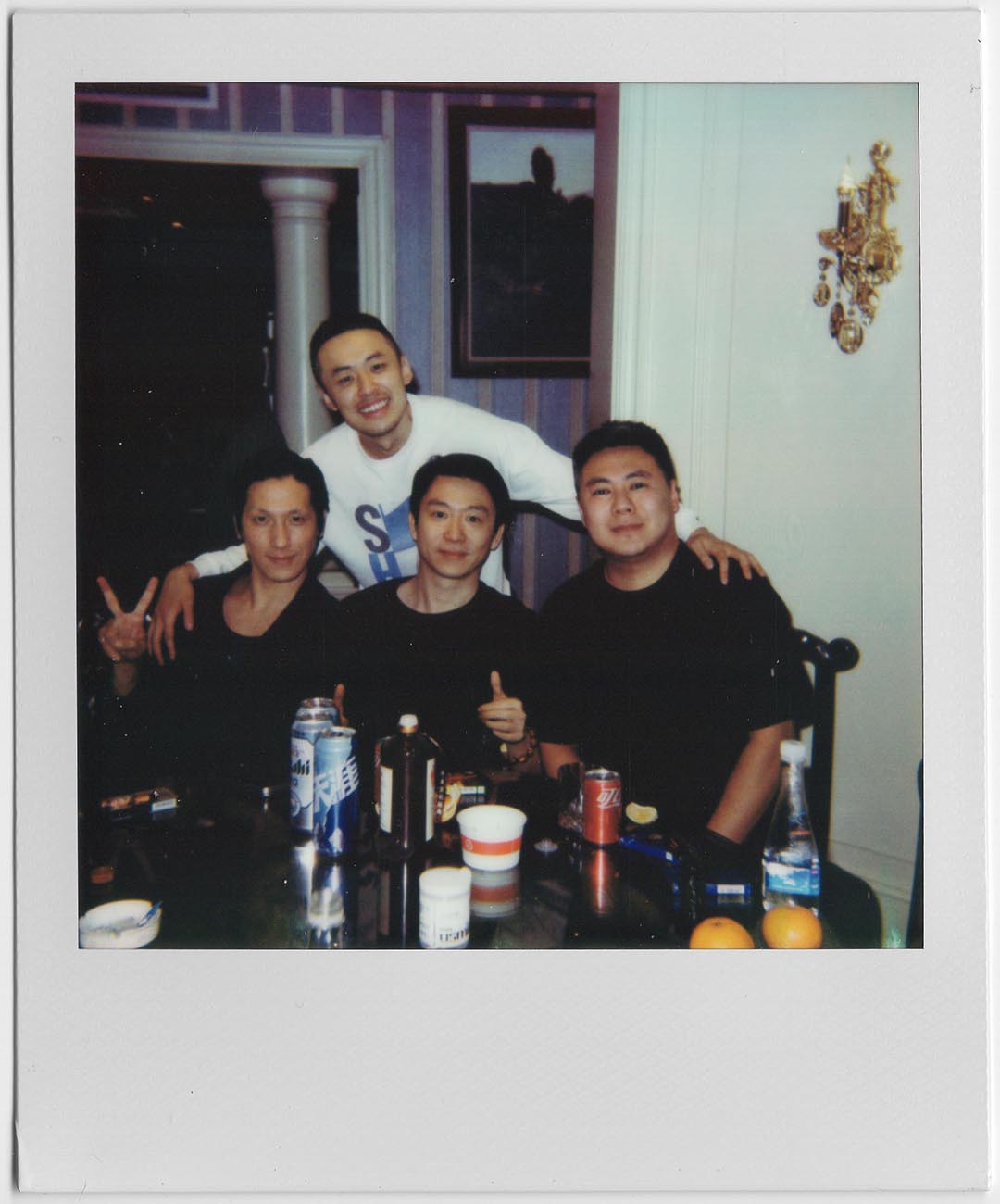
Photographed on January 31, 2025.

FINISHED
“Memory Island” is a newly completed installation from 2026. Memory defines who we are — those vague, overlapping fragments that settle deep within us ultimately converge into a private landscape of remembrance.
I abandoned traditional forging and casting techniques, instead perforating rigid metal with countless tiny holes to make it light and translucent. By hand-bending, connecting, and stretching, the metal grows into a layered, semi-transparent, and resilient three-dimensional island. The layering reflects the accumulation and reconstruction of memory; the semi-transparency evokes the haziness and inaccessibility of recollection; and the elasticity represents how memory can be continually awakened and reshaped upon reflection. Within each of us resides such a memory island.
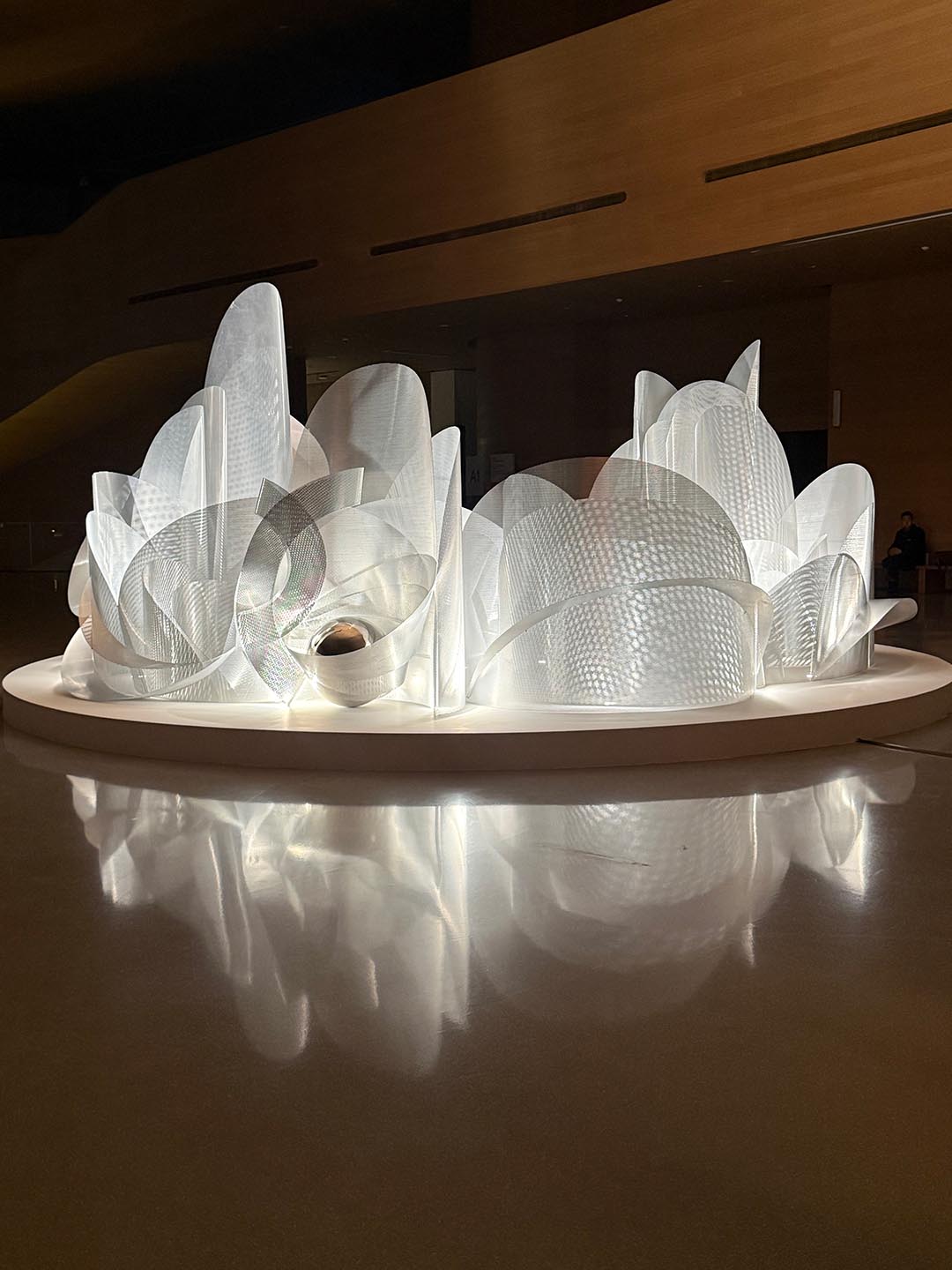
Memory Island,Yuan Xiaotian, 2026
UNFINISHED
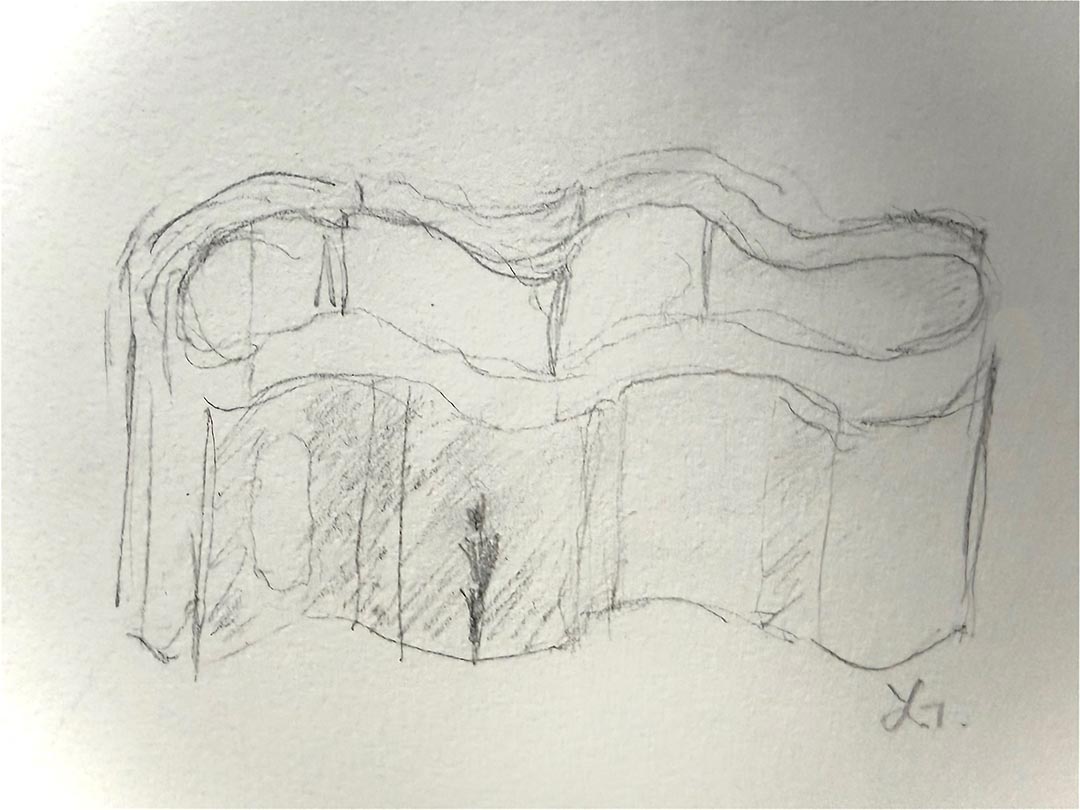
Since beginning the “记忆景观“ (Memory Landscape) series, I have been thinking about how to draw the viewer into the work itself. When one steps into the semi-transparent space, looking outward through the hazy metal, the gaze both penetrates the surroundings and becomes part of the memory landscape — just as each of us exists within our own and others’ landscapes of memory. The process of creating an installation is long and uncertain. From the moment an idea emerges to its final realization, there is no prescribed path — one must discover the method of bringing the idea to life. Yet it is precisely this process that makes the resulting work full of infinite possibilities.
HOW DO YOU CELEBRATE CHINESE NEW YEAR?
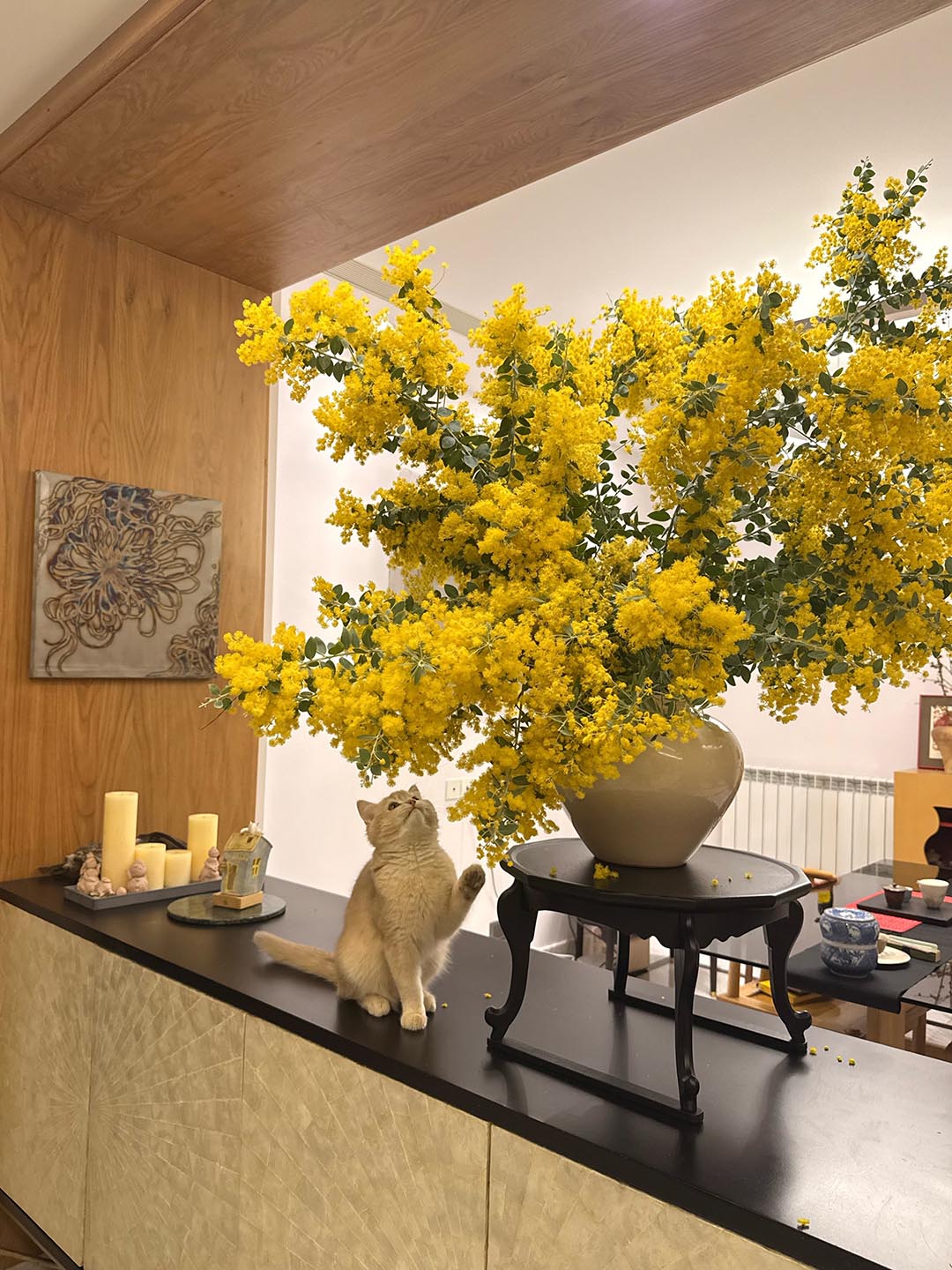
The Spring Festival marks the boundary between the end of winter and the arrival of spring. For me, the most indispensable ritual at the turn of the year is placing auspicious flowers. The blooms speak no words, yet they carry the breath of spring and vibrant life — to me, this is the most fitting way to welcome the new year.