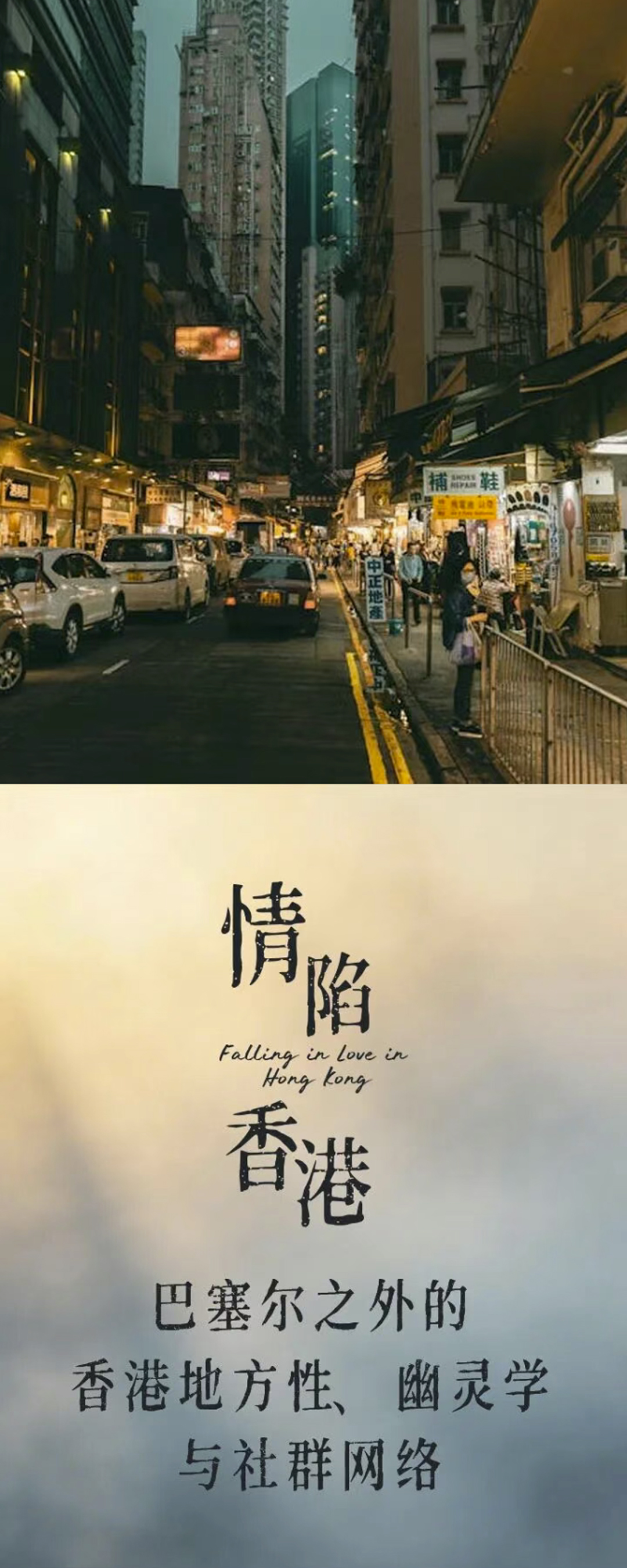
Attempting to chase every art event during Art Basel Hong Kong is a lost cause. In many ways, this impossibility functions as a metaphor for Hong Kong itself: no fragment can stand in for the whole of this "hyperobject," nor can one split into countless parts to assemble a totalizing impression of the city. It is precisely this unknowability that reminds visitors not to treat their art pilgrimage as mere labour, but rather to attune themselves to the diffuse creativity embedded within Hong Kong's urban fabric—before, during, and beyond the fair—and to grasp the emotional substratum sustaining its contemporary art ecology.
To regard Hong Kong solely as a global city risk flattening its specificity as a "place." Amid ongoing deglobalization, however, Hong Kong has been compelled—perhaps unexpectedly—to reconsider its own locality. However reluctant or contingent this process may be, artists and practitioners in the city respond in ways that are distinctly "Hong Kong": ironic, melancholic, cautious, and quietly insistent. What follows gathers observations from a series of exhibitions and events that engage with this sense of the local.
Ghosts and Gods: A Glimpse of Local Modernity
Wong Chuk Hang is without question the liveliest area this year outside the Basel fair venues clustered around Central. Pull up the digital map produced by the Hong Kong Art Gallery Association (founded in 2012, a non-profit formed by a coalition of local galleries) at www.hk-aga.org, and the dense clusters of markers make the point visually: Kowloon, Central, and the Southern District—anchored by Wong Chuk Hang—hold a central position within Hong Kong's broader art ecosystem. It's worth noting that Wong Chuk Hang, long overlooked historically, actually carries traces of human activity dating back to the Neolithic period. More strikingly, it's considered the site of "Hong Kong Wai," believed to be the origin of the name "Hong Kong" itself. Later, the area saw a brief industrial boom in the 1960s, followed by a long decline—a history still legible today in the number of building addresses that begin with the prefix "Industrial."
The Octone Foundation, established in 2022, occupies the 33rd floor of M Place, a building converted from an industrial site. The exhibition currently on view, "GHOSTLY, GODLY," is curated by Wan Feng and features five artists: Simon Liu, Cici Wu, Deng Guoqian, Xia Biquan, and On Kino.
"GHOSTLY, GODLY" approaches the city of Hong Kong through the lens of hauntology, examining "local modernity" within the city's geological and urban fabric. It focuses on how local beliefs and mythologies become internalized into everyday life in Hong Kong, and on the multiple forms of locality that are reconfigured in the process. Among the works, Simon Liu's “Splits in Two” uses an image-based installation to build rich effects of light and shadow, forming a ritual-like space that merges local history with the artist's own life experience. Deng Guoqian's “Bad Habits” presents a hybrid space where exhibition and work coexist: during the exhibition period, the artist inhabits and works within an environment built from fragments of over twenty years of practice, sharing the space with viewers/participants. Meanwhile, his video work “Good Fortune” documents, in documentary form, the decade-cycle Taoist jiao festival in Kam Tin Walled Village. This ritual, practiced widely across Hong Kong, Macau, and Taiwan, is a religious ceremony that has become interwoven with contemporary daily life in Hong Kong, forming a hybrid, dynamic sense of "Hong Kongness."
The participating artist Xia Biquan holds a rather unique position. He is not only an artist but also a key figure in documenting and compiling the exhibition history of Hong Kong, having recorded as many as 2,500 exhibitions in Hong Kong and abroad. Alongside works never previously shown to the public, the curator has specially selected a set of significant exhibition records and personal archival materials from around 1997, foregrounding the lived condition of the creative individual within a complex, entangled historical moment. Meanwhile, Cici Wu employs lanterns, ink, and paper craft to reflect on "the disappearance of book history and its spectral return." The "On Kino" collective, founded in Guangzhou in 2017 by artist Tan Dao, revisits and republishes Hong Kong ghost story magazines that circulated through the city's newsstands in the 1980s and 1990s in its project "HOW TO DRAW ILLUSTRATIONS FOR GHOST STORIES FROM 1980s–1990s IN HONG KONG," using this material as a lens for understanding the cultural psyche of Hong Kong.
In fact, if we take the "hauntological" dimension of Hong Kong's local specificity in "GHOSTLY, GODLY" literally, then ghosts and spirits are indeed a crucial facet of Hong Kong's cultural landscape. More importantly, this sense of "Hong Kongness," deeply shaped by Hong Kong's ghost film culture, is not difficult for audiences from mainland China to understand. On the contrary, they are often able to empathize with the imagined fear, anxiety, and eerie ambiguity—and the real social conditions that lie beneath these effects.
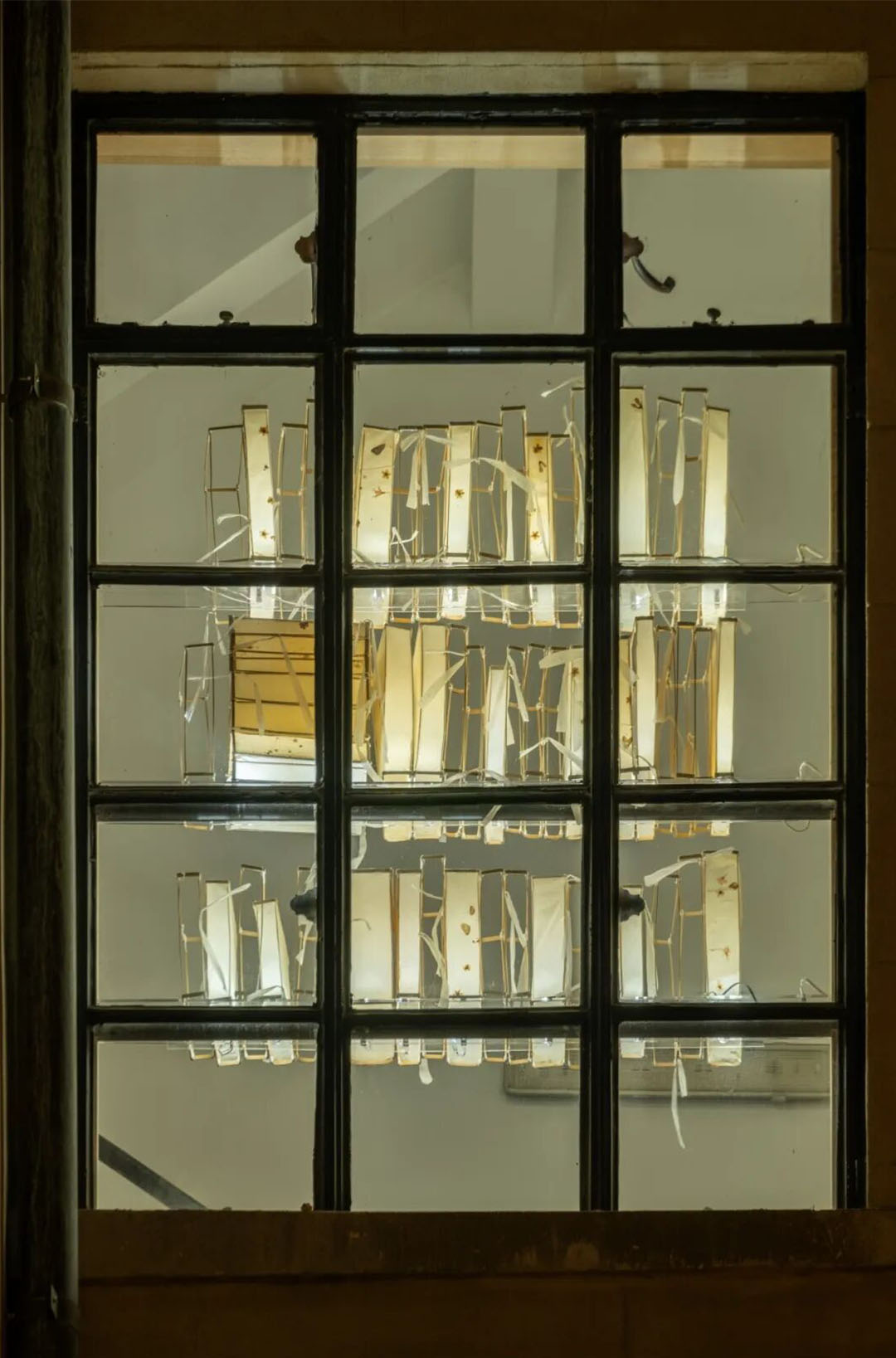
Lanterns from the Unreturned 03,Cici Wu,2025
Within Self-Organized Community Networks
Another locally grounded allegory comes from Current Plans, a non-profit art institution not far from the Octone Foundation. Current Plans defines itself as an alternative art space and, since its founding in 2020, has continuously supported interdisciplinary creative practice and critical knowledge production. Alongside thematic exhibitions, it hosts a wide range of activities—dance parties, cooking workshops, experimental performances, artist residencies, among others. At its core, the space is guided by a spirit of "playfulness and interactivity." On March 27, Current Plans co-organized a discussion with ArtReview China titled “Autonomous Futures: Gathering of Self-Organized Art Networks” . Moderated by co-founder Eunice Tsang, the event brought together practitioners to reflect on sustaining independent initiatives under pressure.
At the start of the conversation, one might have assumed that a local institution's understanding of an overcast sky would necessarily differ from a visitor’s . But before the event reached its second half, a light rain had already driven the audience and guests indoors. After a brief scramble and the requisite adjustments, everyone returned outside, the guests opening umbrellas and carrying on regardless. The scene echoed something the artist Yim Sui-fong had shared earlier, speaking of Rooftop Institute—the grassroots art charity she co-founded in 2016 with artist Law Yuk-mui and Frank Vigneron, chair of the Department of Fine Arts at the Chinese University of Hong Kong. Yim had stressed the importance of the group, the collective, the community—without this diminishing the individual artist's singularity in any way. The process of "being together" mattered far more than any outcome, and the conversation itself came to resemble a Rooftop Institute session of mutual teaching in real time.
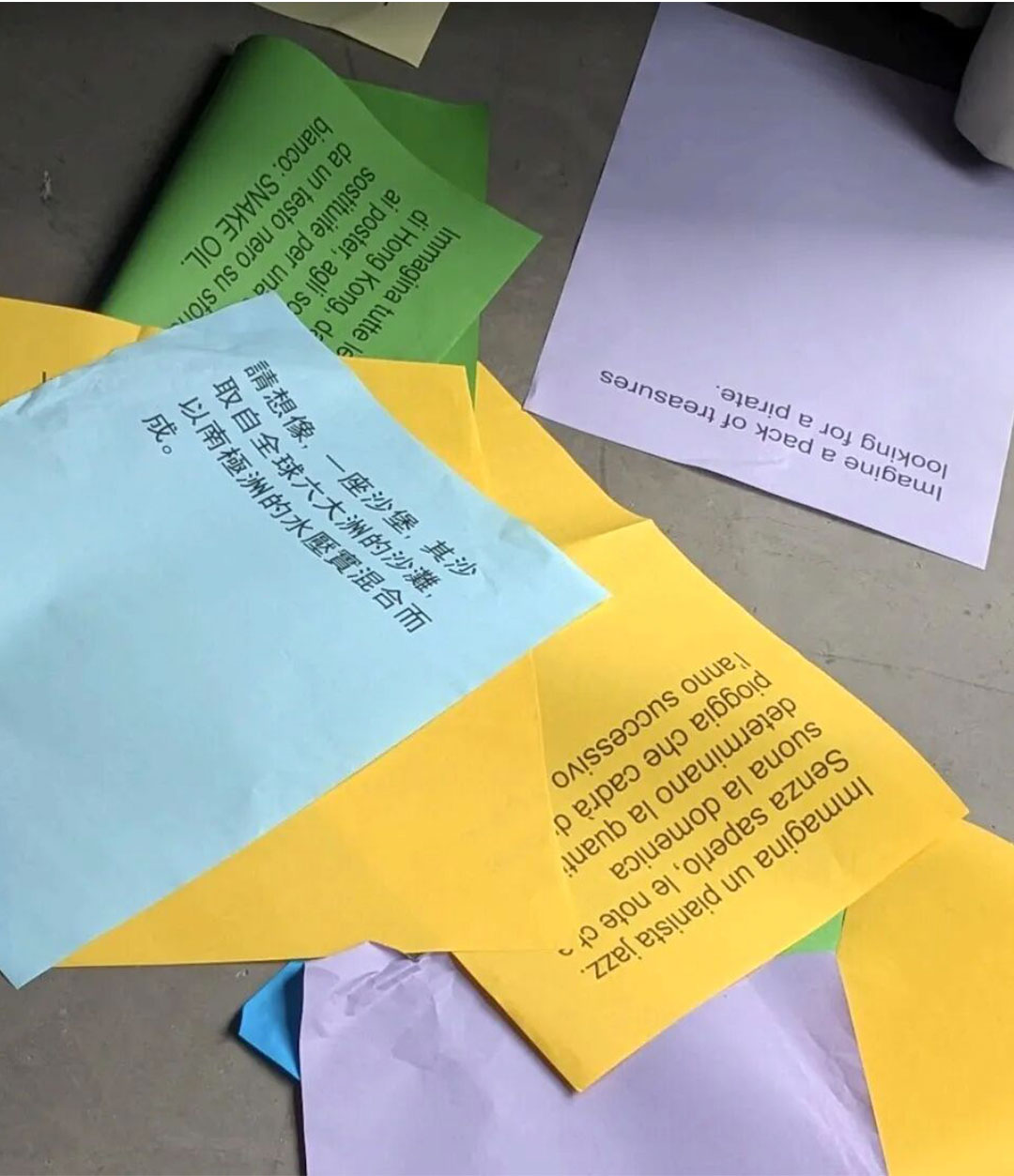
A Wind of Thoughts,Roberto Fassone,2026 Imagine a Dead Blue Whale Inside the Pocket of Giant,Current Plans
The speakers grumbled, at points, about the difficulty of running an independent institution and sustaining the bonds of a small group—yet what came through was less a sense of obligation than an impulse toward wanting to make something happen. The vitality of contemporary art in Hong Kong springs precisely from such pairings and groupings: uncertain in meaning, unclear in prospect, tumbling through hardship and pleasure alike, together.
Ve(ry)Nice!: Making Art in a Pizza Shop
Running concurrently at Current Plans, the exhibition “IMAGINE A DEAD BLUE WHALE INSIDE THE POCKET OF A GIANT”, curated by Giulia Pollicita and Eunice Tsang, brings together nine artists from Italy and Hong Kong to explore dialogues across language, history, and systems. Across the harbour in Tsim Sha Tsui, another project similarly bridges Italy and Hong Kong—this time in a far less conventional venue. "Ve(ry)nice" is an exhibition pitched in a humorous key, though beneath that humor lurks the ghost of a wry, bitter smile. It's staged inside Jacomax, a pizzeria run by an Italian expatriate in Mira Mall, Tsim Sha Tsui. "Ve(ry)nice" dissolved the mournful air I'd felt drifting through Hong Kong's art spaces since arriving in the city—an air made only heavier by the overcast weather and the approach of Qingming. Against this, the exhibition offered a genuine, gentle pushback to the specters haunting the city's cracks and crevices.
Operating as a pop-up, "Ve(ry)nice" inserts contemporary art into everyday life while coinciding with the forthcoming Venice Biennale. Its curatorial strategy seeks to "demystify" dominant narratives, proposing instead a mode of engagement that is spontaneous, light, and agile. In Lau Wai-lee's “Bella, Ciao Bella” (2026), inspired by Chiang Chi-kwong's Cantonese rendition of “Santa Lucia”, audiences are invited to learn "Bella Ciao"—the Italian protest song revived through the series “La Casa de Papel”. The artist says: "Even without knowing Italian, one can still grasp its essence—amid resistance against oppression, let the blossoms fall where they may, and sow tomorrow's fields." Elsewhere, artist Tong Ka-yan's “Notes on the Wor(l)d—On the Go” (2026) uses walking through Venice as a means of randomly exploring Hong Kong—an instructional work realized through video documentation, in which the artist encourages viewers to explore Hong Kong's spatial narratives from an objective vantage point. Artist Ng Kai-yu's “nowatleast” (2015/2026), shot in Hong Kong, offers a sustained, meditative gaze at the "live seafood tanks" that have come to define the city's streetscapes and food culture. The artist describes “nowatleast” as "a fragile, fleeting state of suspension"—much as "Ve(ry)nice"'s own brief run over the course of Art Basel Hong Kong reminds us of that same fragility.
The curatorial team behind "Ve(ry)nice" (Mak 2 | Wong Ka-ying | Ng Kai-yu) described the exhibition's aim as unraveling Hong Kong and Hong Kong art's illusory reverence for Western symbols. Through artistic practice, the exhibition seeks to "intervene in, dismantle, appropriate, or invert the multiple projections of 'Venice' within Hong Kong, allowing viewers to re-recognize, within an everyday space of consumption, how exactly we imagine the West, how we borrow its name, and how—once disenchanted—we might reconstruct a narrative and confidence that belong properly to Hong Kong."
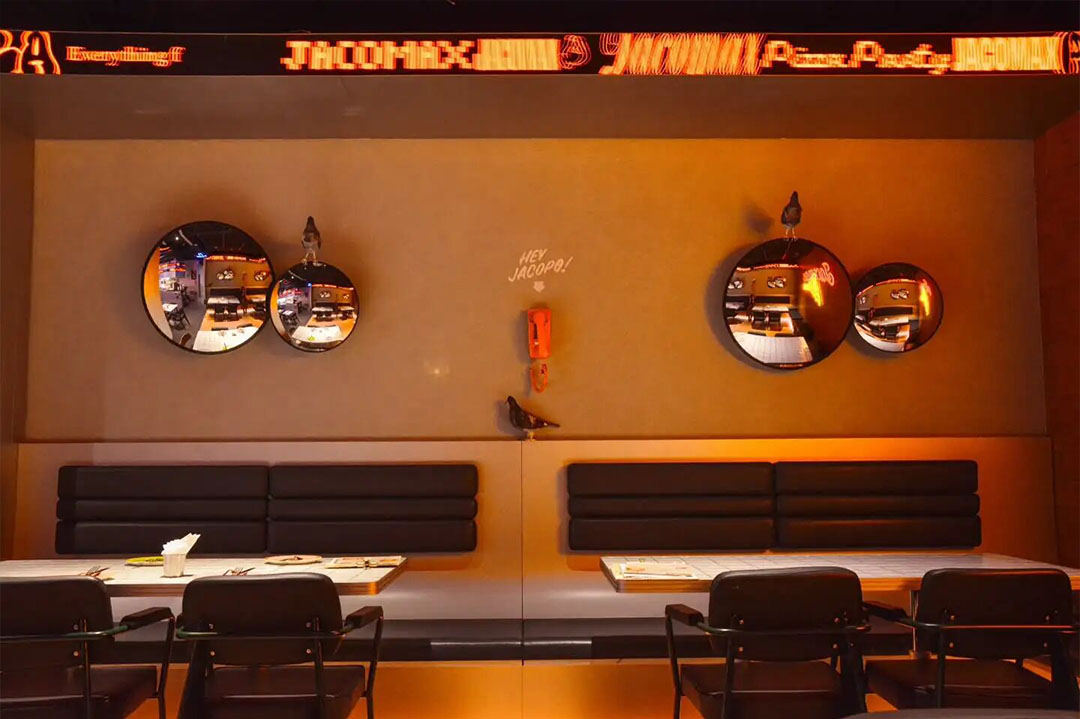
(Pigeon)s, Xie Minyin,Image courtesy of Ve(ry)nice
Writing Hong Kong's "Altered Fairy Tale"
On the west side of Hong Kong Island, a minute's walk from Kennedy Town MTR Station leads to another active non-profit institution, Hart Haus. Established in 2018 with support from Henderson Land Development, it's dedicated to giving emerging and established artists a platform for creation, experimentation, and expanded practice. Since its founding, Hart Haus has run the "Hart Studio Programme," through which artists can apply for shared studio space, easing much of the financial burden of early-stage artistic production. Currently on view at Hart Haus are two solo exhibitions: “Double Blue: An Altered Fairy Tale of Hong Kong (I)” by Li Yuqi and “Trichiasis” by Xu Haolin. In “Trichiasis,” the artist starts from what he considers one of the most profound queer conditions—"failure"—presenting a series of sculptural works made from soap combined with found objects, onto which various "male-gaze" images are transferred.
In Li Yuqi's practice, "topophilia," a sense of place, remains central. Through experimental animation, she transforms Hong Kong's urban landscapes and the concept of fairy tale into what she calls an "anti-fairy tale." Behind its apparent aesthetic beauty, though, the work carries a melancholic undertone within its distorted narrative form. That effect isn't entirely negative; rather, it becomes a reflection on "my Hong Kong," prompting viewers to reconsider their own relationship with the city they inhabit. Li focuses on how "place is formed through flows, memory, and perception into layered emotional and narrative structures." Her work organizes everyday urban experience and perceptions of Hong Kong's city space, exploring how individuals perceive themselves, memory, and cultural identity within the urban environment. In a sense, fairy tales, ghost stories, and myths all function as mirrors of reality. This resonates with the fleeting, transient theater created by the constellation of art events during Art Basel Hong Kong—a city staging itself, briefly. These narratives become analogies for the city's complexity, and also a form of address to it: a kind of love letter to Hong Kong. Stepping momentarily out of the chaos of reality, we may find ourselves suspended again between ghosts and the real—falling into a Hong Kong that exists somewhere between the self and the "other."
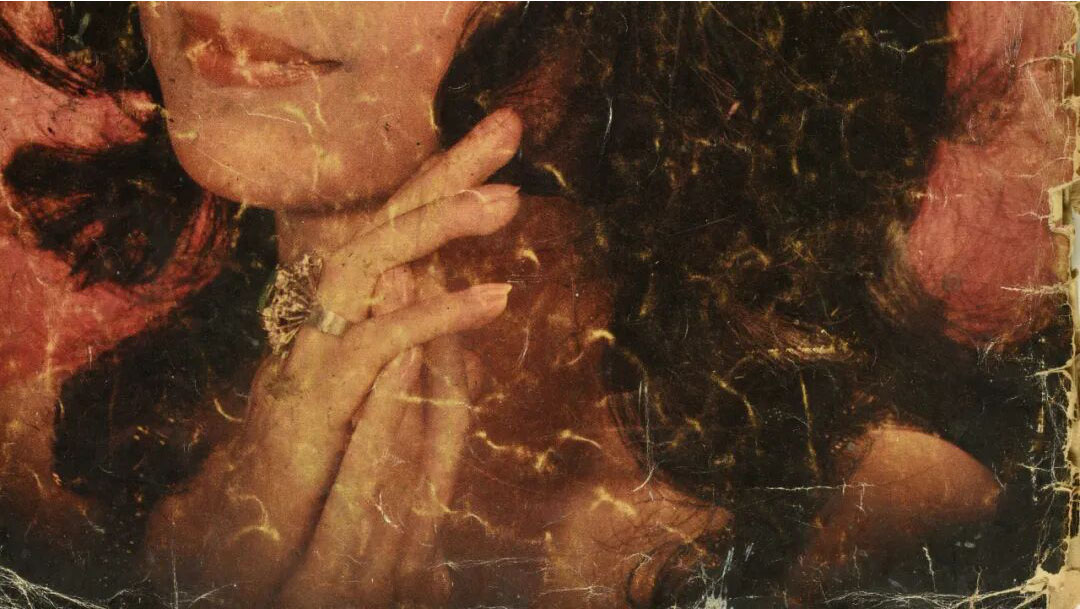
Girl’s Shit: Trichiasis, Hou Lam Tsui, 2026
Producer: Tiffany Liu
Editor: Tiffany Liu
Designer: Nina
Images: Courtesy of various galleries mentioned in the text and the internet



