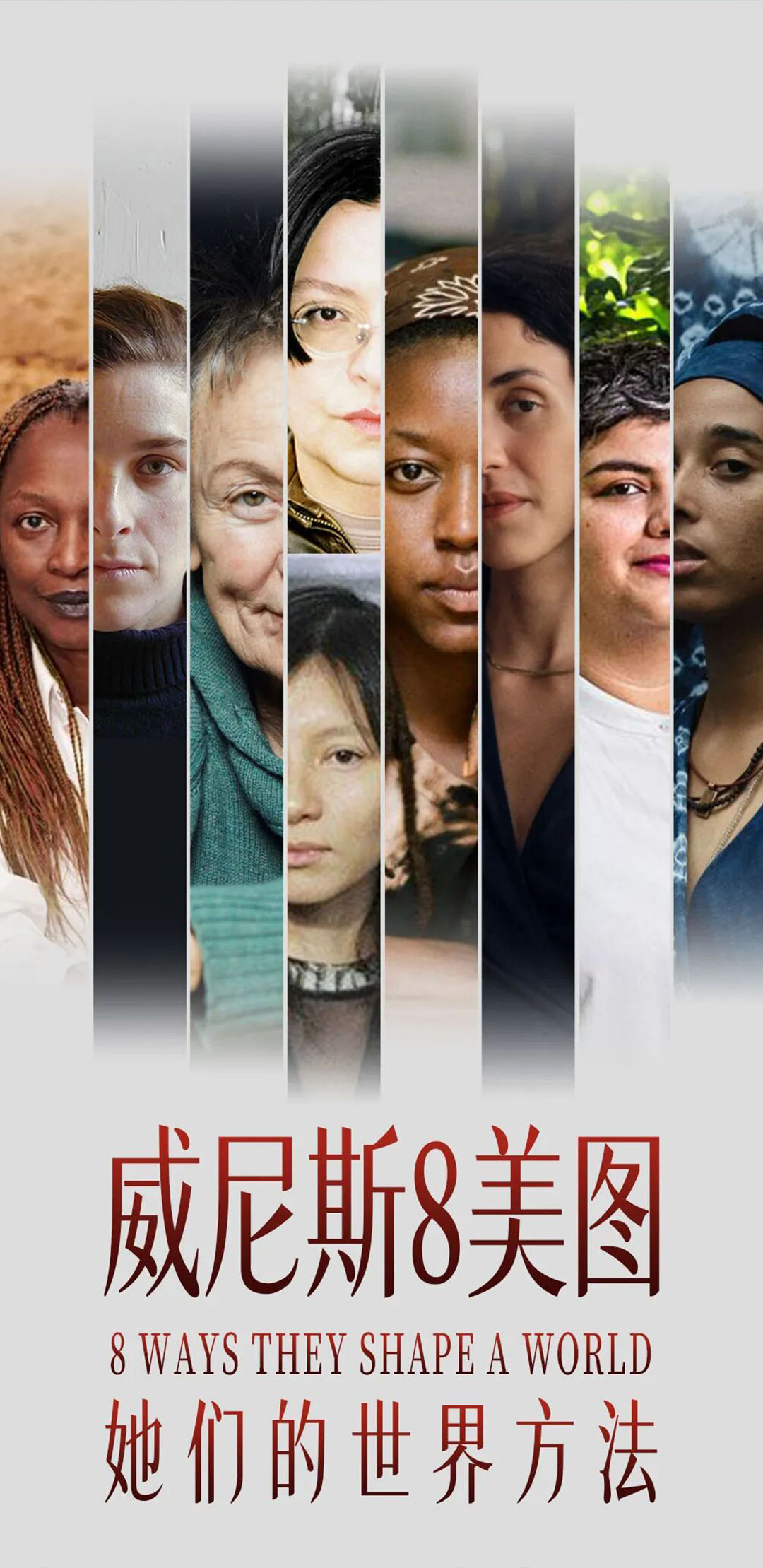
In music theory, the minor key is not a diminished version of the major. It is instead a parallel system—one that organizes affect through different intervallic relations.
The 61st Venice Biennale, scheduled to take place from May 9 to November 22, 2026, will be curated by chief curator Koyo Kouoh. In this globally influential contemporary art exhibition, she has chosen “minor key” as a metaphorical keyword to re-examine the emotional frequencies and narrative structures of contemporary art.
As Kouoh herself put it: “The world is tired. Even art itself is tired.
Maybe the time has come. We need something else. We need to heal. We need to laugh. We need to be with beauty—so much beauty. We need to play, we need to be with poetry…”
What she proposes is less a thematic thesis than a shift in register—a deliberate, collective re-tuning. It is a structural turn toward raw affect, sensory perception, and poetics, carrying within it the latent, generative potential of a feminine—or perhaps maternal—vitality.
From a sprawling landscape of 111 artists in the central exhibition and 99 national pavilions, we isolate eight positions, held by nine distinct names. Operating across vast materials and inquiries, these women confront the critical fault lines of our era: power, collective memory, the body, systemic control, care, narrative, and the frontiers of technology.
They do not march in ideological alignment. Instead, their practices crackle with internal tensions—vibrating between structure and the physical form, systemic logic and relational intimacy, the granular everyday and the vast cosmic, the quiet of archival silence and the disruptive violence of sonic intrusion.
Yet, it is precisely this dissonance that binds them. Together, they circle a singular, urgent question: In a world increasingly structured, accelerated, and hyper-classified, how do we learn again to perceive, to remember—and to forge a future?
01 Power
Koyo Kouoh 1967-2025, Cameroon
She came from the margins and stood at the center
Koyo Kouoh leaves behind no artworks of her own, yet she remains the most vital author of this exhibition.
Her life never conformed to a standard artistic trajectory. Born in Cameroon and raised in Geneva, Switzerland, she spent decades moving between two continents and two languages, navigating two fundamentally different architectures of "civilization." She did not enter the art world through the credentialing gates of an art school. Instead, she built her foundation from the ground up—through cultural organizations, independent publishing, and transnational networks—gradually carving out a position entirely independent of existing power structures.
In Dakar, Senegal, she founded RAW Material Company. The title is a manifesto: a reference to raw, unprocessed matter, and to a state of knowledge not yet domesticated by systems of power. Rather than a traditional gallery, RAW was conceived as a crucible where knowledge happens—a space where exhibitions, lectures, readings, and debates collapse into one another. It was here that many African artists, who would later reshape the global stage, were first seriously discussed and systematically contextualized.
When she later assumed the role of Executive Director at Zeitz MOCAA in Cape Town—one of the continent’s grandest contemporary art institutions, housed in a converted, Victorian-era grain silo overlooking the harbor—she confronted a problem far larger than curation. She saw how easily African art, when swallowed by the global market under the convenient umbrella of the “Global South,” risks being simplified and consumed by galleries and biennials in London, New York, and Paris. Kouoh remained fiercely wary of this central danger: an assimilation that strips away complexity and blunts intellectual sharpness.
Her response was to rewrite the terms of engagement. She refused a single narrative or a commodified, unified “Africanness,” insisting instead that complexity and contradiction coexist.
Across its 130-year history, the Venice Biennale has rarely looked to curators of African descent; a Black woman from sub-Saharan Africa serving as chief curator is an institutional first. Yet this milestone carries weight far beyond mere symbolism. It marks a structural shift, forcing a confrontation with fundamental questions: Who holds the authority to set the agenda of contemporary art? Whose perspective is granted the status of the default? Whose worldview is treated as universal?
Kouoh did not avoid power; she redistributed it. Her curatorial method was one of “field-making”—placing divergent voices side by side, allowing friction to remain, and presenting the Global South not as an exoticized elsewhere, but as a rigorous epistemological position.
In May 2025, during the intense preparation for this exhibition, Koyo Kouoh passed away.
This loss infuses the 61st Venice Biennale with a distinct, elegiac atmosphere from the outset. It is no longer just an art exhibition, but an act of mourning, a profound transmission, and a visceral proof that curation itself is a material force. Her vision remains indelibly embedded in the texts, the spatial design, the selection of artists, and the very community gathered in Venice.
The term “minor key,” in her own words, was an invitation to “shift into a slower register”—to lower our collective frequency amid the noise of modern acceleration, and to listen to the voices usually drowned out. She is no longer here to witness it, but that specific frequency continues to resonate.
To understand her is to realize that this Biennale is a reality reorganized—and as viewers, we too are placed within its structure.
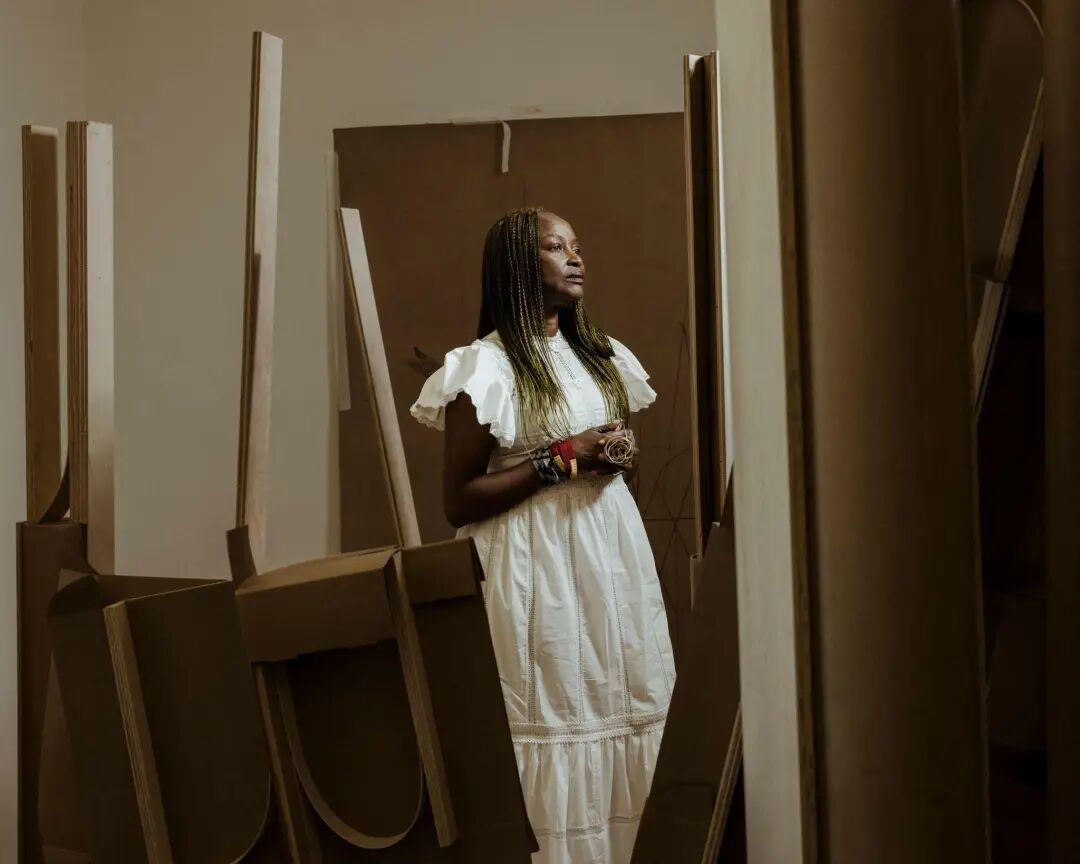
Koyo Kouoh
02 Archive
Zoe Leonardb. 1961, United States
The everyday city is a site of history
Zoe Leonard photographs shop windows, worn clothing, neglected street corners, and used objects—the quiet detritus of daily life that most pass by without a glance. Yet, her practice is far from casual wandering; it is rooted in a precise and devastating historical origin.
She came of age in New York during the heights of the 1980s AIDS crisis. It was an era when time itself felt fractured: people in her community were vanishing, the public sphere shrank from confrontation, and death was systematically ignored by those in power. That crucible brought a crucial realization: if nothing is recorded, entire histories will simply vanish. From that moment on, she began to document, collect, and archive with a fierce, near-obsessive persistence. Her projects often span decades, resulting in vast serial photographs of changing storefronts or systematic archives of discarded objects. This repetition is her methodology. Over time, the everyday thickens into geological strata; each photograph functions as a cross-section of a socio-economic condition caught at a specific moment in time.
In this Venice Biennale, Leonard also appears as a member of the collective arms ache avid aeon, exhibiting under a shared moniker. This decision is deeply political. In an art system where the individual signature is the default currency of authorship, choosing the anonymity of a collective directly challenges the myth of the singular "genius."
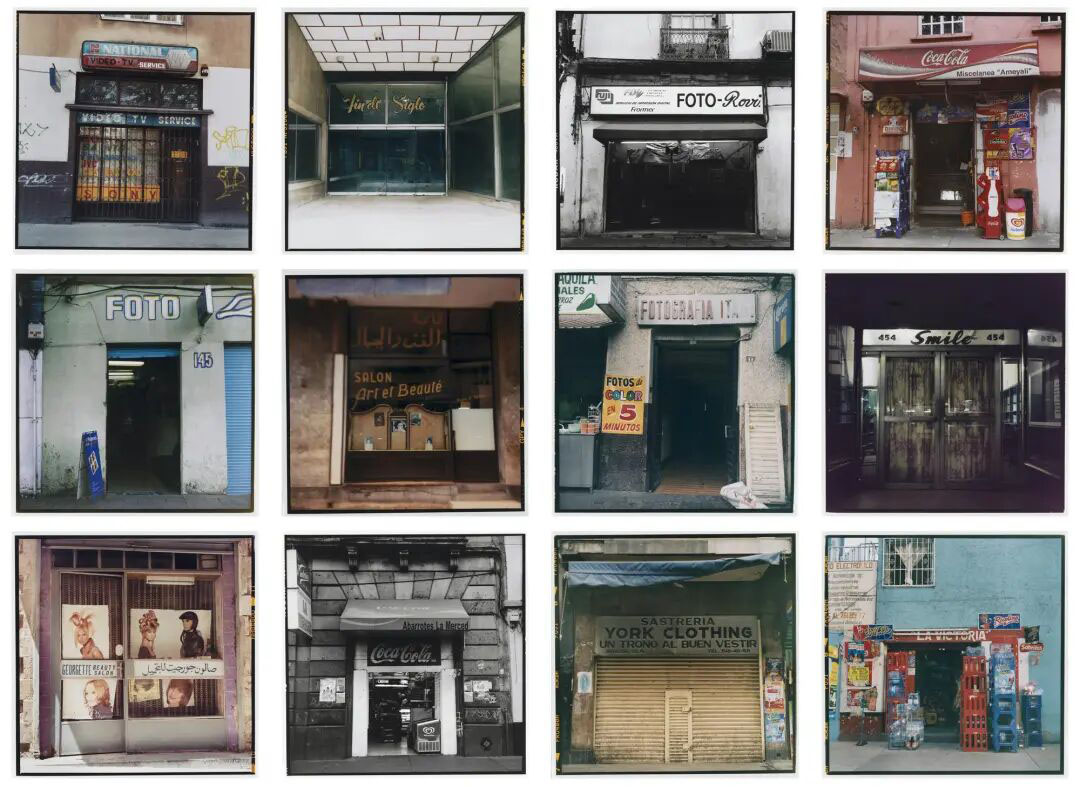
Analogue series, Zoe Leonard, 1998–2009, documenting corner shops, storefronts, windows, and façades one by one
Her presence in this Biennale operates as a quiet insistence. Through everyday, slow, and repetitive gestures, she meticulously repairs the gaps left behind by official history. It is a practice that aligns perfectly with Koyo Kouoh’s logic of the “minor key”: rejecting grand, virtuosic declarations in favor of a continuous, low-frequency vibration—persistent, subterranean, and impossible to ignore.
03 Voice
Laurie Anderson b. 1947, United States
Sound, the reconfiguration of perception
She is a musician, writer, performer, and technological experimenter whose work consistently unfolds at the boundaries—between music and narrative, technology and the body, reality and speculative fiction.
Born in Illinois, Anderson received classical violin training before earning an MFA in sculpture from Columbia University. This interdisciplinary foundation shaped a practice that refuses to settle within any single formal framework. In the 1970s, she immersed herself in New York’s avant-garde art scene, beginning a systematic campaign to blur the boundaries between sound, technology, and live performance.
In 1981, her single “O Superman”—an eight-minute experimental composition built from a processed vocal loop and repetitive phrases—unexpectedly scaled the UK pop charts to reach number two. Yet, she resisted the pull of mainstream celebrity and the commercial music industry. Instead, she remained in a state of productive drift, continuously experimenting at the edges of established systems.
Using vocoders, projection systems, text, and custom electronic instruments, Anderson liberates sound from the purely auditory realm, transforming it into a spatial and temporal architecture. To enter her work is not simply to "listen"; it is to step into an epistemological field structured by language, rhythm, and deliberate pause. You believe you are merely listening, but your perception is in fact being subtly reorganized.
For decades, she shared a profound personal and creative partnership with the writer and musician Lou Reed. Following his passing in 2013, her work turned toward the complex topographies of mourning, time, and consciousness, yielding projects like Landfall—a multimedia collaboration responding to the devastation of Hurricane Sandy, climate change, and personal loss. This rare ability to place intimate, vulnerable experience directly alongside large-scale, indifferent planetary systems remains central to her practice.
In Venice, Anderson’s presence operates as a vital temporal fold. What she brings to this Biennale is not merely a collection of objects, but a half-century methodology—a persistent investigation into how human perception is trained, and how sound can split open the closed circuits of daily habit.
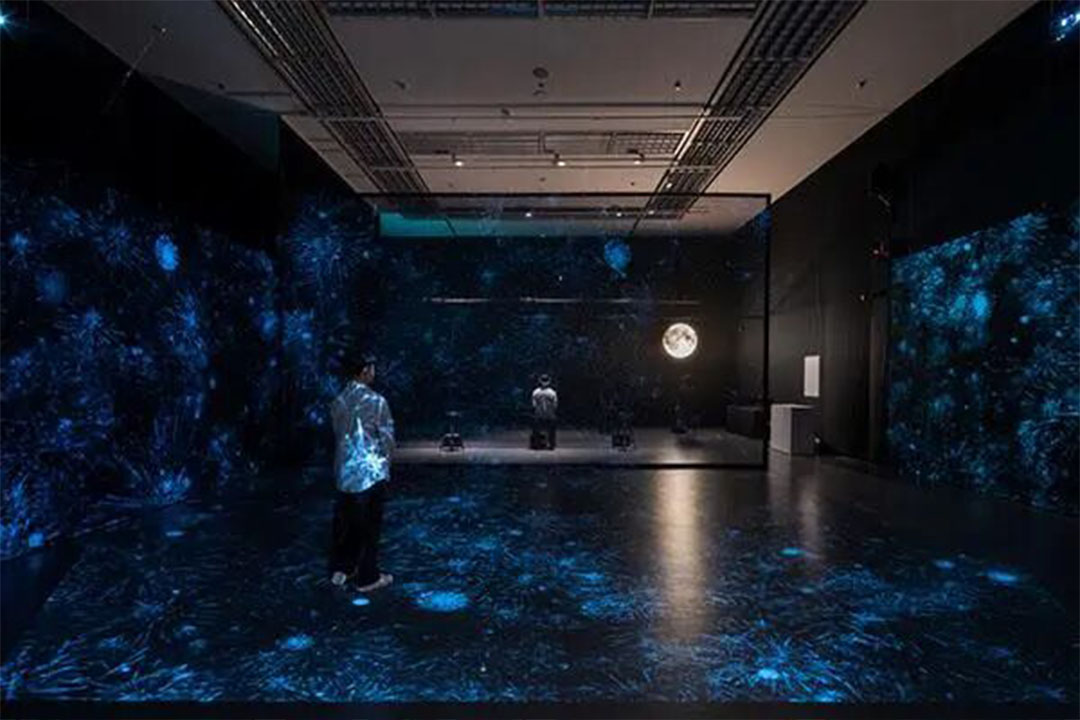
Climate, Laurie Anderson, 2021, an immersive video installation
04 System
Henrike Naumann, 1984–2026, Germany
Sung Tieu, b. 1987, born in Vietnam, lives in Germany
An unfinished collaboration, the poetics of absence
Henrike Naumann was born in 1984 in Zwickau, an industrial city in the former German Democratic Republic. Her early childhood unfolded in lockstep with the dissolution of a country: the Berlin Wall fell when she was five, and German reunification arrived the following year. Yet this historical "unity" was far from a clean break. The debris of the old regime did not simply vanish — it remained embedded in the textures, aesthetics, and domestic habits of everyday life.
Before entering the art world, Naumann had a brief proximity to the conservative youth subcultures proliferating in post-reunification Germany. Rather than a defining biographical label, this experience became her entry point into a specific structural insight: extremist ideologies do not always spread through overt political rhetoric. More often, they operate through everyday environments — the cadence of a music subculture, the arrangement of a living room, a particular vernacular of consumer furniture. Seemingly harmless, mundane elements form a subtle but highly effective ideological system.
Naumann's practice was consistently, explicitly spatial. Reconstructing interiors with authentic furniture and period-accurate commodities, she recreated specific historical moments: East German living rooms, the transitional spaces of the 1990s, domestic environments tethered to radicalized youth culture. These spaces were never sensationalized; they were ordinary, even familiar. Yet it was precisely this familiarity that bred an intense, latent disquiet. Refusing to moralize or accuse, Naumann placed viewers directly inside the space, leaving them to realize that the environment itself was ideology made material.
Sung Tieu's work, by contrast — built from metal, sound, bureaucratic documents, and stark institutional frameworks — appears restrained, clinical, cold. Born in Vietnam and raised in Germany, Tieu draws on the lingering histories of the Cold War, migration, and European institutional mechanisms. Her core concern is rendering invisible apparatuses perceptible: the forms, regulations, legal terminology, and acoustic infrastructures that dictate human movement and destiny. Rather than expressing emotion directly, Tieu forces the viewer to inhabit the system itself, where psychological and systemic pressure becomes visible through its own internal logic.
Together, Naumann and Tieu were selected to represent the German Pavilion — a profoundly coherent curatorial pairing. Each approached the same inquiry from opposite directions: how systems dominate and shape the individual. One began from lived, domestic space; the other from institutional structure. One worked through visible, tactile domesticity; the other through invisible, airless mechanism. One was unsettlingly intimate; the other clinically suffocating.
But in February 2026, amid preparations for the exhibition, Henrike Naumann suddenly passed away.
This loss fundamentally altered the nature of the German Pavilion, shifting it from an exhibition about historical residues to an exhibition that itself now carries an unassimilated historical residue. The intended collaboration became permanently asymmetrical. In response, the pavilion adopted a position of refusal: it chose not to artificially complete Naumann's work, not to substitute her presence with another artist, and not to reduce her legacy to a memorial gesture. Instead, it chose to preserve the raw state of interruption itself.
Naumann's entire practice had been dedicated to what history could never fully process — the stubborn elements that remain embedded in everyday space. Now she, too, has entered that space, irreducibly and permanently.
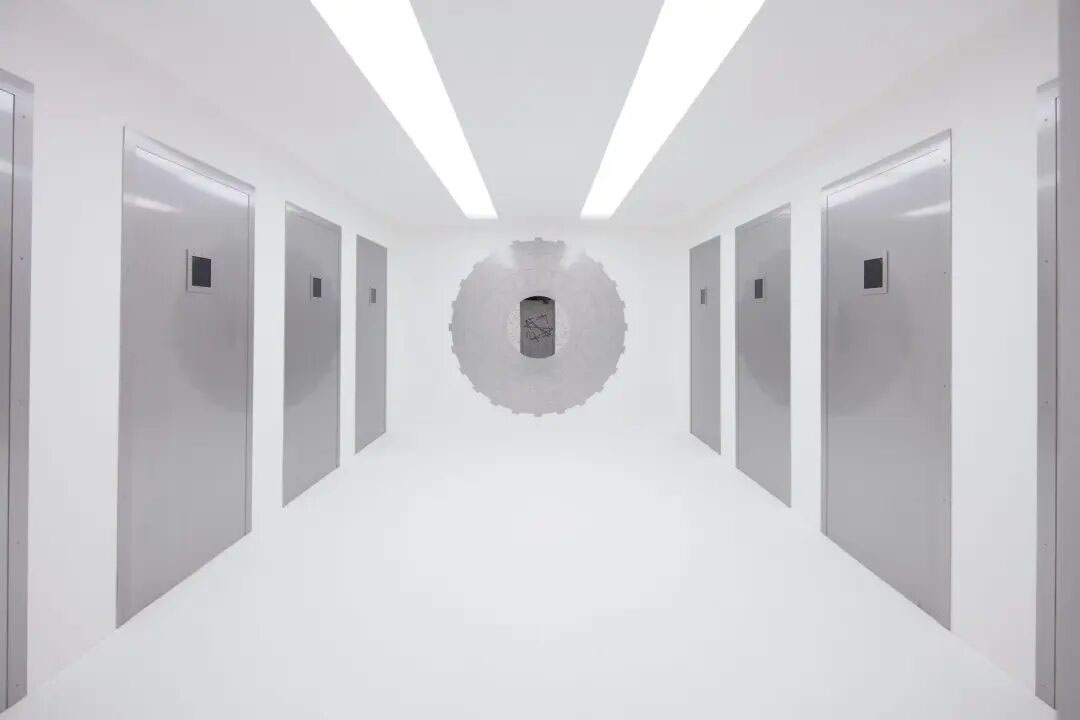
Citizen Ground, Sung Tieu, 2023, installation work
The 61st Venice Biennale thus contains two parallel fields organized around absence: the central exhibition, marked by the death of its chief curator, Koyo Kouoh, and the German Pavilion, marked by the death of Naumann. This parallel was never designed, yet it forms the Biennale's deepest, most resonant undercurrent — posing a final, unavoidable question: can an unfinished structure itself be a profound form of truth?
05 Body
Adebunmi Gbadebo,b. 1992, United States
Body is the irreducible evidence of history
Her practice begins at an intensely specific site: her own family, and a history that has left almost no written record.
Born in Livingston, New Jersey, she grew up within a cultural landscape deeply entangled with the lineage of American slavery. When she began tracing her ancestry, what she encountered was an archival void: under the machinery of enslavement, names, lineages, and identities were systematically erased. History left almost no paper trail—or rather, its traces were driven into another kind of material altogether.
She turns to hair.
Hair is one of the most easily shed, seemingly insignificant fragments of the body, yet it remains an intensely individual biological marker: it harbors DNA, recording health, nutrition, stress, and time. Gbadebo collects hair from within the African American community—not as an anonymous, abstract medium, but as a material drawn from real people, real relationships, and concrete emotional networks. She then weaves, spins, and shapes it into large-scale installations.
Black women’s hair has historically been a site of violent regulation—shaved as punishment, pathologized as “uncivilized,” or coerced into concealment. In the African American experience, the politics of hair is never metaphorical; it is a lived, somatic reality. Her material choice is therefore not merely aesthetic, but evidentiary: it proves that some histories are written directly into the body, remaining entirely indelible to archival erasure.
Her works are simultaneously tender and heavy. That weight does not derive from rhetoric or accusation, but from the raw physics of the material itself—the knowledge that each strand once belonged to a living person.
Within the architecture of the “minor key,” Gbadebo’s practice strikes a particular low frequency: a density of bodily matter that continues to emit signals that formal language can never fully contain.
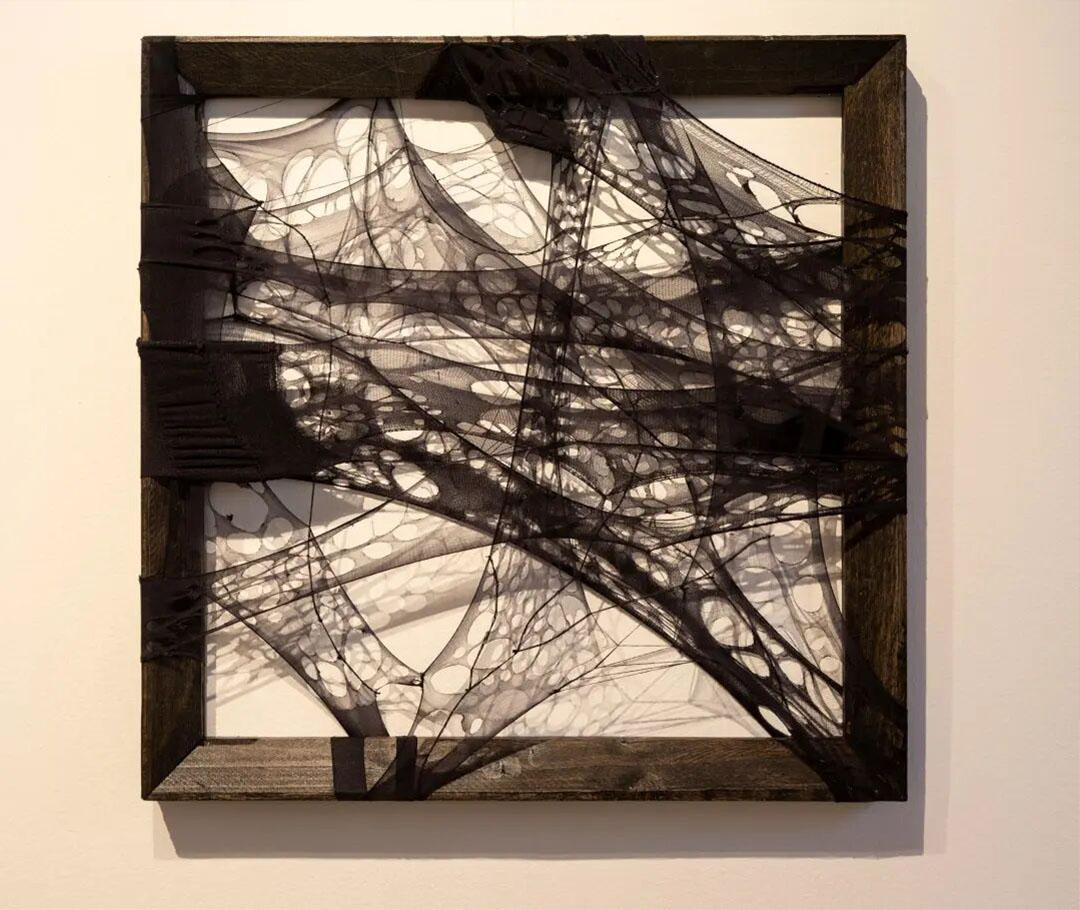
Untitled, Adebunmi Gbadebo, c. 2020s, from her Memorial/Soil/Hair series
06 Care
Natalia Lassalle-Morillo b. 1991, Puerto Rico
with Gloria Morillo
Care is a methodology
The contemporary art system harbors a deep-seated bias: it privileges the “independent author,” the individual perspective, and the discrete, self-contained “artwork,” while relegating care, companionship, and kinship to the private sphere—deeming them affective, perhaps, but never truly epistemic. Natalia’s practice fundamentally dismantles this categorization.
Born and working in San Juan, she grew up within a Caribbean cultural context where matrilineal relationships operate not merely as emotional bonds, but as the structural engines of historical and cultural continuity. Her practice is indivisible from her mother, Gloria Morillo: they labor together, record together, and narrate together. This relationship is never the background music to the work; it is the work itself.
Her question is simple but radical: what happens if care itself is treated as a primary form of creation?
The force of this question lies in how it redefines the boundaries of knowledge production. She transforms mother–daughter voice recordings, bodily memory, and everyday storytelling into perceptible, discussable structures—not by staging a "discourse on care," but by deploying care as a rigorous methodology. In her work, care ceases to be a theme and becomes an operational logic.
Puerto Rico’s geopolitical condition adds a sharp layer of tension: an island territory politically bound to the United States while culturally anchored in the Caribbean and Latin America, where historical narration has long relied on oral transmission rather than paper archives, and on relational networks over institutional records. In this light, matrilineal knowledge is not simply “family intimacy”; it is a survival-based system of information transmission.
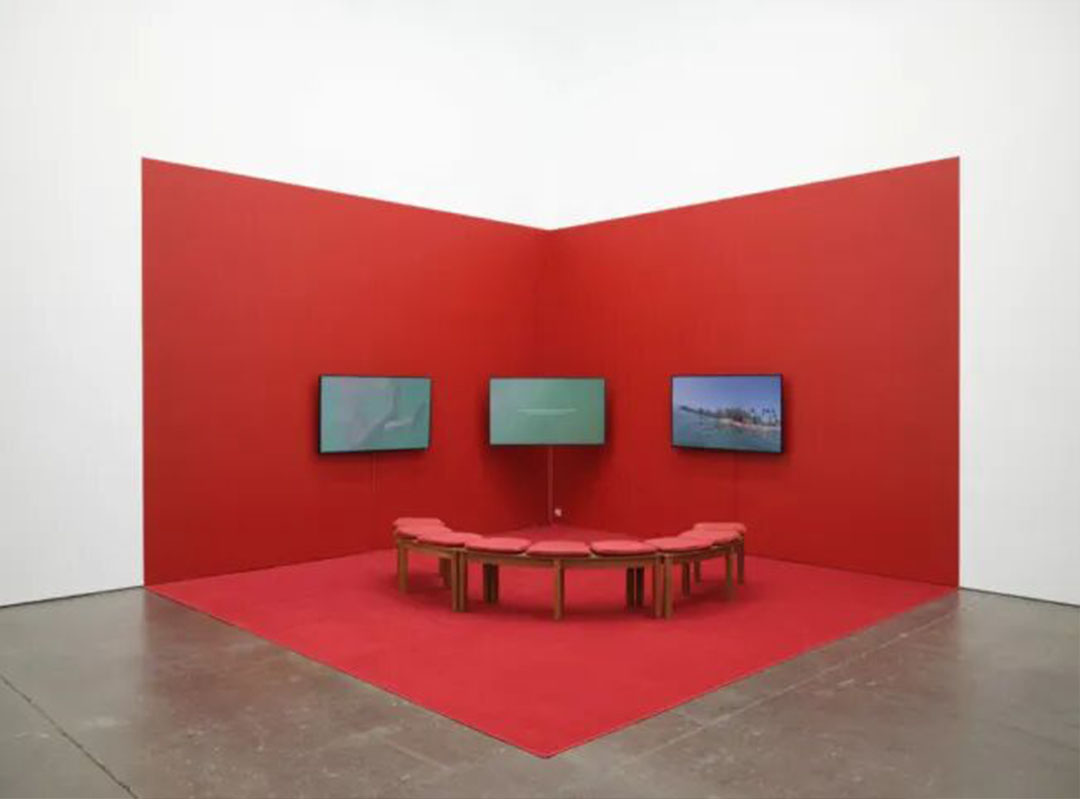
What Remains, Natalia Lassalle-Morillo, c. 2021–2022
In Venice, her collaboration with her mother poses a rarely acknowledged challenge to the international exhibition complex: when a form of knowledge can only be transmitted through relationships, does the art world actually possess the capacity to receive it?
07 Narrative
Sofía Gallisá Muriente, b. 1986, Puerto Rico
When the image itself becomes a battlefield
Several artists in this exhibition work with history and archives. What distinguishes Sofía is that her central question is not "history has been forgotten" but rather: history has never stopped being actively produced.
She is a moving-image artist as well as a researcher and organizer, working closely with archival institutions and community media in Puerto Rico. Her practice almost always begins with existing visual material — news footage, family recordings, political propaganda, forgotten documentary images. But unlike much "archival art," she is not attempting to rescue these materials; she is interrogating them.
Her method involves juxtaposing, interrupting, and rearranging images from different sources. Yet this "editing" is not aimed at constructing a more complete historical narrative — on the contrary, it dismantles narrative coherence. Time becomes non-linear, meaning begins to drift, and the viewer gradually realizes that images are not neutral records of reality but active instruments in the production of reality itself.
This insight sharpens within the political condition of Puerto Rico, a territory long shaped by U.S. political and cultural control. Public media narratives, textbook histories, even disaster reporting — as in the coverage following Hurricane Maria in 2017 — have all been sites of struggle. Who decides which images are preserved? Who determines which voices enter the archive? Who controls how the story of a place is told?
Sofía's work makes the seams of narration visible. Many of her pieces deliberately preserve rupture, absence, and uncertainty — gaps that are not accidental but intentionally left open. These missing elements become invitations: what should be here, and why isn't it?
Alongside Natalia Lassalle-Morillo, she represents another Puerto Rican position within the Biennale. Their practices form an internal tension: one transmits memory through relation and care, the other interrogates memory through the deconstruction of images. Same geography, two epistemologies — this juxtaposition becomes one of the most instructive threads of the exhibition.
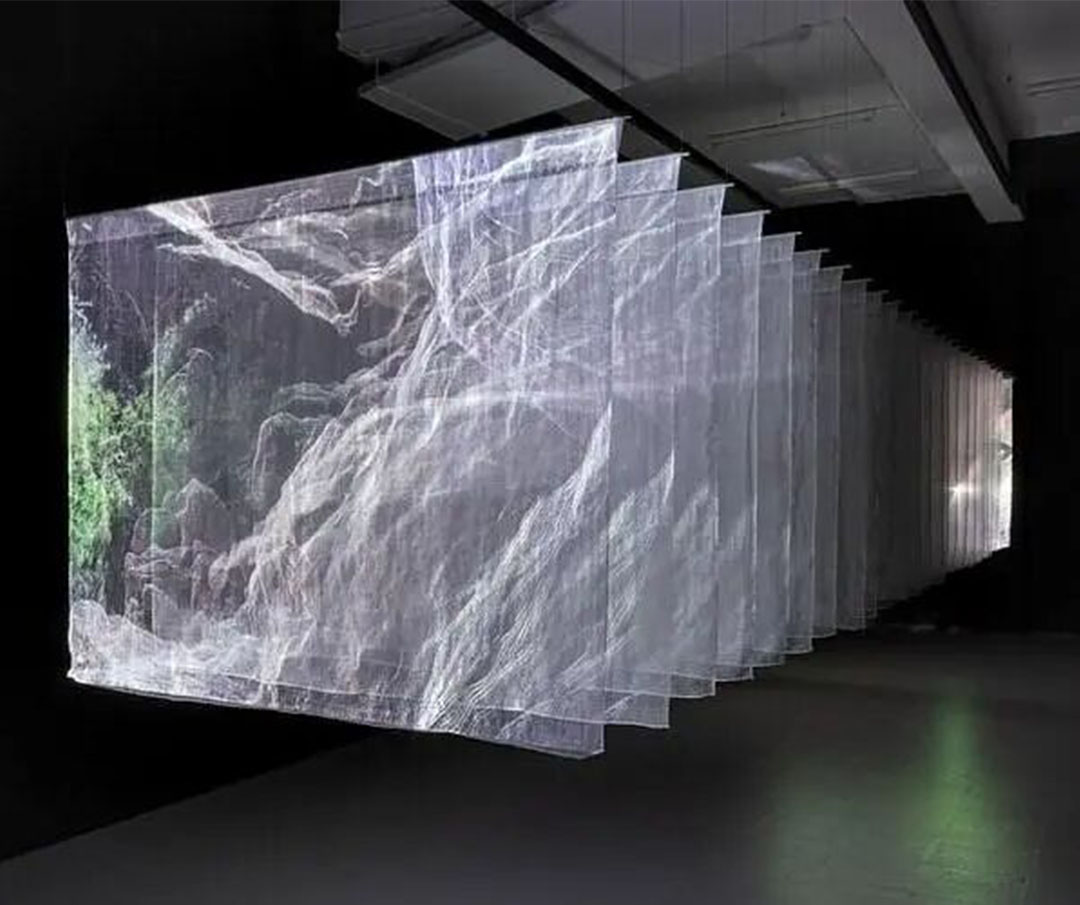
Grave of No Tomb, Sofia Gallisá Muriente, c. 2021–2022
08 Healing
Tabita Rezaire b. 1989, born in France; works between the Caribbean and Africa
When digital technology requires decolonization
Tabita is often described as an "Afro-cyber-feminist" — a term that is accurate but also risks flattening the complexity of her practice. A more precise framing might be: she is someone attempting to build new connections between technology and spirituality, not because she assumes the two are naturally compatible, but because both have been shaped by colonial histories and therefore must be re-examined through the same radical lens.
Born in Paris, with French Guianese and Danish heritage, she studied Moving Image at Central Saint Martins in London. Although this educational path sits firmly within the mainstream art system, her most fundamental critique of that system only sharpened after she entered it.
Her central argument is that contemporary internet and digital technologies are not neutral tools. They were designed and built under specific historical conditions — colonialism, the Cold War, U.S. hegemony — and so they embed particular power structures. The routes of undersea fiber-optic cables closely mirror historical slave trade routes; the geography of data centers replicates global economic inequality. Technology has never been only technical.
Her response is not rejection but reorientation: she seeks alternative modes of access. She brings together African spiritual systems, ancestral knowledge, bodily practices, and digital imagery to construct a new relational grammar — not using spirituality to decorate technology, but allowing both to return to their obscured histories and renegotiate their relationship.
A less frequently mentioned but crucial aspect of her practice is AMAKABA in French Guiana — a site that combines sustainable agriculture, astronomy, artistic practice, and spiritual repair. She is directly involved in cacao farming there. This is not a symbolic extension of her art but a logical continuation of it: if decolonization is to be real, it cannot remain within gallery walls. It must take place in land relations, in food production systems, in everyday bodily engagement with the environment.
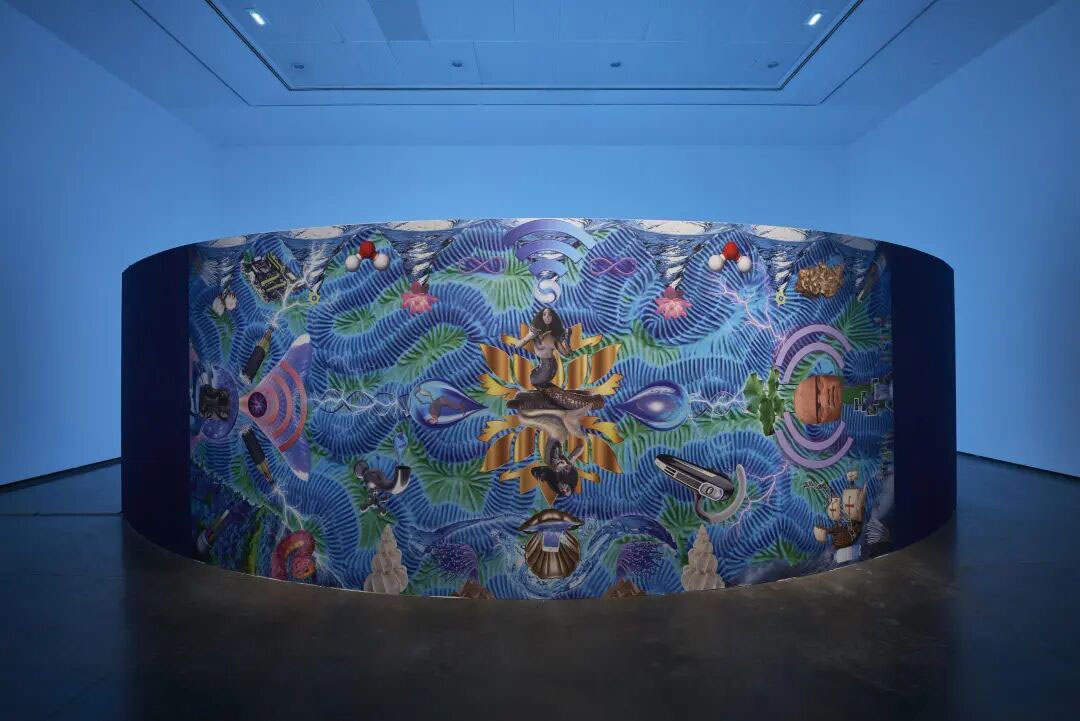
Deep Down Tidal, Tabita Rezaire, 2017
Her work in Venice points toward a longer temporal horizon — not immediate repair, but a way of asking: where can the future begin?
Minor key is not an endpoint. It is a frequency.
These nine women, scattered across the spaces of the 2026 Venice Biennale, each working with their own materials and methods, are engaging different facets of the same historical present. Their presence is both part of Koyo Kouoh's curatorial legacy and a direct response to it.
Across Venice, these nine women articulate different conditions of the present. Their practices form both the legacy of Koyo Kouoh and its continuation.
The music continues. Even when drowned out by the anxious noise of the world, it never truly stops.
A minor key is not a soft noise, nor a gesture of retreat. It is a choice of another intervallic logic — one with its own penetrating force, one that vibrates continuously in the low register, one that does not rush to be heard yet cannot be ignored.
These women are that frequency.
Producer: Tiffany Liu
Editor: Tiffany Liu
Designer: Yuki
Images: from the internet, Venice Biennale



