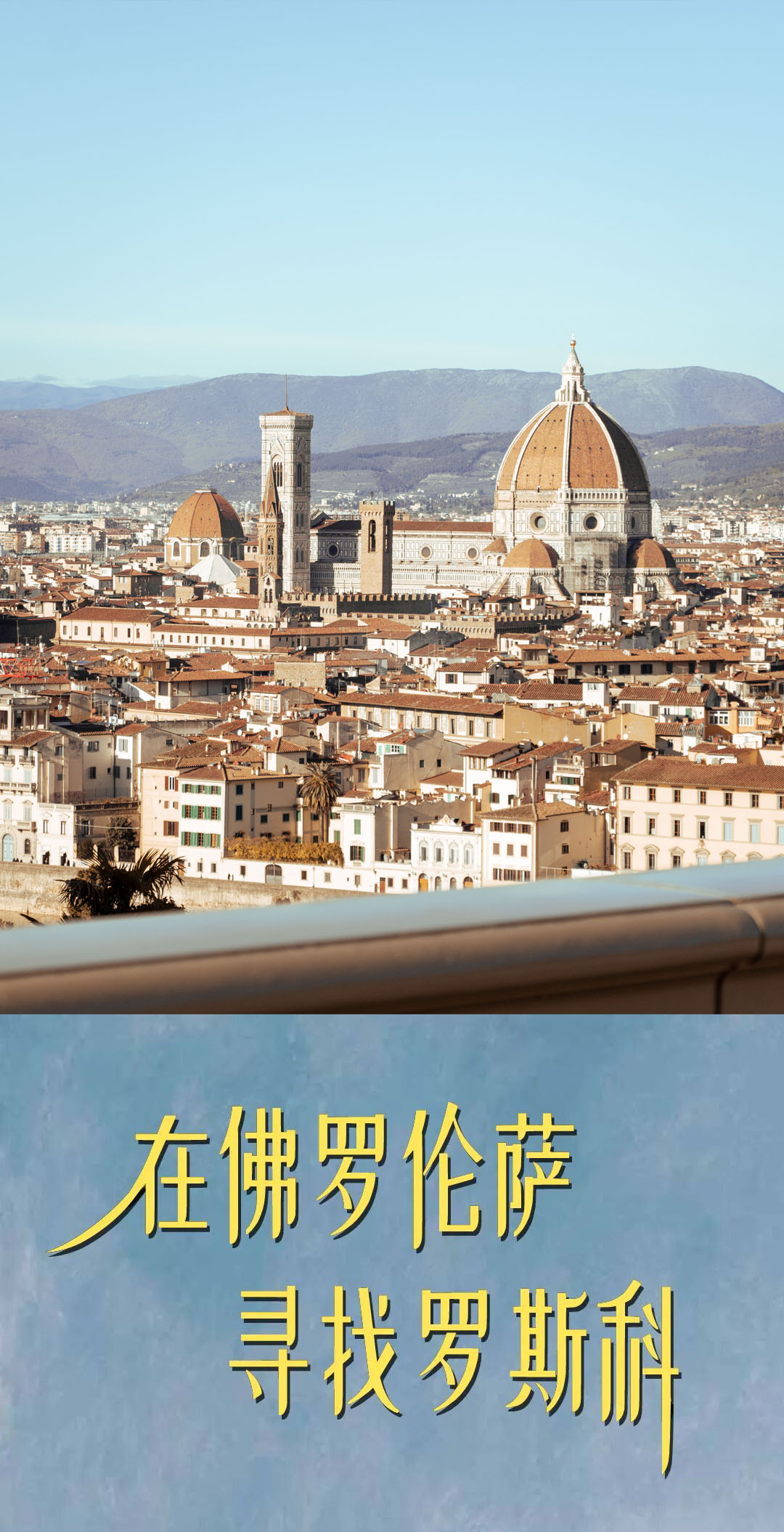
Florence, the birthplace of the European Renaissance; Mark Rothko, a pioneer of contemporary American Abstract Expressionism—two names not easily reconciled, but recently brought together at the Palazzo Strozzi in the recent major retrospective Rothko in Florence. The premise is far from arbitrary. During the 1950s, Rothko visited Florence, and the city’s rich legacy had since left a mark on his vision.The exhibition’s preface sums up the case thus:
"He [Rothko] returned to Florence again and again, and his direct encounter with Renaissance art... exerted a profound influence on his creative practice and aesthetic sensibility, offering him a model of 'immersive art'—one capable of connecting with the viewer on both a perceptual and a spiritual plane."
And yet, stepping into Palazzo Strozzi, what awaited me was something quite different from what I had expected. After wandering the galleries, I came away gravely unsatisfied by the exhibition's broad-brush claims. Still, the very idea of Rothko in Florence continued to intrigue me. Something told me that beyond the walls of the show, a great deal remained unsaid, and it is that which has prompted me to set these thoughts down into words.
Part I: Where is Rothko?
Rothko in Florence, organized by the Fondazione Palazzo Strozzi, bills itself as "one of the most important exhibitions ever dedicated to Mark Rothko... a unique project conceived specifically for Palazzo Strozzi to celebrate the artist's special bond with Florence." Framed this way, it was hard not to expect some little-known anecdote or a handful of rarely seen works that might offer a fresh new narrative on this otherwise complicated, layered artist.
What the exhibition delivers is something else entirely. From Rothko's early figurative work, through the Surrealism of the 1940s, to the classic color-field paintings of the 1950s, and finally to the late "Black on Gray" series — the galleries unfold with meticulous chronological precision, assembling what amounts to an exhaustive archive of Rothko's development. Running alongside this timeline is an unrelenting stream of references to Florence and the Renaissance, surfacing at every turn:
"The smallest works on display were made without the use of perspective, drawing on techniques from Florentine Renaissance painters." "The architectural elements of Interior recall ancient temples and tombs, or the famed Medici Chapel that Michelangelo designed at Basilica of San Lorenzo." "The weathered deep red of the Roman walls, and the stillness of those spaces, profoundly shaped his sense of color and scale..."
Within this framing of the artist's biography, the insistence on referencing the same topic again and again seems designed to prove that Rothko's life was indeed “in dialogue with Florence." But the evidence offered is almost entirely confined to matters of technique and craft, and this had left me more than a little puzzled. Such curatorial logic, in one sense or another, sits at odds with Rothko’s own conviction. Here was a man who devoted his life to touching the essence of existence itself through paint—In a 1956 interview with the critic Selden Rodman, he put it plainly: "I'm not an abstractionist... I'm not interested in the relationship of color or form or anything else. I'm interested only in expressing basic human emotions — tragedy, ecstasy, doom, and so on." His son, Christopher Rothko, an art historian in his own right, has gone further still. In Mark Rothko: From the Inside Out, he traces through his father's entire career the "constant, palpable presence of my father's humanity" , insisting that what pulses beneath those blocks of color is always the trace of an "engaged, kindled human spirit."
And it is this same Christopher Rothko who co-curated the exhibition. Perplexed, I turned to the exhibit’s two remaining spaces, hoping to find a more satisfying answer there.
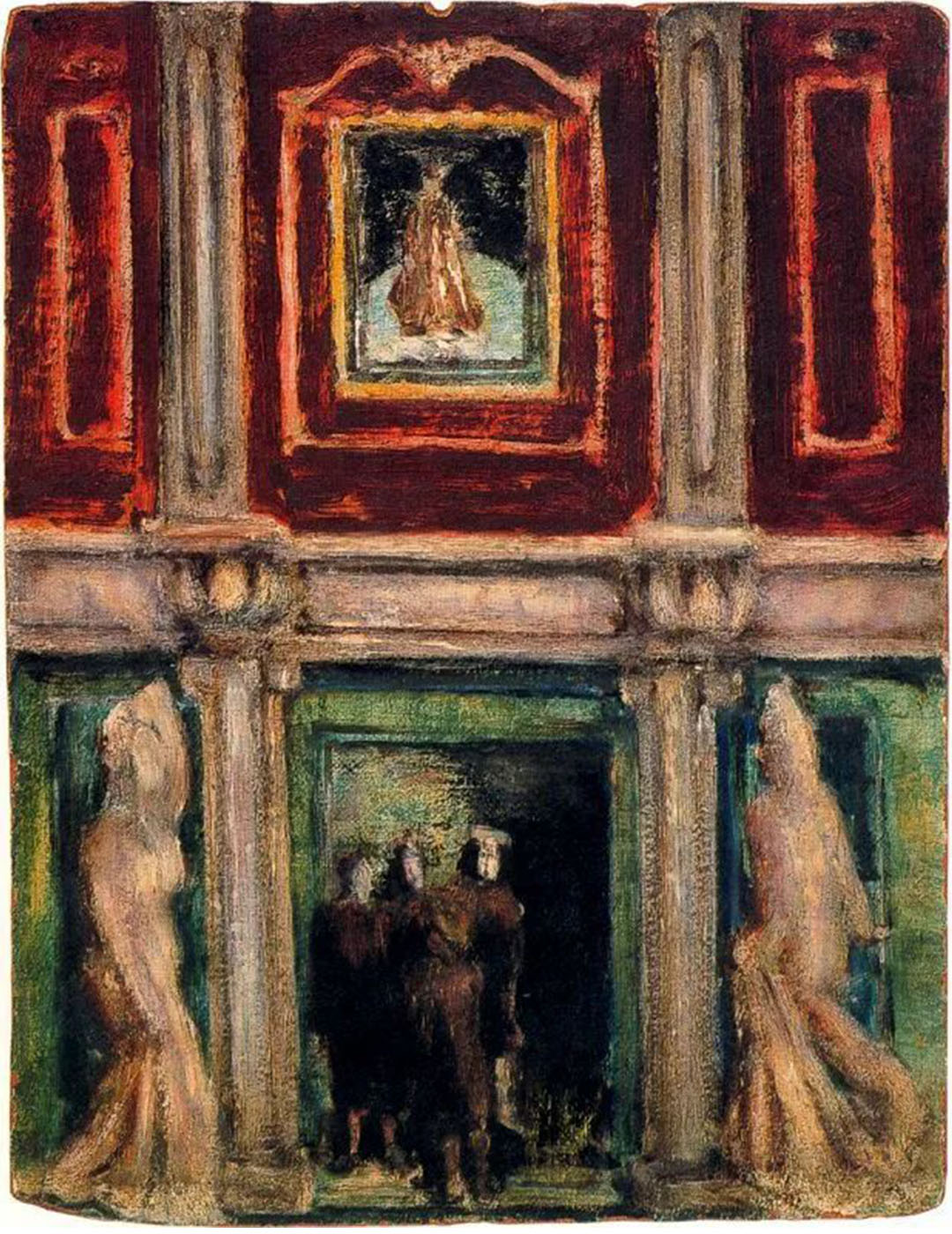
Interior, Mark Rothko
1936, oil on hardboard, 60.6 × 46.4 cm
Part II: What Did Rothko See?
Beyond the main exhibition at Palazzo Strozzi, one of the show's most notable features is its dispersal across the city. The Museo di San Marco and the Biblioteca Medicea Laurenziana — two venerable landmarks — serve as satellite venues to the central show, and both, notably, are places Rothko himself named in past interviews.
It was in these spaces, with their distinct atmospheres and spatial quality, that I finally arrived at a more tangible understanding of the man. The Museo di San Marco is a monastery. On his first visit to Florence, Rothko had planned to spend only an afternoon there, and yet he ended up staying until closing. Fra Angelico's luminous frescoes, together with the monastery's almost tangible devotion, moved him so deeply that he returned the following day. It became one of his most cherished places in the city.
The exhibition attempts to recreate something of that “tender” encounter: along the narrow second-floor corridor, a row of monastic cells — each a small, partitioned square — pairs Rothko's abstract canvases with solemn, devotional frescoes, the two fixing their gaze together on every visitor who passes through. The second space is the Biblioteca Medicea Laurenziana, designed by Michelangelo and completed in the sixteenth century. Rothko spoke, in several interviews, of his fascination with its vestibule:
“I was very much influenced subconsciously by Michelangelo’s walls in the staircase room of the Medicean Library in Florence. He achieved just the kind of feeling I’m after. He makes the viewers feel as though they are trapped in a room where all the doors and windows are bricked up, so that all they can do is butt their heads forever against the wall.”
Startling, as Rothko so often was — but more striking still is that this is the exhibition's only direct quotation from the artist himself. And by curious coincidence, that single sentence captured exactly what I felt while moving through the show. Inside the cramped cells of San Marco, a sliver of daylight fell through a small window nearby, and that thin shaft of light only deepened the sense of confinement pressing in on the room. What met my eye were sorrowing, empathetic biblical figures, before whom even Rothko's paintings seemed to yield, submitting to their divinity and grandeur. The vestibule of the Laurentian Library is an even more sealed, austere box of a space. Between towering stone columns and shuttered archways, two of Rothko's late works — black and red interlaced — stand enthroned at its center, the focal point of the entire architecture; they are a silent majesty shadowed by a faint undertow of oppression and unease.
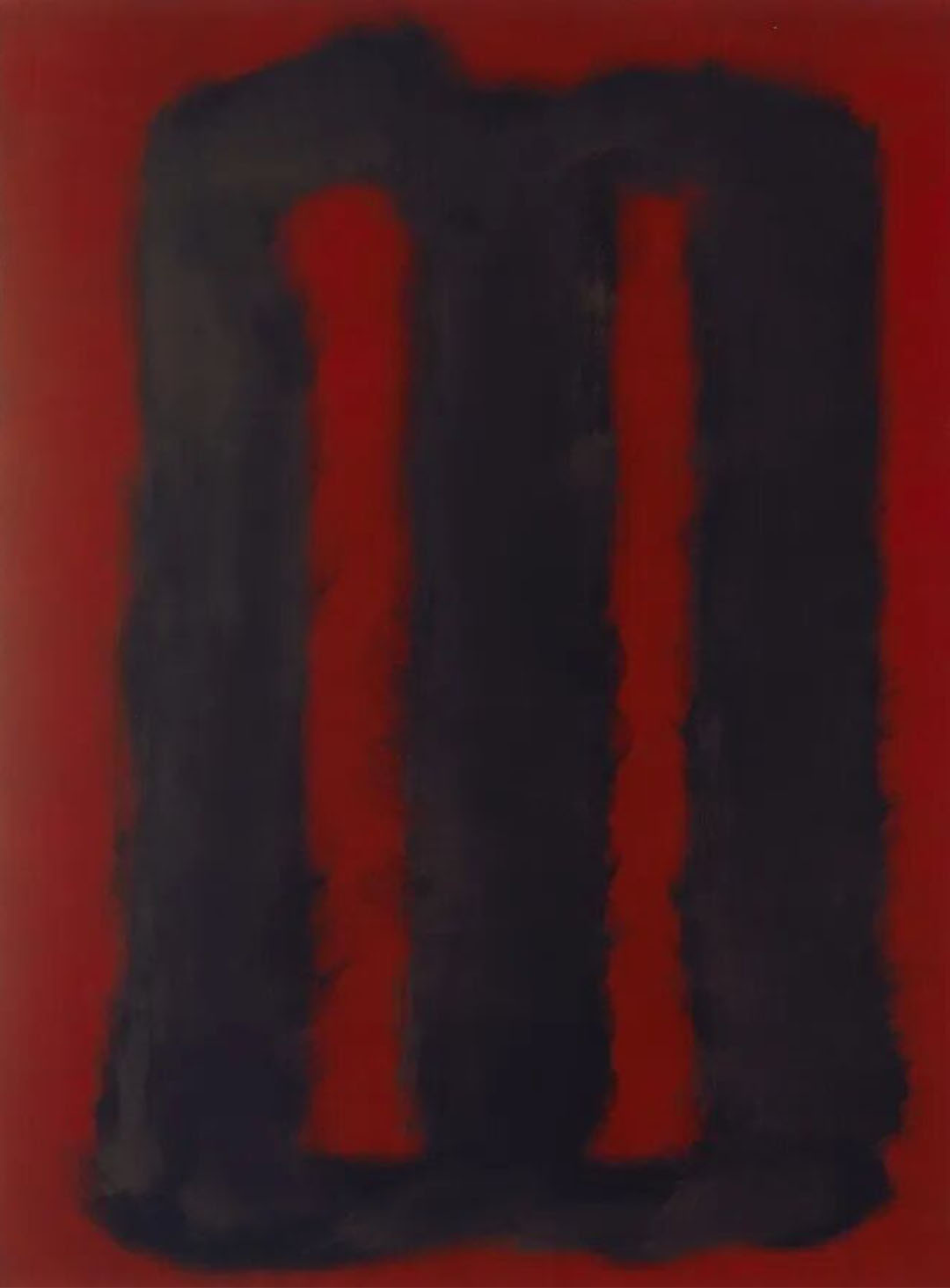
Seagram Murals Study, Mark Rothko
1958, watercolor, oil on watercolor paper, 75.6 × 55.6 cm
Not "inspired." Not "nourished." But “confined”. Whether in Rothko's own words or in my own eyes as a viewer, this reading diverges sharply from the exhibition's official narrative — and yet resonates uncannily with the themes of his late work. Whether in the coiled, inward tension of the sketches for the Seagram Murals, or the drowning weight of color in the "Black on Gray" series, both bodies of work are saturated with a fascination for confinement, introversion, oppression — proclaiming an inner impasse from which the artist could find no exit.
As Rothko himself put it: "I have imprisoned the most utter violence in every inch of their surface."
Part III: What Was Rothko in Florence
Chronologically, most of these late works were made well after Rothko's travels through Florence. The question, then, is whether the city served as a catalyst or as an echo chamber. To answer it, we first need to understand exactly what moment in his life brought him there. Rothko, in fact, visited Florence twice. His first visit was in 1950 — but in the decade before it, he had already spent considerable time studying and brooding over the Renaissance. In an unfinished manuscript later collected in The Artist's Reality, he laid out the history of art from ancient Greece through the Renaissance in a philosophical, systematic fashion, with the Renaissance receiving by far the heaviest treatment. One passage reads:
“In our age starvation is the lot assigned to the devotee of this practice… Fortunate indeed have been those artists living in the golden age of Pericles, or patronized by the cultured merchants of the Renaissance or by the iconoclastic soldier-poets of the Trecento.”
Christopher reads in this an “unacknowledged envy” in his father: “Far from receiving commissions from popes or kings, he had, for the past decade, been forced to survive on government relief. Rothko was evidently deeply humiliated by this state of dependency." Carrying a decade's worth of these tanglesome emotions, Rothko (then forty-six) set foot in Florence for the first time in 1950. The trip was arranged by his wife, Mell, with the intent to help him recover from the psychological breakdown brought on by his mother’s death.
Over five months of traveling through Italy, he passed through Siena, Venice, Florence, and Rome. Lands and scenes he had written about for years without ever having seen them now appeared before him in the flesh — and it was on this trip that he first walked into the vestibule of the Biblioteca Medicea Laurenziana. Yet it was too after this encounter that his painting entered its most vividly colored phase (to phrase it in my intuitive metaphor, of crimson clouds on the brink of nightfall). His palette did begin to darken gradually from the mid-1950s on, but the philosophy of enclosed, inward-compressing space that would come to define his late work did not fully take shape until after the Seagram Murals commission of 1958.
In 1966, following a five-week stay in Rome, he returned once more to Florence. Compared to his first visit, this felt less like a discovery than a revisiting. Rothko had just completed the Rothko Chapel commission in Houston. This principle, upon which this chapel was built—a solitary space, a solitary painting, a solitary audience—shared an essential kinship with the Monastery of San Marco. Rothko left no written or spoken record of this second visit. Two years later, this contemporary artist, by then largely celebrated, would be hospitalized for an aortic aneurysm. Four years after that, he would end his own life in his New York studio.
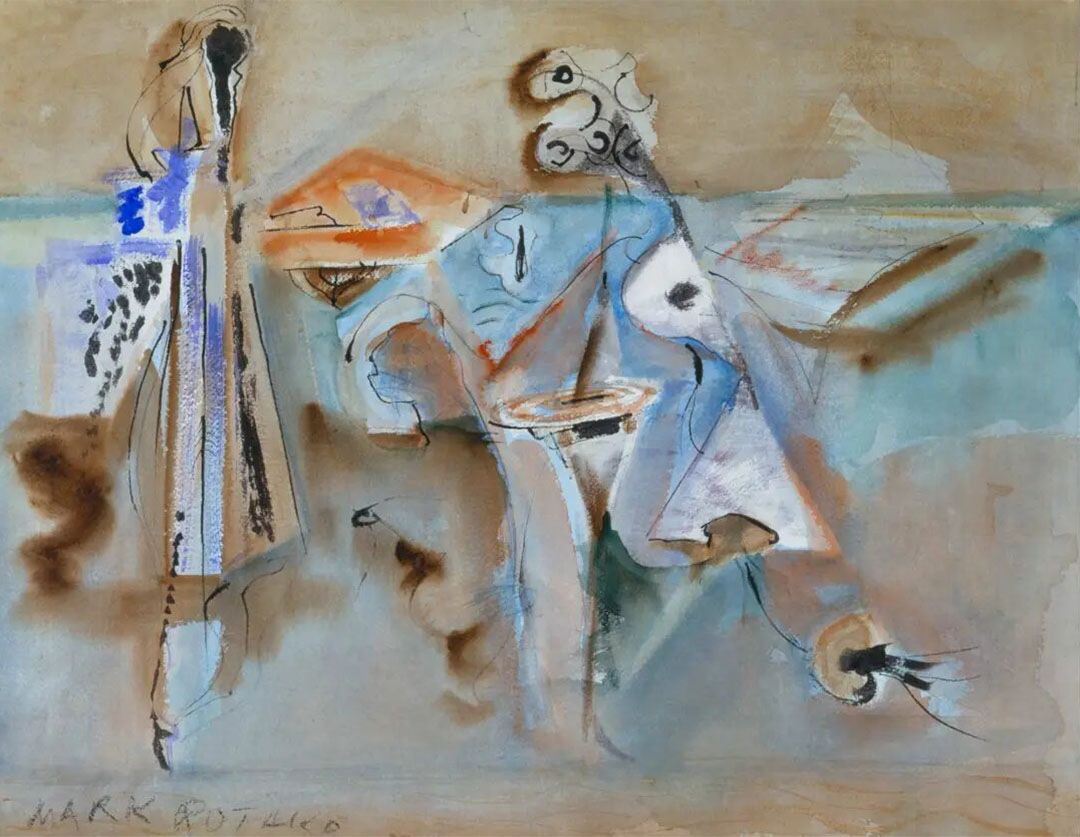
Untitled, Mark Rothko
1944, watercolor, ink, graphite, scrubbing on watercolor paper, 57.5 × 78.9 cm
Part IV: What Did Rothko in Florence Really Mean?
The first journey was undertaken in the struggle to recover from its collapse; the latter returned to a life approaching its closure. Seen in this light, these two visits, sixteen years apart, do occupy rather distinctive junctures in the artist’s life. And so, here is where I arrived: the images of “spiritual seeker” and “craft apprentice” that the exhibition attempts to construct may hold true in a strictly factual sense (Rothko did sustain a long engagement with Renaissance art, and his visual language shows a considerable degree of correspondence with it, which lends the exhibition's argument a certain traceable logic) but likewise diverged from the artist’s own spiritual core. To put it more bluntly: the influence Florence exerted on Rothko was real, but not quite what this exhibition claims it to be.
And this particular narrative left me with a subtle unease. In 2023, the Foundation Louis Vuitton in Paris mounted a Rothko retrospective similar in form to this one, likewise using his artistic trajectory as its curatorial through-line. But the Paris exhibition was oriented toward "filling a gap" — in the words of curator Suzanne Pagé, "Mark Rothko has long lacked the presentation and recognition he deserves in France, and this exhibition hopes to let French audiences rediscover him.", and with the sheer scale of works and its public educational programming, together they created a lucid and complete Rothko experience.
What's more interesting still: during his 1950 tour of Europe, Rothko also visited Paris. "Rothko in Paris" would have been just as viable a concept — he had likewise gone long without systematic presentation across Europe, Florence included. The only difference is that Paris candidly acknowledged the distance between itself and the artist, while Florence has tried to close that distance — even at the cost of bestowing on him an identity that has never been rigorously verified.
I In this process, the artist quietly shifts from being the subject of the narrative to becoming a medium for the city's own narrative — a shift made explicit in the preface to the official catalogue from the Fondazione Palazzo Strozzi: "For years, the Foundation has committed itself to advancing this mission, developing projects designed to affirm Florence's Renaissance identity, positioning it as a meeting point of different languages and contemporary thought. Rothko's encounter with this city thus becomes an occasion to confirm the enduring power of dialogue between past and present."
This unguarded statement confirms that the exhibition, in fact, is a cultural declaration on behalf of Florence. Beyond the side it wishes us to see, that is, the spiritual kinship between artist and city, what I glimpsed on the other side was the long-standing disposition of this thousand-year-old city of art: a tradition that casts the artist as craftsman, governed by the premise of religious narrative, in which "art," once disenchanted, cannot exist purely as itself. Case after case, it grew to be bound up with other purposes: In the Renaissance, art was the visible embodiment of the glory of the Church and the Medici family. Today, perhaps, it has become a continual cashing in on historical heritage, a carefully tended cultural brand, a yearning to reclaim its place on the map of contemporary art.
And behind the drawing of Rothko into this apparatus of declaration, other threads seem to be at work. As I strolled through the city of Florence, I noticed something telling: this small city that spanned no more than a hundred-odd square kilometers was home to more than ten art institutions with American ties. From the long-established SACI, which has served generations of U.S. students for decades, to the permanent exchange programs run here by universities like Texas State, the University of Minnesota, and the University of South Florida, thousands of American students arrive each year to "complete" their art education. They study Renaissance painting, restore ancient frescoes, move between monasteries and museums, seeking to return to some imagined “origin of art”.
This long-standing bond makes the relationship between Florence and the American art world — and the international art world more broadly — far more complicated, and far more mundane, than any single exhibition could convey. The narrative of inheritance keeps working its magic, and everyone is glad to receive it. None of this is in itself objectionable. But an untimely thought flickered through my mind: to Florence, perhaps Rothko is simply another American student. And it was at that moment I understood: the exhibition's title, "Rothko in Florence," could not be more precise — for Rothko was, from the very start, only ever placed within this city, never once given the chance to stand beside it as an equal.
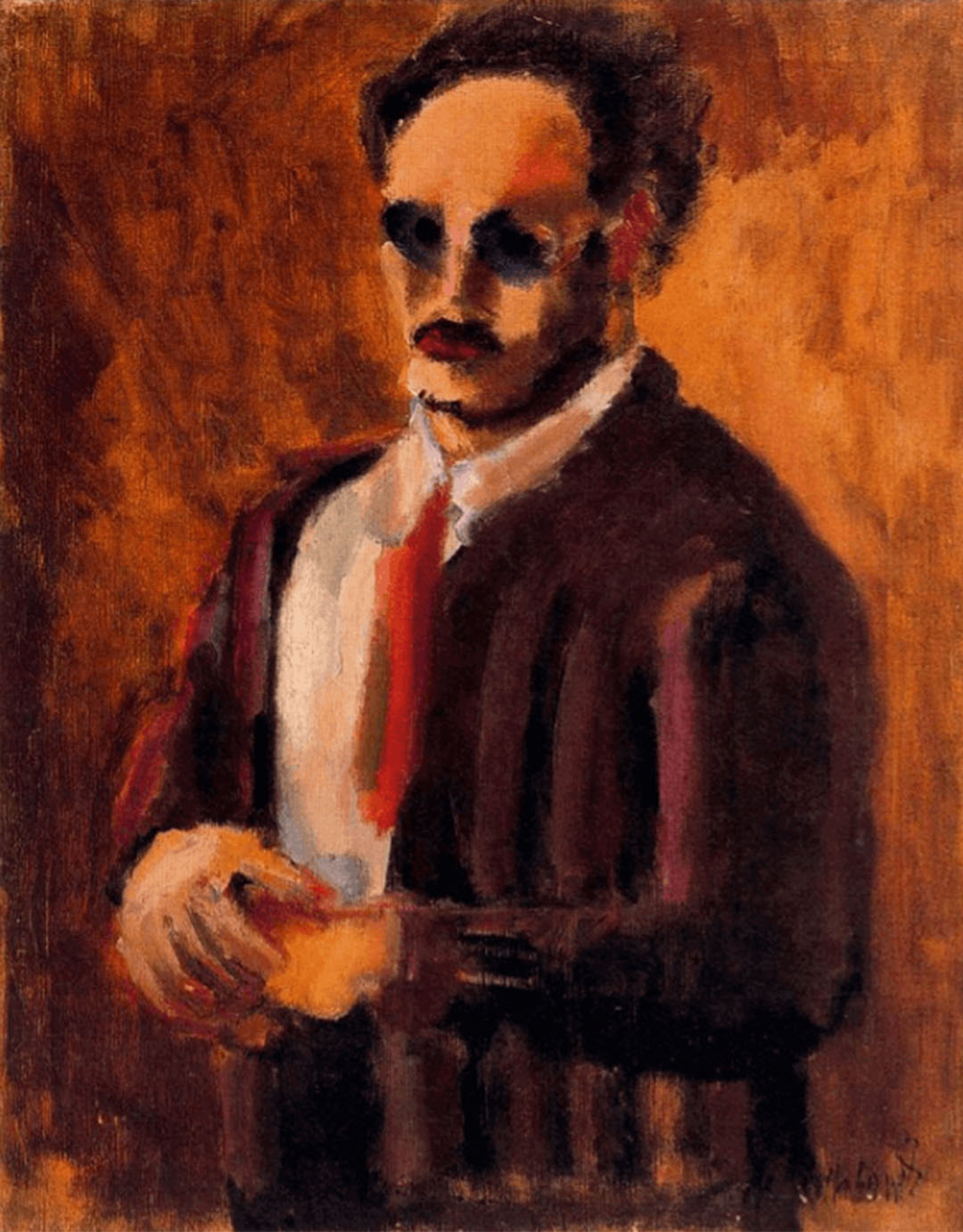
Self-portrait, Mark Rothko
1936, oil on canvas, 81,9 × 65,4 cm

Producer: Tiffany Liu
Editor: Tiffany Liu
Designer: Nina
Image : Official website of Palazzo Strozzi, Pace Gallery, and the Internet



