Spanish novelist and poet Sara Mesa is regarded as one of the most distinctive and compelling voices in contemporary Spanish literature. Her novel Un amor explores female vulnerability and growth within a closed, insular environment, portraying the struggles and transformations of individuals under the pressures of contemporary life. During Shanghai International Literature Week, we spoke with Mesa about the ideas behind her writing, beginning with Un amor, and her approach to exploring the more elusive dimensions of human nature.
Born in Madrid in 1976 and raised in Seville, Mesa began her career in journalism before turning to fiction. She has published novels, short-story collections, and poetry, and has received major Spanish literary honors, including the National Poetry Prize“Fundación Cultural Miguel Hernández.”and Ojo Crítico de Narrativa Prize. Un amor, which she wrote intermittently over the course of six or seven years, was published in 2020 and was soon named one of the best books of the year by numerous publications.
We met Sara Mesa at the Instituto Cervantes in Shanghai. With her short, neatly cut hair, blue eyes, and a white short-sleeved shirt embroidered with several cartoon cats peeking out here and there, she offered a playful counterpoint to her initially serious expression. “I just bought this in Shanghai,” she said with a smile, carrying a sense of worldly familiarity alongside an almost childlike innocence.
As a writer who dislikes planning her creative process according to a fixed system, Mesa does not follow a strict writing schedule or work according to a predetermined framework. Such rigid structures, she believes, are not necessarily conducive to writing. “The process of conceiving an idea is very mysterious, a bit like scenes in a dream, or the places I have passed through… An idea is like a seed. As you write, other things gradually begin to happen, and the seed slowly grows, generating new ideas.”
Before turning to fiction, Mesa worked in journalism. This experience has led her to maintain a deliberate distance from reality when constructing fictional narratives. Her writing avoids excessive embellishment, often favoring short sentences while retaining the rough edges of realism and leaving room for readers’ imagination. She explains that she tends to portray the world around her in indirect and understated ways, allowing her writing to reach a broader and more open dimension.
Escape: A Metaphor for the Anxieties of Contemporary Life
Escape is a recurring theme in literature. Leaving behind a familiar and comfortable environment for an unfamiliar one often entails a kind of “rebirth,” as individuals seek to find their balance through encounters and collisions with others. Yet escape can also become a vicious cycle: longing to break free from a suffocating everyday life and hoping to overcome difficulties through a change of surroundings, only to find oneself falling deeper into fear and uncertainty.
The idea for Un amor emerged from a convergence of different events. A woman was preparing to move; a writer friend of Mesa’s was struggling to pay bills and preparing to relocate to the countryside. These were what Mesa describes as "sparks of inspiration", appeared in succession and became the starting point for the entire narrative.
The novel opens directly in the unfamiliar surroundings, with little sense of ease: “Night fell, as though a heavy weight were pressing down on her, forcing her to sit down just to catch her breath. The silence outside was not what she had hoped for.” Having just moved to the remote village of La Escapa, Nat is unpacking and cleaning her rented house. She does not have enough savings to rent a better place by the sea, but she still sees the move as an opportunity to begin a new life. She starts cleaning, telling herself that once the weather cools down, things will become easier.
Mesa is clear that Nat’s escape from the city to the countryside is not intended to evoke an idyllic rural life. Instead, she constructs the countryside as a closed society, observing how an outsider attempts to integrate into it—and how that process can even trigger a sense of claustrophobia. This is a recurring characteristic of her work. In Cara de pan (The Face of Bread), the setting is a boarding school inhabited by girls; in her recently published essay collection Silencio administrativo (Administrative Silence) and her latest novel Oposición (Opposition), she turns her attention to offices, using these enclosed spaces to examine women’s personal growth in the face of social conventions and structures of power.
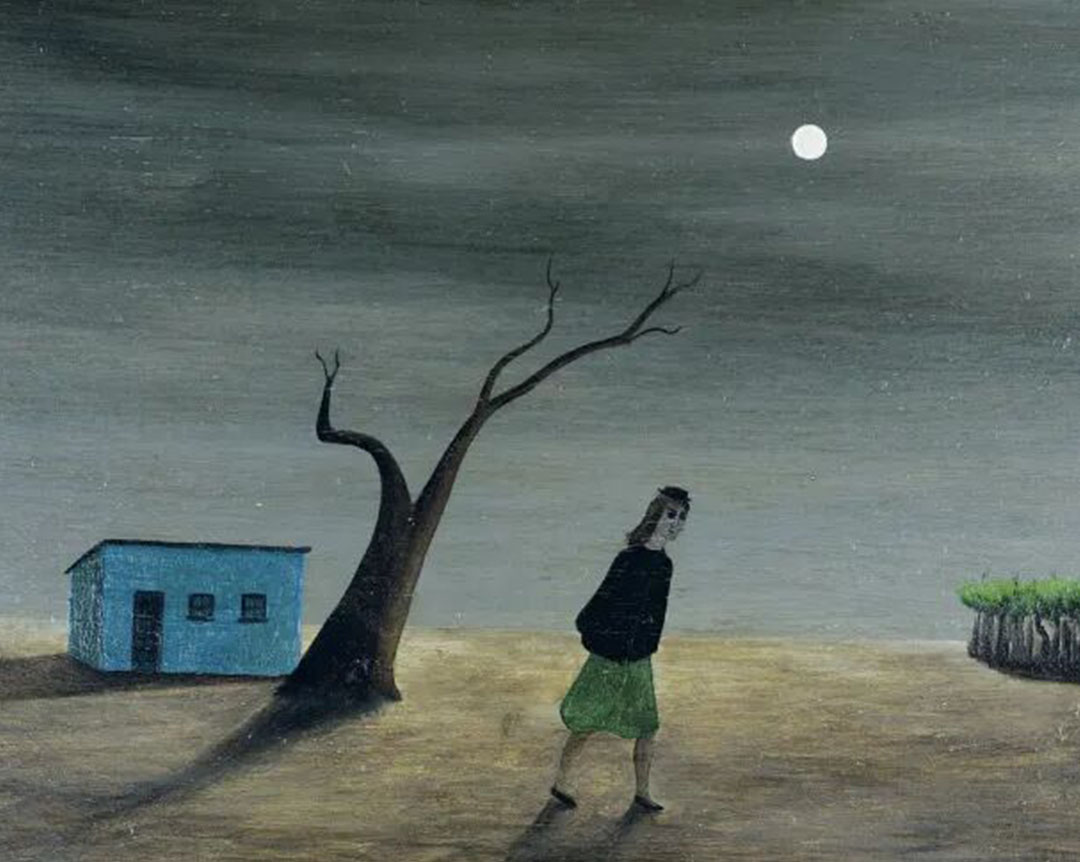
Un amor cover illustration. Image source: Internet
As Mesa puts it, “What happens within a family, or in an office, acts as a mirror for the whole society.” In Un amor, Nat escapes to a rural community rife with neighborhood gossip, only to find that there is no pastoral idyll waiting for her. Instead, she is immediately confronted by a difficult landlord, a leaking house, and an unremarkable man who proposes a strange exchange. Everything is mundane, yet deeply unsettling.
Love, the Untamable Other
The title of the book is deceptively simple, yet carries a complex and ambiguous meaning. The unequal relationship between the two protagonists has little to do with conventional romance; instead, it is more like a storm whipped up by muddy earth. Mesa’s work is consistently grounded in social realism and critique. So how did she arrive at such a title? She explains: “When readers see the title, they may begin to wonder what a love actually means. Of course, this is not love in the traditional sense. It may not be the kind of love people want, nor the kind of love traditionally expected of women by society. It may not even be the kind of love readers expect. But I think it is a choice that belongs to Nat. As a young woman, it is entirely possible for her to see this relationship as one possible form of love.”
Love becomes an illusion to be deconstructed. It may appear sweet on the surface, only to reveal more complicated and bitter flavors when tasted—a much darker experience. As Nat reflects, “A single moment can be enough to prove an entire life,” yet eventually, “her memory keeps fading, until now it has shrunk to something that could fit inside a fist.”
After reading the book, some readers have interpreted Un amor as referring to Nat’s love for her dog, Sieso, an animal whose presence runs throughout the novel and carries a strong symbolic weight. At the beginning of the story, Nat receives an ill-tempered dog from her landlord and names him Sieso—a name that itself means “annoying” or “irksome.” She hopes that “once she has a dog, things will become easier.” Andreas, meanwhile, has a cat named Lee. After he coldly kills Lee’s newborn kittens, his relationship with Nat also reaches its end. When Sieso injures a neighbor’s child, he is taken away, only to escape and return in search of shelter,all conflicts converge and reach their peak.
In Un amor, the relationships between humans and animals run in parallel with those between people, forming a series of metaphors. The animals, the landlord who repeatedly intrudes upon Nat’s private space, Píter, who consistently shows her kindness, and the elderly couple next door—all are embodiments of the untamable “Other,” pushing Nat toward a series of decisions.
“I do have a particular interest in and affection for animals, but I hope to show something different from the stereotypical relationship between humans and animals. It isn’t necessarily sweet or simple. In reality, it is much more complex.” Wearing a silver rabbit ring on Mesa’s right hand, polished bright from frequent touch. She continues: “The symbolism of the animals emerged naturally; it wasn’t something I deliberately constructed. When I write about the relationship between humans and animals, I try to preserve the texture and complexity of reality. In the story, we see that when the protagonist tries to train the dog, she encounters many difficulties. She cannot simply tame him and enter into a sweet, uncomplicated relationship with Sieso.”
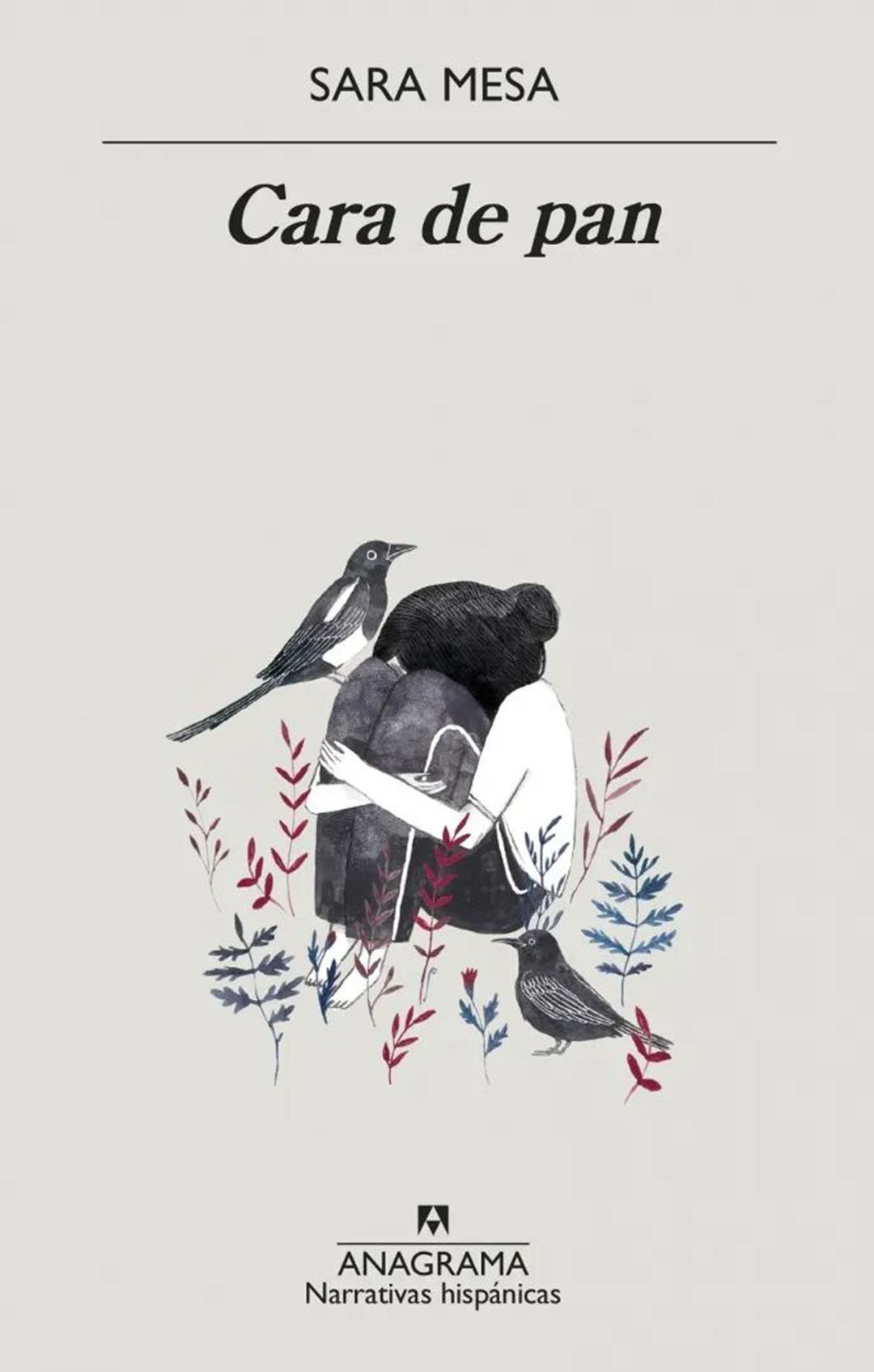
Cara de pan, by Sara Mesa. Image source: Internet
From Page to Screen: Two Languages Narrating the Fluid Truth
When literary works are adapted into film, the question of "success" varies greatly depending on perspective, as the two media involve different viewpoints. Take Marguerite Duras’s The Lover, for example. Its film adaptation reached a wide audience and is often regarded as a successful production, yet Duras herself was deeply dissatisfied with the screenplay. The leaps and movements of her stream-of-consciousness prose were, in her view, largely lost when translated into the more linear and accessible language of cinema.
Un amor is written entirely in the present tense, making for a fluid reading experience. Nat is trying to escape her past, so there are no conventional flashbacks. She remains deliberately vague about the “minor theft” that may have directly led to her resignation, while her translation work is presented only in fragments. She seems suspended in a state of uncertainty, unable to settle in her room. Only after this unease has gradually passed on to the reader does Mesa allow the story to move in directions that are unpredictable, yet at the same time entirely plausible.
The film adaptation of Un amor, directed by Spanish filmmaker Isabel Coixet, was released in 2023. It received the Best Supporting Performance award at the 71st San Sebastián International Film Festival and was nominated for the Golden Shell in the festival’s Official Selection. Coixet asked Mesa whether she would like to participate in the screenwriting process, but she declined: “During the adaptation process, I wanted to give the director as much freedom as possible to create her own work.”
The film largely follows the novel’s chronology, while making more explicit choices in character development to help audiences follow the story. At the beginning of the film, Nat works as a translator for refugees, struggling with the painful realization that her work cannot change their circumstances. Andreas, however, sees her distress as little more than self-indulgence, given that his own mother is a refugee who has experienced far greater despair. When Sieso is taken to the veterinarian for an examination, he is diagnosed as intersex, adding another layer of ambiguity to the dog’s already difficult and unappealing nature.
At the end of the novel, Nat moves once again and drives back to La Escapa, visiting the mountain overlook she once shared with Andreas during their period of intimacy. She hopes that a new sensation will overwrite her earlier memories. An ant crawls onto her hand: “Suddenly, even the theft she had committed in the past seemed to make sense. Now she could understand it. The goal was not reached through deliberate pursuit, but inadvertently, through swaying and detours, almost by chance.” The film gives the ending a more concrete resolution: Sieso, who had been taken away, miraculously reappears almost like an accomplice, and leaves together with Nat as she dances.
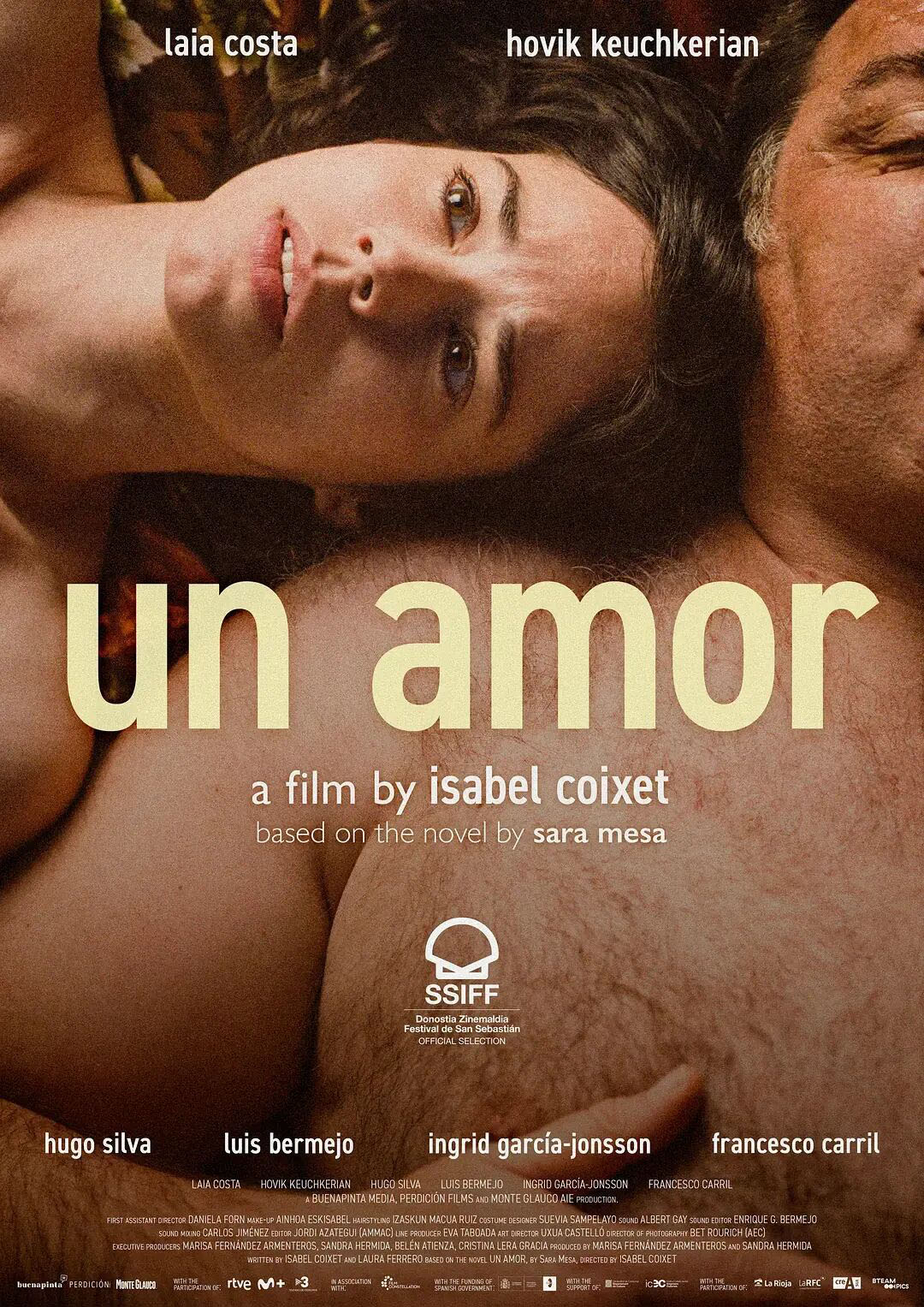
Un amor film poster, directed by Isabel Coixet. Image source: Internet
“After watching the film, I felt that it still preserved some of what I originally wanted to express. The film is more direct, while my version is more ambiguous, leaving certain spaces open.” Mesa describes her stories as resembling dreams, with some elements drawn from her own dreams. She repeatedly returns to the importance of ambiguity and open space in literature. Like reading a poem, she believes, literature does not necessarily need to provide a definitive answer. Its existence can be both certain and fluid. After all, “once you read it, you feel it.”
Q&A
When did you first become interested in writing? Before becoming a full-time writer, you also worked as a journalist for some time. What did that period of your career mean to you?
Sara Mesa:It took me a long time to figure out what I truly wanted to do, what my real passion was. I studied journalism as an undergraduate and worked as a journalist for many years. When I turned 30, I realized that what I was truly passionate about was fiction, especially novels. During the first year after I came to this realization, I continued to combine literary writing with other work. But a year later, I left my previous job and devoted myself entirely to writing.
Is there a book that has had a particularly profound influence on you? What have you been reading recently?
Sara Mesa:One book that has had a particularly strong influence on me is Nikolai Gogol’s Dead Souls. I would also like to recommend a collection by the Spanish short-story writer Eider Rodríguez, Era todo el mismo hueco. It was originally written in Basque.
Are you familiar with the work of any Chinese writers?
Sara Mesa:I’ve read works by Mo Yan, and I’ve also read a collection of poetry from the East. On this trip to China, I’ve been reading some works by Chinese writers, mainly short stories, although I don’t remember all the names. Many of the books I’ve encountered have been recommendations from publishers.
There are quite a lot of differences between China and Spain when it comes to literary tastes. One of the problems with translated literature in Spain is that around 70 to 75 percent of translated works are translated from English. There are many outstanding Chinese writers, but these remarkable works simply don’t appear in Spanish bookstores or libraries.
In Un amor, Nat decides to move from the city to a remote village after a relatively minor act of theft, which is never described in detail in the novel. The theme of escape brings to mind Alice Munro’s Runaway, whose protagonists are often women and whose stories focus on the experience of living in small towns, with an emphasis on moments of revelation. Is Nat’s migration an act of voluntary escape, or a form of involuntary exile? And could this movement from the city to the countryside be read as a metaphor for the anxiety that permeates contemporary life?
Sara Mesa:I’m very glad you mentioned Alice Munro. She is also a writer I admire very much, a true master, especially when it comes to portraying pain in everyday life. Her characters experience emotional, physical, or existential forms of suffering, yet they themselves are often unable to clearly define what they are going through.
Nat’s move is indeed a voluntary escape, but she doesn’t actually know where she wants to go. She is in a rather ambiguous state, constantly exploring. Because she cannot define or fully articulate what she is feeling, the decision she ultimately makes is also ambiguous.
I had her escape to the countryside not because I have any particular affection for rural environments. In my other books, I similarly tend to set stories in small, enclosed places, sometimes places that even make the protagonists feel claustrophobic. This allows the dynamics of power to become more visible within the environment.
The novel takes place entirely in the present and follows a linear narrative, making for a very fluid reading experience.
Sara Mesa:Yes. When I was writing the book, I deliberately arranged everything in chronological order, so it is relatively straightforward to read. I think the complexity of the book lies in its content rather than in its treatment of time. At the same time, we can still feel the weight of the past. Take Nat and Andreas, or the elderly Roberta, for example. I never explicitly explain their pasts, but their past experiences clearly determine their present circumstances. The reader can sense that those past experiences are there.
How did Nat’s character change as you progressed through the writing?
Sara Mesa:As the character develops, she discovers new versions of herself. Certain decisions she makes, or the ways she responds to particular events, are new even to her. She is constantly getting to know herself and learning.
These changes are extremely subtle. My readers have to be very attentive in order to grasp those nuances as they emerge.
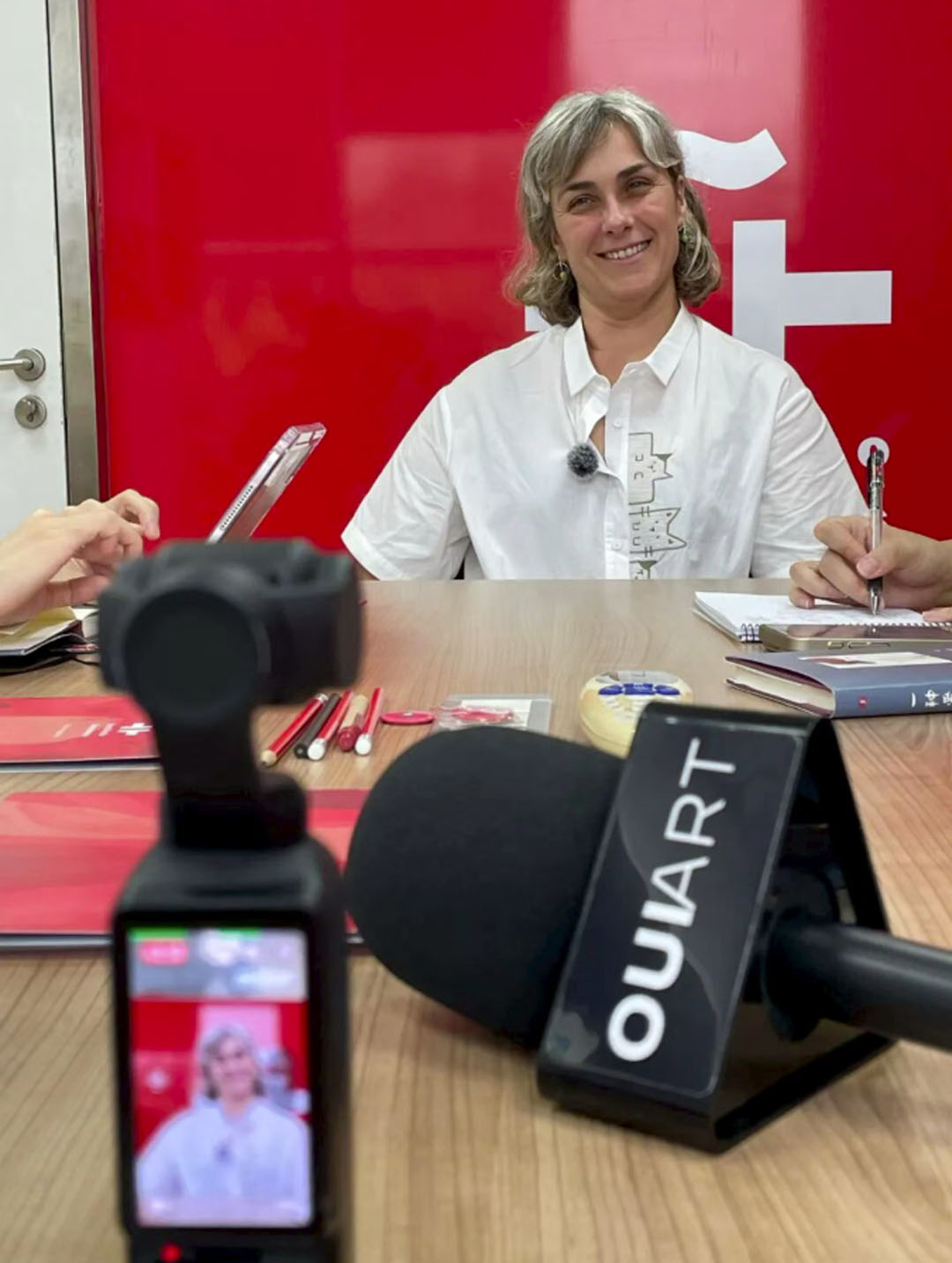
Sara Mesa interviewed by Oui Art

Producer:Tiffany Liu
Editor:Tiffany Liu
Designer:Nina
Images courtesy of Oui Art and the Internet



