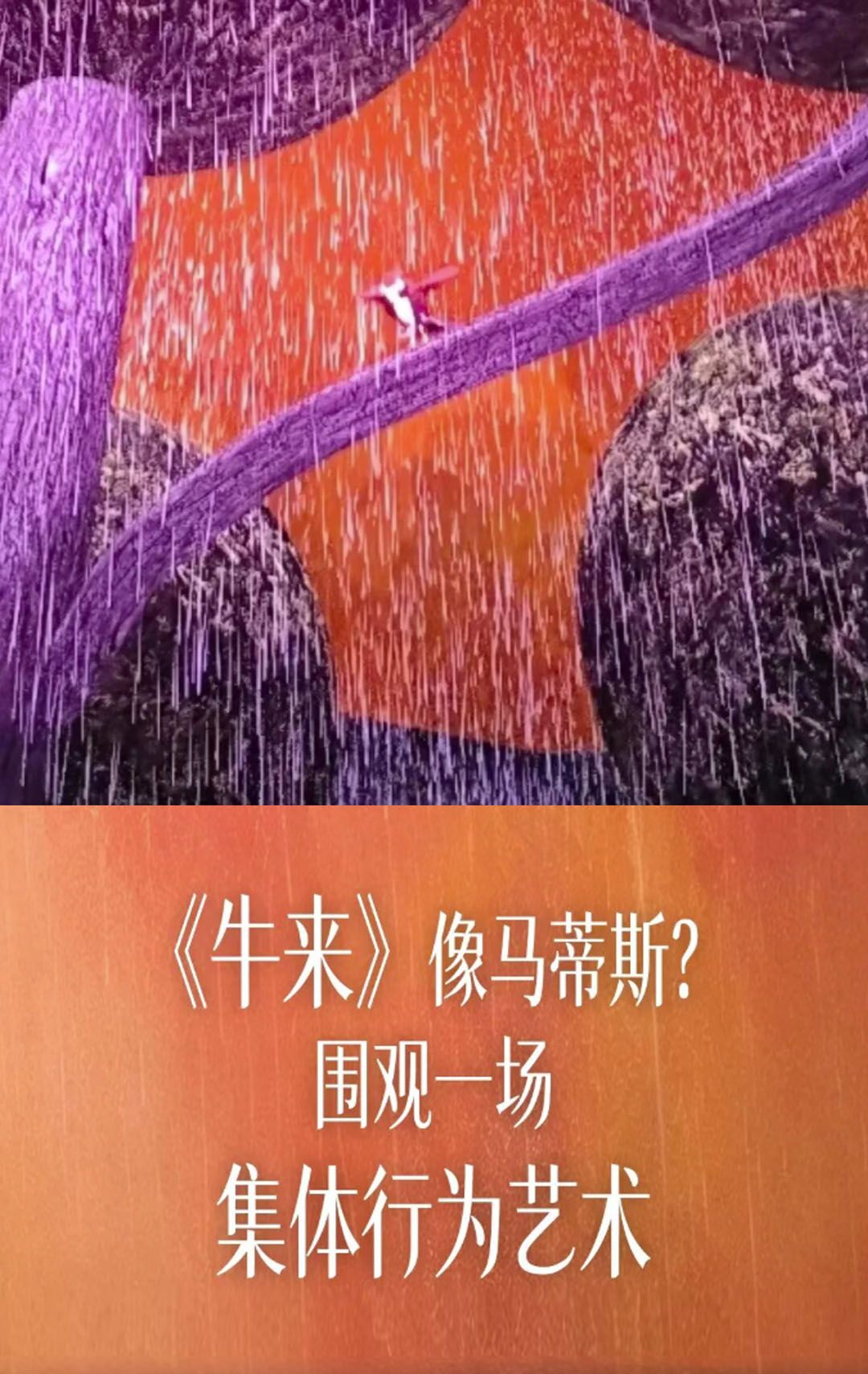
This summer, if you still haven't heard of Niulai, chances are you've already lost touch with the internet's increasingly “abstract” universe.
Roughly made and visually eccentric, this Chinese animated film has taken the internet by storm in ways that are difficult to explain. It has sparked a wave of collective participation—and, almost by accident, reopened an old debate from art history.
In This Carnival, No One Wants to Be Left Out
Audiences have embraced it as a form of “digital comfort food.” Critics are furiously hammering away at their keyboards. Brand accounts, meanwhile, have abandoned all pretence of restraint and rushed headlong into the traffic frenzy.
Fan art, imitation, memes—everyone wants in, afraid that arriving one step too late might mean losing touch with the young audiences currently obsessed with all things “abstract.”
Amid endless comments of “hahahaha” and “I don't understand it, but I'm blown away,” another, more unexpected question has begun to surface:
“Why does this look like Matisse and Picasso?”
The people asking may never have opened an art history textbook. But the question acts like a key, unexpectedly unlocking a compartment that has been gathering dust for more than a century.
Inside are works once dismissed as “trash,” “childish,” and “completely incomprehensible”—paintings that now occupy prominent positions in the world's leading museums and are collectively known as classics.
We have no intention of overstating Niulai's “artistic value,” nor are we about to guarantee its place in history.
What interests us is something else: why does a work this outrageous bring Matisse and Picasso to mind?
Is it simply an internet joke? Or does it point to some hidden cycle within the history of aesthetics?
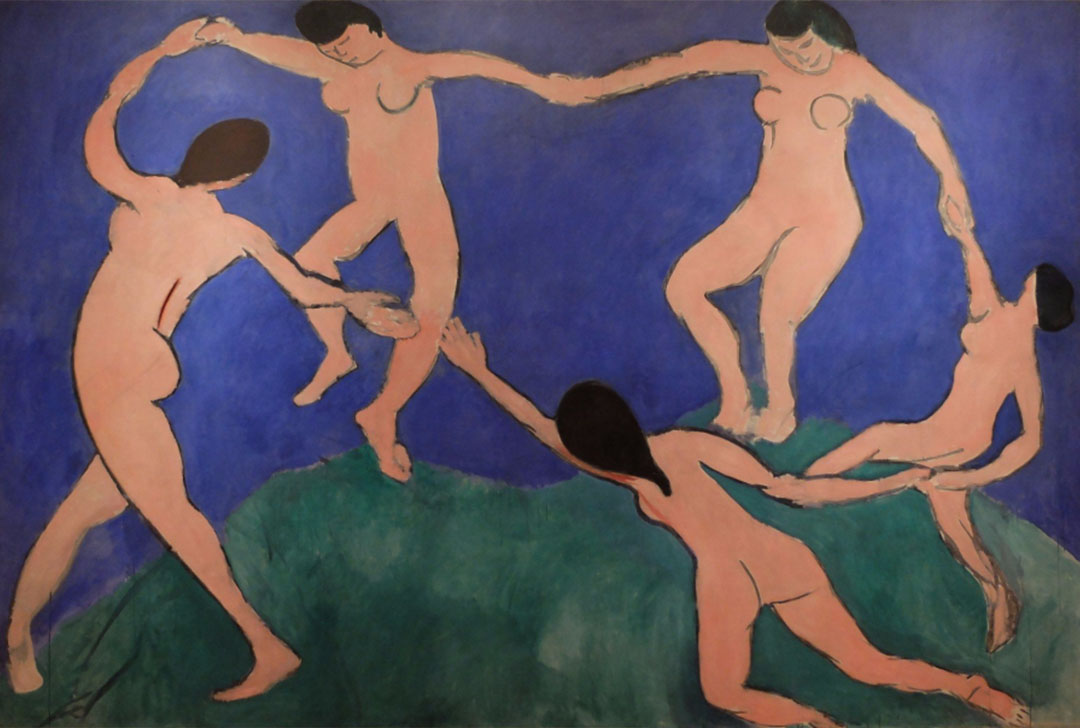
Dance, Henri Matisse
What Are We Really Saying When We Say It “Looks Like Matisse and Picasso”?
There is no need to rush into accusing internet users of having bad taste—or bad eyesight.
Watch a few clips from Niulai, then think back to Matisse's Dance or Picasso's Les Demoiselles d'Avignon, and a strange kind of visual resonance does begin to emerge.(Personally, I genuinely love that forest.)
The first connection lies in the visual language: simple, direct, unpolished, and almost childlike.
Niulai was painstakingly animated frame by frame by director Xin Yumeng and her mother, Sun Lifang, who is now over sixty. Its lines visibly tremble, carrying an unmistakable sense of amateurism.
Matisse's celebrated late cut-outs, meanwhile, pursued a radically simplified visual language—stripping away complexity in search of something more essential. Picasso went even further, dismantling and reassembling the human face, producing distortions that, from the perspective of classical representation, could appear almost childlike.
To an eye trained according to the strict standards of academic art, the similarity is easy to understand:
“I could draw that too.”
A deeper resonance, however, lies in their shared departure from convention. One of Niulai's most discussed sequences features a bird flying across the sky for five uninterrupted minutes: no dialogue, no plot.
By the standards of mainstream filmmaking, this might easily be considered a serious narrative failure. In the context of performance art, however, it could be understood as a deliberate dismantling of audience expectations.
The experience recalls the bewilderment provoked by Picasso's Guernica: distorted bodies, a fractured composition, and a symbolic language resistant to any single interpretation.
Faced with such images, the first response is not always awe.
Sometimes, it is simply:
“What am I looking at?”
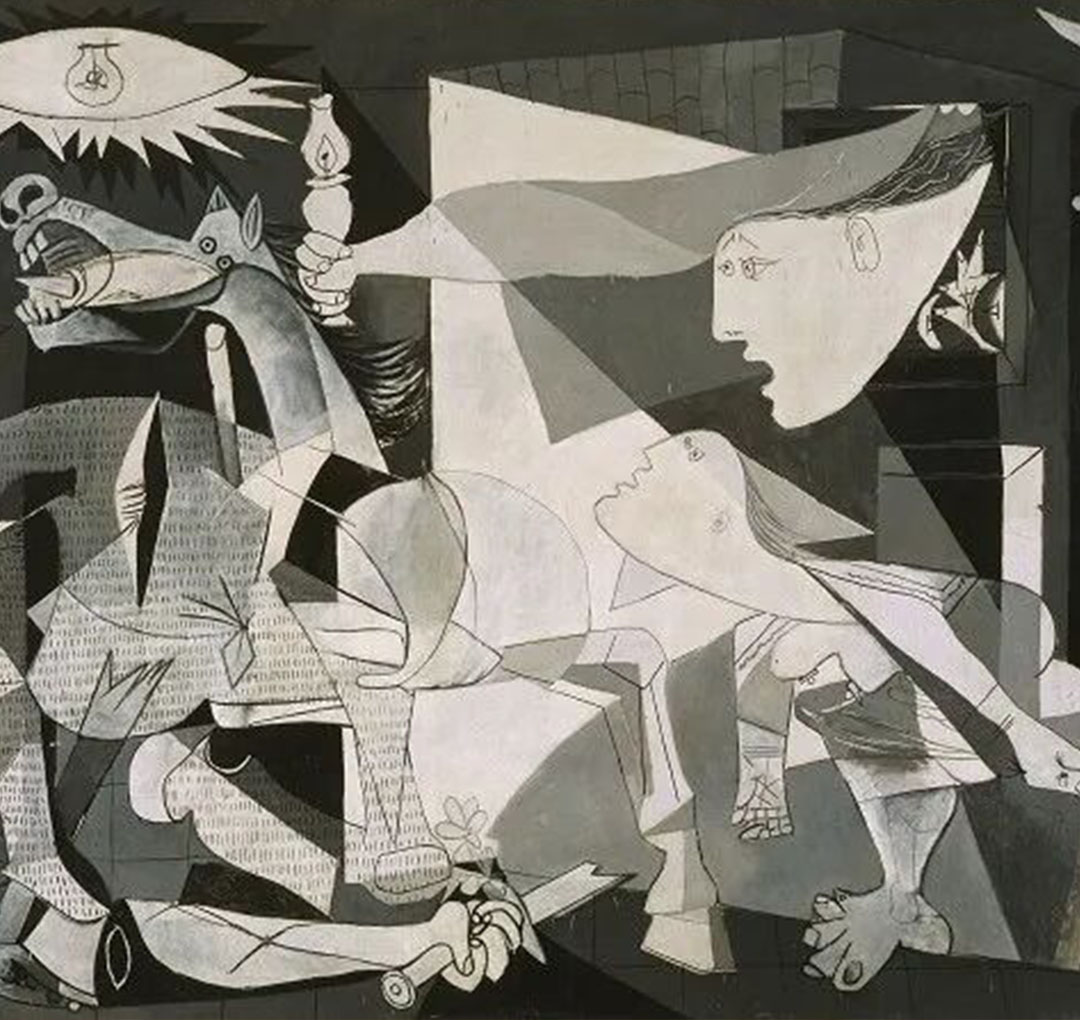
Guernica (detail), Pablo Picasso
When audiences encounter a visual language that exceeds their existing frameworks of understanding, the response is often a mixture of unease and excitement.
A century later, that feeling has hardly changed.
Art History's “They Hated It—Then They Loved It” Rule
Why does art history seem to be full of artists who were brutally dismissed in their own time, only to be elevated to canonical status later?
There is a rather cruel historical pattern worth recalling: many of the masters we now regard as untouchable were once dismissed as frauds, lunatics, or worse.
Van Gogh. During his lifetime, he could hardly have imagined that The Starry Night would one day become an icon of global popular culture. At the time, his paintings were criticised for their “muddy colours” and lines so coarse they were said to be almost physically unpleasant to look at. When the critic Albert Aurier wrote in praise of his work, he was met with ridicule from his peers, who accused him of overinterpreting “the work of a madman.” Van Gogh famously sold almost nothing during his lifetime. Residents of Saint-Rémy even signed a petition demanding his confinement, on the grounds that “what this man paints is a deliberate insult to aesthetics.”
Today, the artist once regarded as an aesthetic aberration has become one of the most recognisable figures in art history.
Cézanne. Now celebrated as the “father of modern art,” he was met with little more than indifference and ridicule by the Paris Salon of 1866. Critics mocked his still lifes: “The apples are crooked, the tables are tilted—either the man cannot see properly, or he is deliberately making fools of the public.” Even his close friend, the writer Émile Zola, later based the failed painter in his novel The Masterpiece partly on Cézanne, leading to a rupture between the two.
Only towards the end of Cézanne's life did a younger generation of artists begin to understand that the old man who “could not get his forms right” had, in fact, invented an entirely new way of seeing.
Monet. At the first Impressionist exhibition in 1874, the critic Louis Leroy famously responded to Impression, Sunrise with scorn. The painting, he wrote, was vague, ugly and unfinished—less complete than wallpaper in its preliminary stages. He went on to characterise the entire exhibition as an uprising staged by artists incapable of proper drawing.
Audiences came partly out of curiosity, only to leave bewildered by what they had seen. The psychological mechanism is not entirely unlike that of today's viewers buying tickets to see Niulai:
“What exactly is this—and why is everyone talking about it?”
The eventual establishment of Impressionism was not simply the result of technological developments such as the spread of portable paint tubes. It also depended on persistence: eight independent exhibitions, sustained over time, until yesterday's bad reviews were gradually transformed into today's classics.
The pattern feels strangely familiar.
“Too childish.” “Complete garbage.” “Impossible to understand.”
Replace the subject of these judgments with Niulai, place them in today's social media comment sections, and very little would need to change.
The paradox of art history is that it is not always perfection that drives change. More often, change begins with an offence.
A new visual language inevitably violates an old set of rules. To those invested in those rules, such violations can appear amateurish, provocative—even symptomatic of aesthetic decline.
But a clear distinction needs to be made here.
Matisse and Picasso did not become masters simply because they abandoned realistic representation. They became masters because they established new ways of seeing.
Through Fauvism, Matisse pushed colour and pictorial flatness towards a radically new visual language. Through Cubism, Picasso transformed the relationship between form, space, and perception.
They were not only destroyers of old rules.
They established new ones of their own.
And Niulai?
For now, it has certainly carried out an act of deconstruction. It disrupts the coherence of cinematic narrative and rejects many of the production standards associated with industrial image-making.
But has it constructed a new aesthetic order—one that can be recognised, interpreted, and extended beyond itself?
For the moment, there is little evidence to suggest that it has.
We can acknowledge the cultural value of this kind of “offence” without immediately placing it on a pedestal. Being criticised may be one of the entry points into the process of becoming a classic. But standing the test of time is the real test. And for now, Niulai has yet to reach that stage.
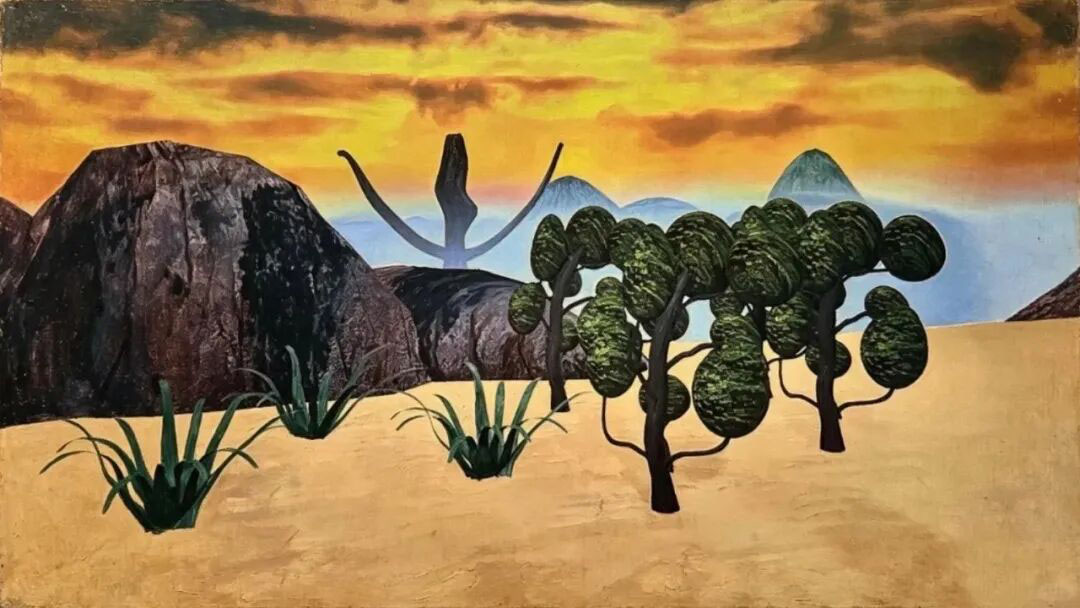
Screenshot from Niulai (source: internet)
Why It Resonates: Relief and Sincerity
So why are we still willing to devote so much attention to this film?
Because, as a cultural phenomenon, the audience response it has generated is genuinely worth examining.
Across social media, two words appear again and again in discussions of Niulai:
“Stress relief” and “sincerity.”
When those cries of “Mom—Mom—” begin echoing across social media, suddenly, everyone seems to be watching with the same wide-eyed sincerity.
Viewers repeatedly describe Niulai as a viewing experience that demands almost nothing from them. No prior knowledge of film language. No need to anticipate plot developments. No expectation of visual sophistication.
In an era where short-form video is governed by the “golden three-second rule,” while commercial cinema is increasingly built around spectacular effects and tightly engineered narratives, the cognitive demands placed on audiences have become increasingly high.
Against this backdrop, Niulai offers something unusually low-pressure.
Its rejection of conventional storytelling and polished production becomes, in itself, a form of relief.
Its roughness becomes part of the entertainment.
The idea of “sincerity” is perhaps even more revealing.
Beyond the jokes and memes, many viewers have also responded to the intentions expressed in the film's final section. The animation itself clearly exists outside the conventions of professional training, while its production process—handmaking the film frame by frame together with the director's mother—carries a sense of manual labour rarely visible within contemporary industrial production.
This apparent “clumsiness” has not been rejected outright.
Instead, some viewers have interpreted it as a recognisable form of creative sincerity.
Against the highly standardised and predictable production model of mainstream animation, Niulai bears traces of something almost pre-industrial: the visible imprint of individual labour.
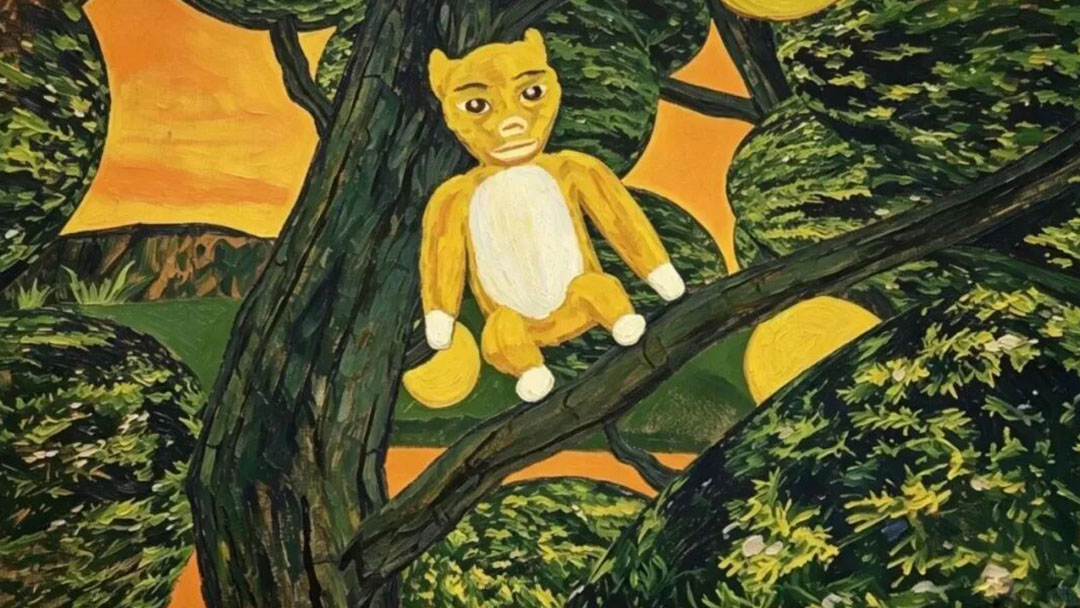
Screenshot from Niulai (source: internet)
In a cultural market shaped by extreme homogeneity, sometimes being unmistakably strange is enough to make a work worth talking about.
When Niulai Becomes a Collective Performance
At this point, if we pull the camera back a little further, Niulai has already exceeded the boundaries of a single film.
It has evolved into a collective performance shaped by widespread participation.
Consider how the event has unfolded.
The director releases a “film,” made through an almost radically primitive mode of production, and this becomes the spark.
Viewers begin creating fan works and hand-drawn posters, some of which are far more polished than the original. This is the extension.
Cinemas in different cities begin promoting screenings with handwritten noticeboards, transforming the act of exhibition into an offline event. This becomes the field.
Brand accounts rush in, dismantling their own carefully constructed identities while simultaneously chasing attention. This is the intervention.
Even the fiercely critical reviews become inseparable from the phenomenon itself.
Without opposition, the spectacle would be incomplete.
Perhaps Niulai's future significance within the sociology of art will ultimately exceed the significance of the images themselves.
It has generated a collective discussion around a series of fundamental questions:
What is cinema? What is aesthetics? Where do the boundaries of art lie?
Like a giant prism, it refracts something of the cultural psychology of the present moment: fatigue with polished narratives, resistance to industrial standards, and a desire for cultural production that feels more open, equal, and participatory.
The director drew the opening.
Viewers, brands, cinemas, and social media collectively drew the rest.
This dissolution of the boundary between creator and audience—and the collaborative form of cultural production that emerges from it—is itself a distinctly contemporary artistic experiment.
As for whether Niulai will ultimately become a piece of cultural debris or a future classic—
there is no need to deliver history's final verdict in advance.
Watch closely. Think independently.
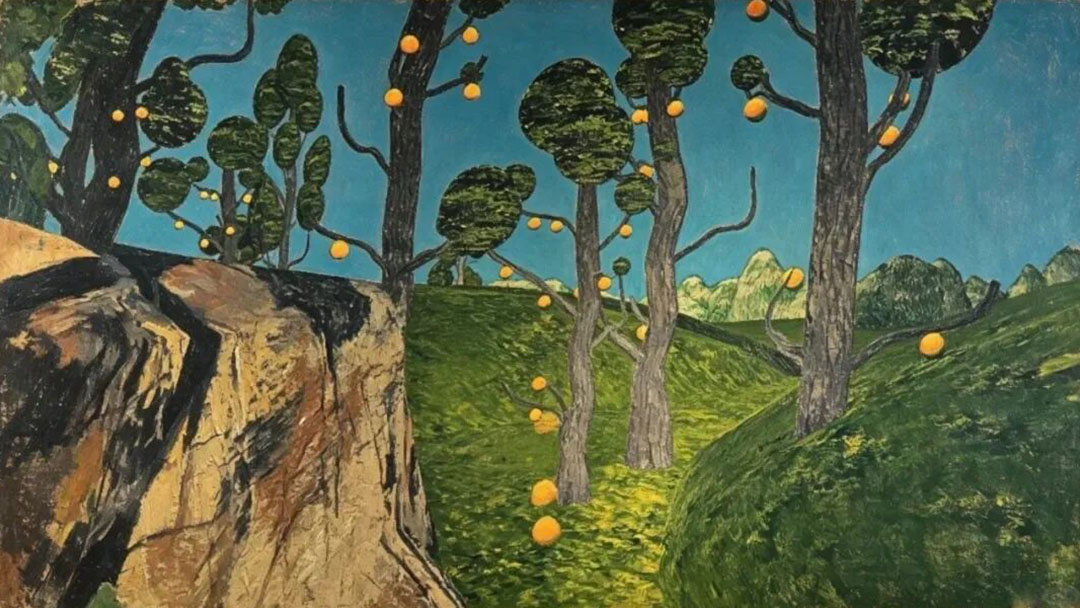
Screenshot from Niulai (source: internet)

Producer: Tiffany Liu
Editor: Tiffany Liu
Designer: Nina
Image source: Internet



